

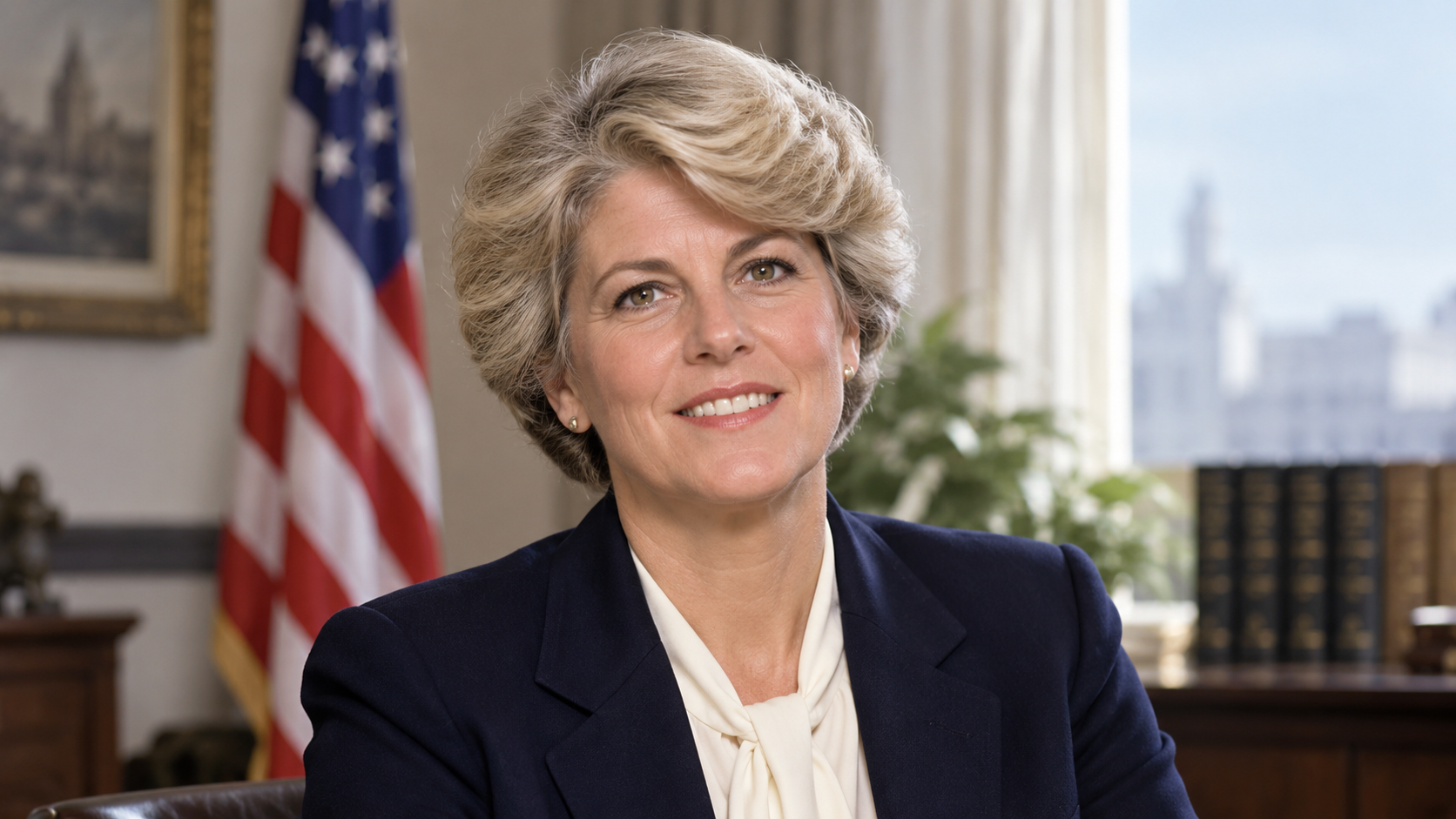
“There are no doors we cannot unlock.”
Geraldine Ferraro delivered this line while accepting the Democratic nomination for vice president on July 19, 1984, in San Francisco. A representative from New York, she became the first woman nominated for that office by a major American political party. Walter Mondale headed the ticket. The sentence followed her description of the signal sent by choosing a woman for the nation’s second highest office. Its setting matters: Ferraro was speaking at a party convention, seeking support for a campaign and presenting her nomination as evidence that familiar limits could be challenged. The statement carried both personal pride and a collective political invitation.
The image of a locked door makes exclusion tangible. A person may possess ability, experience, and ambition yet still encounter an entrance guarded by assumptions about who belongs inside. Ferraro’s choice of the word we shifted attention from an exceptional individual to the people capable of changing those assumptions. A nomination requires decisions by others as well as effort by the candidate. Read this way, the line asks parties and voters to recognize their own responsibility for opportunity. They cannot simply applaud perseverance while continuing to narrow the pool of people considered credible for leadership. Access depends on institutional choices.
Ferraro also connected her breakthrough to a broader argument about fair rules. Her speech addressed economic opportunity, education, and civil rights alongside her place on the ticket. The open door therefore represented more than permission to appear on a convention stage. It suggested that public institutions should draw on abilities previously discounted or overlooked. That is an ambitious claim, but a nomination does not prove that every obstacle has disappeared. Representation can change what an audience imagines without immediately changing the resources, networks, or scrutiny facing another candidate. The symbolic achievement and the practical work belong together, even when they advance at different speeds.
The November election supplies a necessary limit to the promise: Mondale and Ferraro lost to Ronald Reagan and George H. W. Bush. Breaking a barrier did not guarantee electoral success, nor did it remove the need to persuade voters about policy and leadership. The quotation remains useful because it distinguishes an inherited restriction from a democratic choice. Voters can reject a candidate after considering the case she makes; that is different from treating her identity as a reason she should never compete. Ferraro’s door metaphor invites a continuing examination of recruitment, nomination, and evaluation, asking whether public life permits a fair contest before it measures the result.
The line comes from Ferraro’s July 1984 convention acceptance address. Her nomination gave the door metaphor an immediate example: a major party had selected a woman for its vice-presidential ticket.
Ferraro spoke as an experienced member of Congress and as Mondale’s running mate. Understanding both roles keeps the quotation connected to political preparation and party decision-making, rather than presenting it as an isolated motivational slogan.
The plural pronoun places responsibility on a wider community. An opening becomes possible when people who control access reconsider the assumptions used to judge candidates.
The claim is deliberately aspirational. It does not establish that all barriers were already gone or that identity alone qualifies anyone for office. The nomination changed a boundary; the election still required persuasion.
The ticket’s defeat limits triumphal readings of the speech. Ferraro achieved a historic nomination without winning the office, demonstrating that a breakthrough and an electoral outcome are separate facts.
Her words offer a way to examine candidate pipelines today. A useful question is whether a party considers a broad range of qualified people before voters are asked to choose among them.
Explore more "Quotes of The Day"
Discover more notable quotes from influential voices across politics, science, business, technology, sports, and culture. Each quote offers insight into how ideas, beliefs, and decisions shape the world around us.