

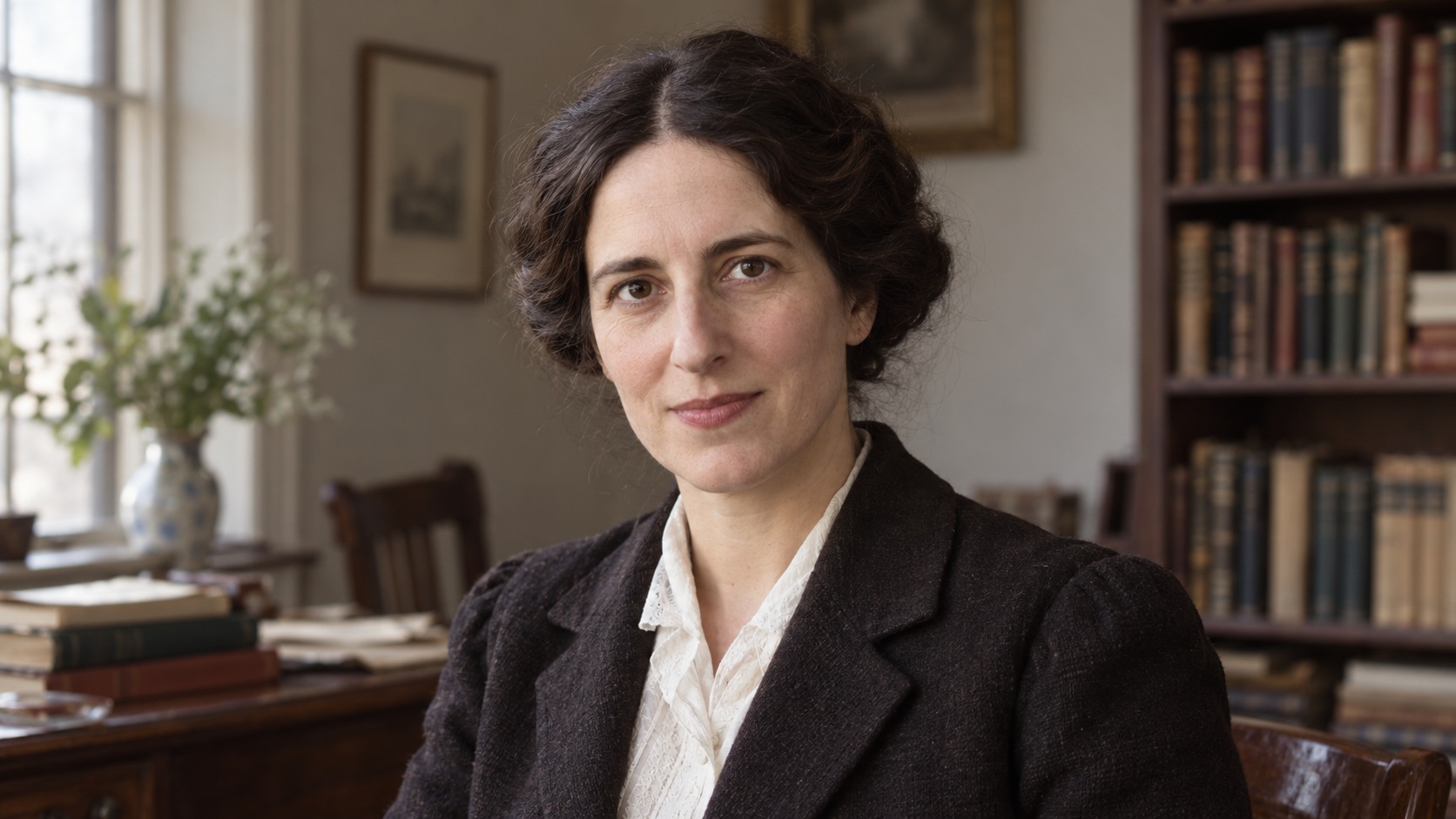
“Freedom is a large word.”
Crystal Eastman wrote this sentence in “Now We Can Begin,” published in The Liberator in December 1920. A lawyer and feminist organizer, she was considering the movement’s direction after ratification of the Nineteenth Amendment. She refused to treat the achievement of a constitutional voting right as the conclusion of women’s struggle. The brief sentence opened a much larger inquiry into the conditions that allow a person to choose a life. Rather than supplying a tidy definition, Eastman made the size of the word a reason to examine it carefully. Winning one important right could reveal the next set of questions.
Her essay linked freedom to the ability to pursue different occupations and to maintain economic independence. It also insisted that housework and child-raising deserved recognition as work. Those concerns exposed a gap between a formal permission and a usable opportunity. Someone may be allowed to enter a profession while lacking a fair chance to earn a living within it. Someone else may choose care work yet remain dependent on another person for basic security. Eastman’s argument asks readers to look at how options are organized, rather than assuming that a legal declaration alone gives every person the same practical range of choices.
The household was central to that examination. Eastman challenged the expectation that women would manage domestic responsibilities while men remained unprepared to share them. Her discussion of education extended to boys as well as girls, making everyday competence a shared responsibility. This was a political argument because the distribution of unpaid work affects the time and independence available for public participation. A meeting, training course, or campaign can be formally open while remaining difficult to attend. The connection does not mean that family life should be reduced to a calculation. It means that political equality cannot be understood without noticing how necessary work is assigned.
Eastman’s vision should also be read with limits in view. Constitutional protection against denial of voting rights on the basis of sex did not end every form of disenfranchisement, and her essay did not provide a complete account of every woman’s circumstances. Nor must a reader accept every remedy she proposed to see the force of her question. Freedom can refer to protection from interference, access to public decisions, or the material ability to act on a choice. Those meanings can create different policy priorities. Eastman’s compact observation encourages a more demanding discussion: identify which freedom is being promised, who can exercise it, and what conditions make that promise credible.
“Now We Can Begin” appeared in The Liberator after the suffrage amendment’s ratification in 1920. Eastman treated that victory as a starting point for a broader feminist program.
The original essay connects the quoted sentence to occupation, income, domestic work, and education. Its subject is the practical scope of women’s independence, rather than freedom as an undefined compliment.
Eastman wanted readers to test an abstract ideal against ordinary arrangements. A right can matter greatly while leaving difficulties in employment or household responsibility unresolved.
Her discussion assigns men responsibility for learning domestic skills. It challenges a division of labor that can reduce another person’s freedom even without an explicit legal prohibition.
The essay helps explain why political reform often continues after a major legislative victory. An institution can open formally while the conditions needed to participate remain uneven.
Debates about care, employment, and access to public life still benefit from precise definitions. Eastman’s short sentence asks which choices a policy protects and whether people have the means to use them.
Explore more "Quotes of The Day"
Discover more notable quotes from influential voices across politics, science, business, technology, sports, and culture. Each quote offers insight into how ideas, beliefs, and decisions shape the world around us.