

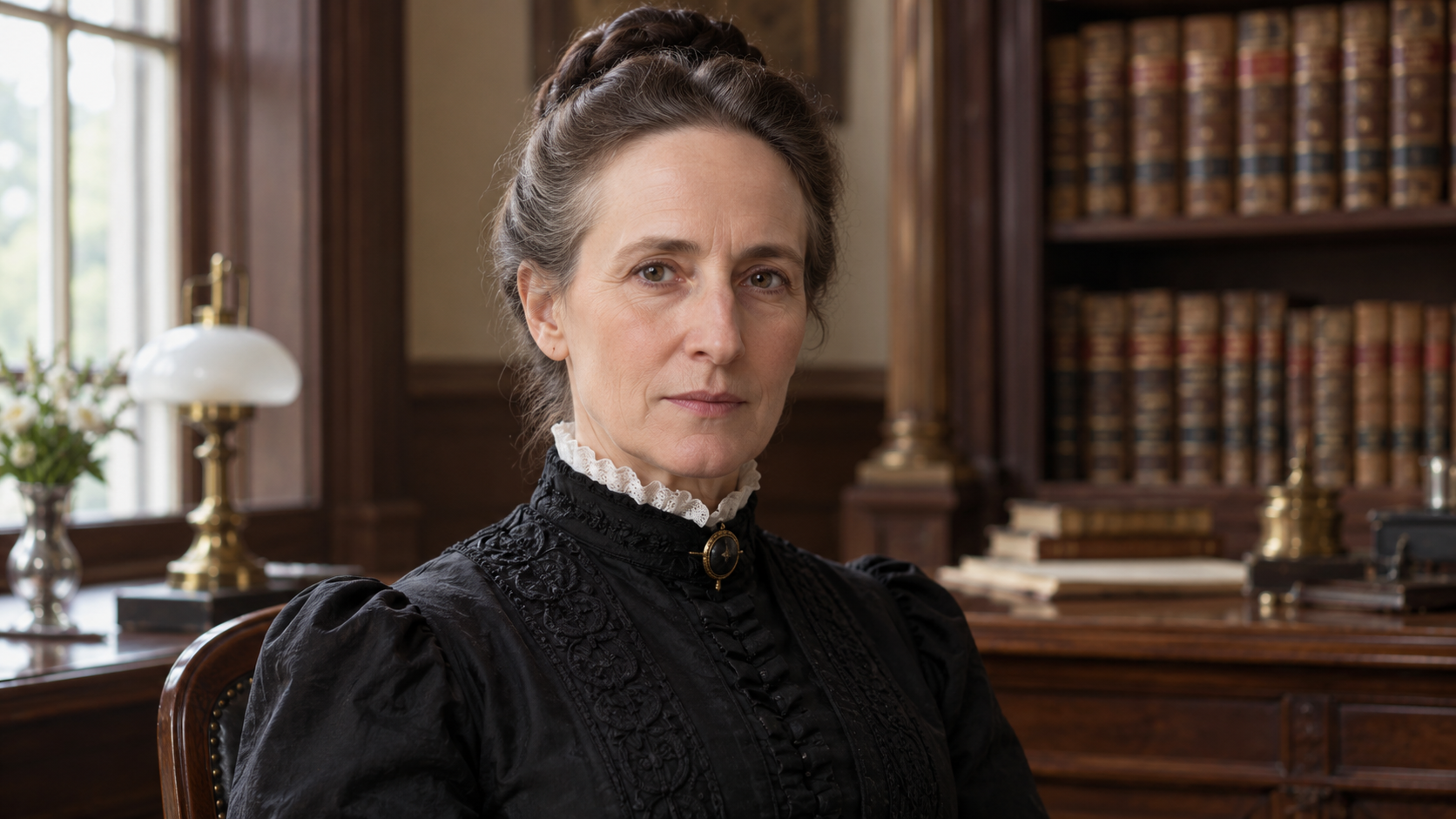
“I cannot vote, but I can be voted for.”
Belva Lockwood used this pointed distinction in connection with her 1884 presidential campaign. Running on the National Equal Rights Party ticket, the lawyer challenged assumptions about women’s place in national politics before the Nineteenth Amendment. The Library of Congress preserves the statement in its account of women on the ballot, and historical coverage associates it with that candidacy. Its two clauses perform different jobs. The first acknowledges a restriction on Lockwood’s own participation as a voter. The second insists that the restriction does not settle whether others may support her for office. A familiar exclusion becomes the subject of a public challenge.
That distinction makes the sentence more than a clever reversal. Voting, running for office, and receiving votes are related activities, but they are not identical. Lockwood refused to let a barrier in one area silently define every other possibility. Her campaign placed a woman in the position of asking citizens for authority to govern, when women’s political standing remained deeply constrained. The gesture required an audience to confront an uncomfortable question: if leadership depends on judgment and ability, why should the presumption of competence be confined to men? She made the argument through candidacy as well as through words.
Lockwood brought professional experience to that challenge. In 1879 she became the first woman admitted to the bar of the United States Supreme Court, after campaigning to change the rule that had excluded women. Her presidential effort continued a pattern of testing an institutional boundary instead of accepting custom as the last word. She was not the first American woman to announce a presidential candidacy; Victoria Woodhull had done so in 1872. That distinction protects the history from an attractive but inaccurate simplification. Lockwood’s significance rests on the campaign she undertook and the political contradiction it exposed, without requiring every pioneering achievement to belong to her.
An honest reading also avoids treating the campaign as proof of equality already secured. Lockwood did not win the presidency. Appearing as a candidate could attract attention to women’s claims without producing broad acceptance or immediate reform. The words remain useful because they demonstrate how carefully naming a restriction can create room for action. Institutions often blend written rules, familiar practices, and social expectations until they seem like one unavoidable fact. Lockwood separated them. Her example invites citizens to ask what a barrier actually prevents, which authority sustains it, and what lawful avenues remain available to contest it. A precise distinction can become the beginning of political pressure.
Lockwood’s 1884 campaign on the Equal Rights ticket supplied the setting for the quotation. She used candidacy to challenge expectations about who could speak as a prospective national leader.
The statement describes her own position. It should not be expanded into a claim that no woman anywhere in the United States could vote at the time, since voting rules differed among jurisdictions.
The sentence separates casting a vote from seeking votes. That separation exposed how quickly a restriction could be treated as a general judgment about women’s fitness for public responsibility.
Lockwood faced ridicule as well as political resistance. Her declaration therefore had a practical purpose: it kept attention on participation and eligibility when opponents might prefer to dismiss the candidate herself.
Her campaign belongs alongside her effort to enter Supreme Court practice. Both involved identifying an exclusion and challenging the claim that established custom made it inevitable.
The useful lesson is careful institutional analysis. Before accepting a boundary as permanent, distinguish what a rule says from the broader assumptions people attach to it.
Explore more "Quotes of The Day"
Discover more notable quotes from influential voices across politics, science, business, technology, sports, and culture. Each quote offers insight into how ideas, beliefs, and decisions shape the world around us.