

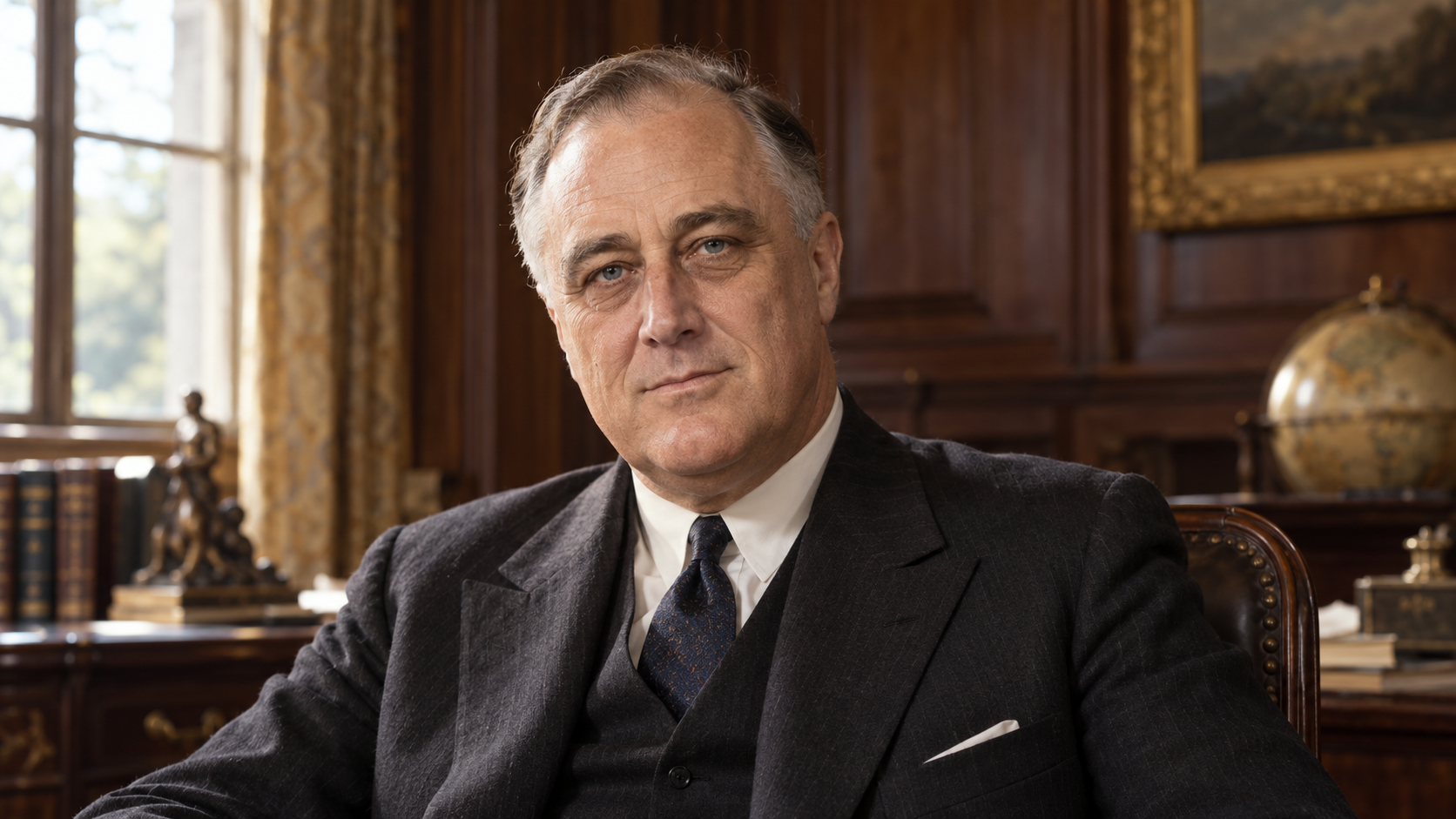
“The only thing we have to fear is fear itself.”
Franklin D. Roosevelt spoke these words on March 4, 1933, as the United States faced bank failures, mass unemployment, and a deep crisis of public confidence. His first inaugural address acknowledged the severity of the emergency while arguing that nameless and unreasoning terror could obstruct the action needed to confront it.
The quotation is often remembered as simple reassurance, but its political purpose was more demanding. Roosevelt was preparing the public for rapid government intervention and asking citizens to distinguish real economic hardship from panic that could intensify bank runs, retreat, and paralysis. Confidence, in this framing, was a condition for coordinated action.
Political leaders frequently use fear to describe both dangers and public reactions to them. The line offers a useful test: warnings should be tied to evidence and proportionate responses, while reassurance should not minimize genuine suffering. Responsible leadership must communicate risk clearly enough to motivate action without turning uncertainty into spectacle.
The sentence endures because democracies regularly face moments when public emotion affects institutional capacity. Fear can sharpen attention, but it can also narrow judgment and make extreme measures appear inevitable. Roosevelt’s formulation asks citizens and leaders to acknowledge danger while refusing to let panic make their decisions for them.
Roosevelt delivered the words in his first inaugural address at the depth of the Great Depression on March 4, 1933.
The complete sentence describes fear as nameless, unreasoning, and unjustified terror that can paralyze efforts to turn retreat into advance.
The phrase sought to rebuild confidence while preparing the country for decisive action against an economic emergency.
It connects public psychology with governing capacity: collective action becomes harder when panic overwhelms judgment.
Not every fear is irrational, and reassurance is harmful when it dismisses evidence or lived hardship.
The durable lesson is not to ignore danger, but to evaluate it carefully and choose responses that remain accountable to facts and democratic rights.
Explore more "Quotes of The Day"
Discover more notable quotes from influential voices across politics, science, business, technology, sports, and culture. Each quote offers insight into how ideas, beliefs, and decisions shape the world around us.