

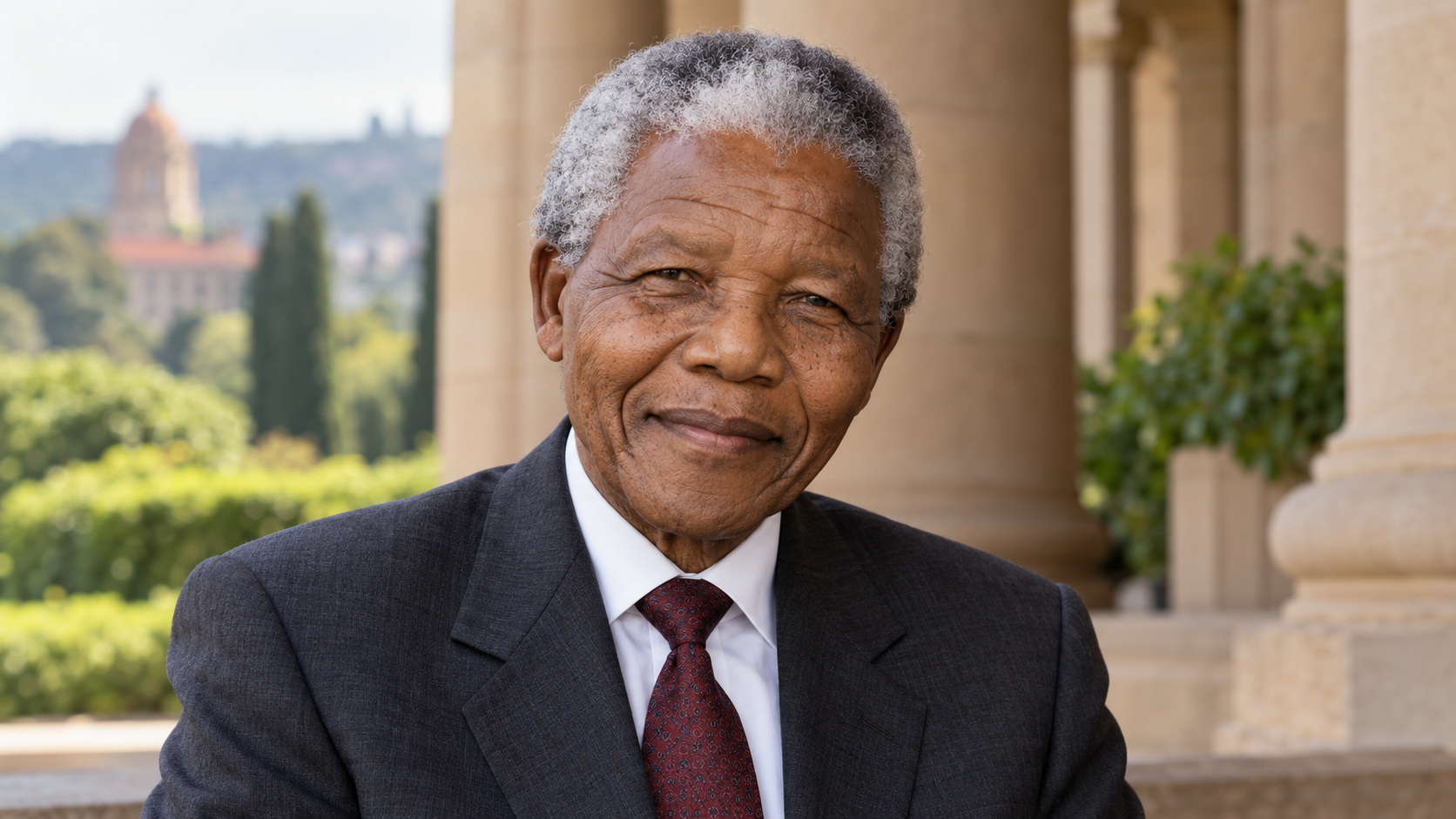
“Let there be justice for all. Let there be peace for all.”
Nelson Mandela delivered these words on May 10, 1994, as he was inaugurated president of a democratic South Africa. The ceremony followed the country’s first election with universal adult suffrage and marked the formal end of apartheid rule. Mandela addressed both the wounds of the past and the work required to build a shared future.
The pairing of justice and peace is deliberate. Peace without equal rights can preserve an unjust order, while justice pursued without a workable political settlement can leave societies trapped in conflict. Mandela’s language treated the two goals as mutually reinforcing foundations for democratic life.
The speech also placed responsibility on ordinary citizens and institutions. A new constitution and an elected government could open a path, but dignity would depend on daily actions, material opportunity, accountable law, and continued nation-building. Reconciliation was presented as active construction rather than collective amnesia.
The quotation remains influential because transitions do not erase inequality or mistrust overnight. It offers a standard against which democratic progress can be measured: whether institutions protect people fairly and whether political disagreement can occur without renewed domination or violence.
Mandela spoke at the Union Buildings in Pretoria after becoming the first president of South Africa’s democratic, nonracial government.
The official government transcript records the paired appeal.
Justice concerns rights, accountability, and fair participation. Peace concerns security and a political order in which conflicts can be resolved without violence.
Either goal can be fragile without the other. The sentence refuses the choice between them.
An inaugural promise cannot by itself remove entrenched economic and social inequality. Institutions, resources, and sustained public participation determine implementation.
The quote remains a useful democratic test precisely because it names aspirations that require continual work after a transition ceremony ends.
Explore more "Quotes of The Day"
Discover more notable quotes from influential voices across politics, science, business, technology, sports, and culture. Each quote offers insight into how ideas, beliefs, and decisions shape the world around us.