

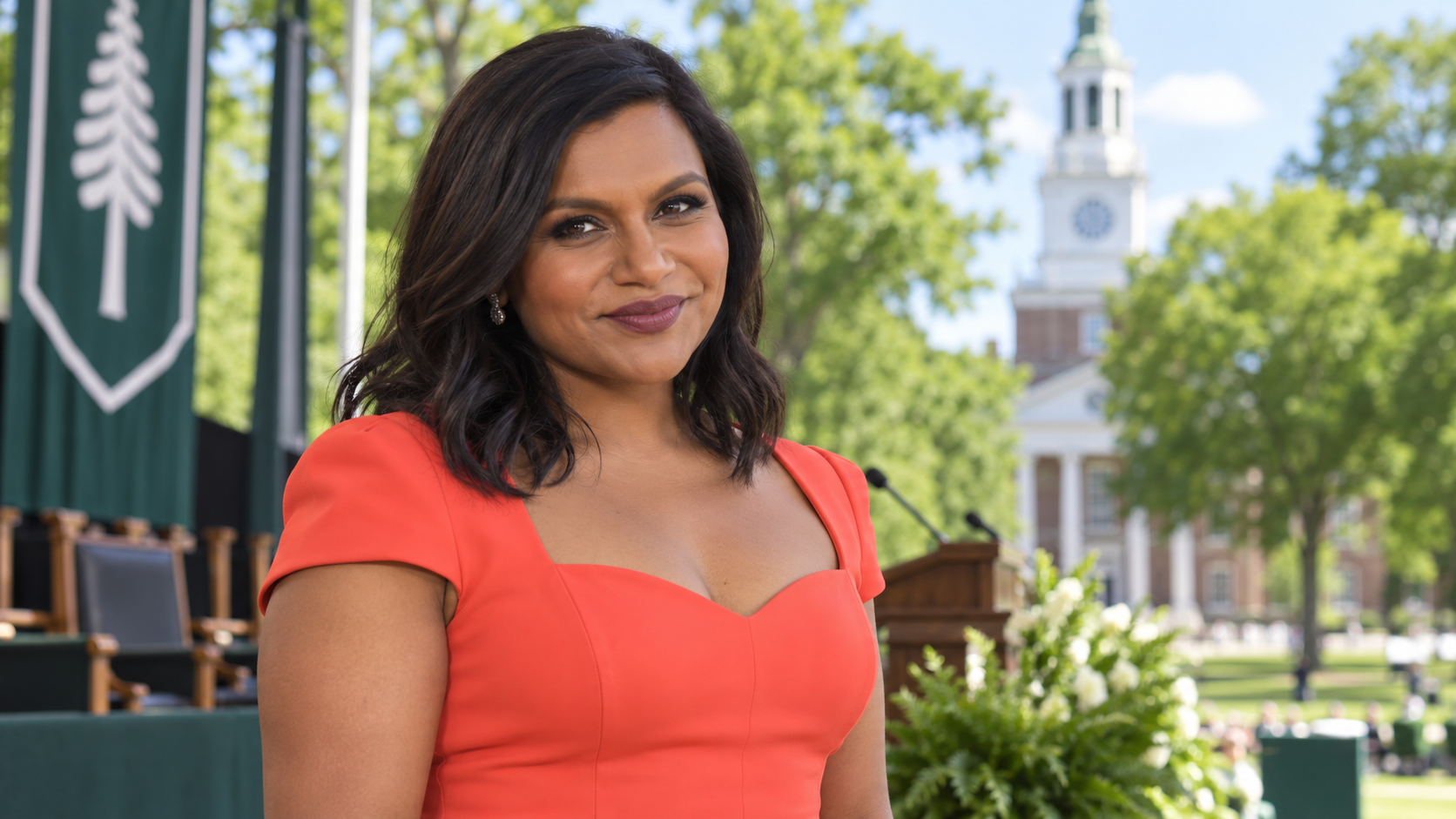
“Don’t let anyone tell you that you can’t do something, but especially not yourself.”
Mindy Kaling ended Dartmouth’s 2018 commencement address with a direct warning: “Don’t let anyone tell you that you can’t do something, but especially not yourself.” The actor, writer, and producer had spent much of the speech using jokes to question polished success stories. She described checklists that did not unfold as planned, the confidence required to enter rooms where she did not fit an expected mold, and the support that made an unconventional life possible. Her closing line distilled those stories into a challenge about the voice closest to every decision.
The quote identifies self-rejection as an especially efficient gatekeeper. Other people may underestimate an idea, but an internal “no” can prevent the application, audition, pitch, or first draft from existing at all. Kaling was not arguing that confidence guarantees success. She was arguing for the right to participate in uncertainty. The person who asks “Why not me?” does not claim entitlement to a prize; that person refuses to treat doubt as evidence before the attempt has supplied any facts.
Confidence also needs boundaries. Ignoring every warning can become recklessness, and criticism sometimes contains knowledge that ambition lacks. The task is to separate a useful constraint from a prediction disguised as certainty. Skills can be developed, plans can be revised, and collaborators can fill genuine gaps. At the same time, money, discrimination, disability, caregiving, and access shape what risks are available to different people. Self-belief should not erase those realities or blame someone for barriers they did not create. It is most durable when paired with preparation, community, and an honest account of cost.
Kaling’s message remains relevant in entertainment and beyond because comparison now arrives continuously. Finished work, career announcements, and curated confidence can make a beginner’s uncertainty feel like proof of unfitness. A better response is to convert the internal veto into a testable question. Instead of “I cannot do this,” ask, “What would I need to learn, and what is the smallest safe attempt?” Send the inquiry, outline the scene, request the meeting, or submit the sample. Invite feedback from someone who wants the work to improve, not someone invested in keeping the role fixed. Then judge the next step from evidence. The point is not to silence every doubt; it is to stop giving doubt final authority. Kaling’s sentence endures because it grants no easy victory. It offers something more useful: permission to enter the process, discover what the work requires, and let reality answer a question that fear had tried to close in advance.
Kaling delivered the line near the end of Dartmouth’s June 2018 commencement address. After joking about careers, family, and abandoned life checklists, she recalled whispering “Why not me?” as a student. Her conclusion asked graduates to become their own supporters while also rooting for others. The setting connected her later success in television and film to a younger self who could not yet see how the path would unfold.
The quote challenges self-rejection before an attempt has produced evidence. It does not mean ignoring expertise, cost, or risk. Useful criticism can expose real gaps, and structural barriers are not cured by confidence. The stronger practice is to distinguish “not yet” from “never,” pair belief with preparation and support, and treat a small attempt as a way to learn rather than a referendum on personal worth.
Curated success can make ordinary uncertainty feel like disqualification. Turn one private “I can’t” into a testable question: What skill, resource, or conversation would make a first attempt possible? Take the smallest safe step this week and ask a constructive person for feedback. Use the result to revise the plan. Doubt may remain present, but it does not need the final vote.
Explore more "Quotes of The Day"
Discover more notable quotes from influential voices across politics, science, business, technology, sports, and culture. Each quote offers insight into how ideas, beliefs, and decisions shape the world around us.