

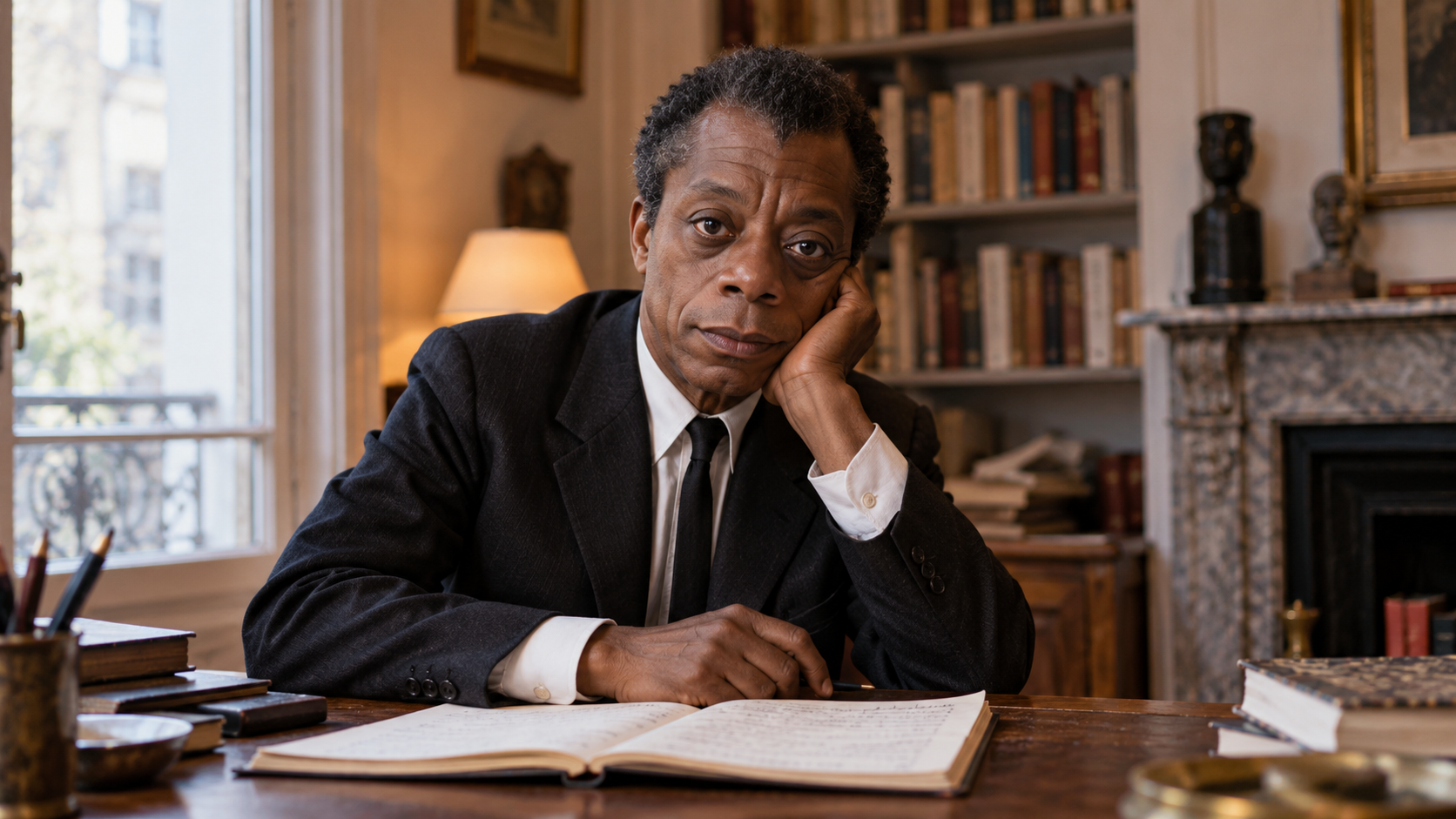
“When you’re writing, you’re trying to find out something which you don’t know.”
In a 1984 Paris Review interview, James Baldwin distinguished the confidence required in a pulpit from the uncertainty required at a desk. “When you’re writing, you’re trying to find out something which you don’t know,” he said. He went further, describing language as a route toward what a writer may not want to discover. The comment came from an author whose fiction, essays, criticism, and speeches repeatedly tested the stories America told about race, sexuality, family, and innocence. For Baldwin, writing was not the delivery system for a conclusion already polished in advance; it was the place where the conclusion became possible.
That view changes the writer’s job. If composition is discovery, a draft does not merely package knowledge; it creates pressure under which assumptions can be examined. Characters refuse the role assigned to them, an image exposes a contradiction, or a sentence leads beyond the outline. This is one reason Baldwin’s work crosses literary and cultural categories so easily. He did not protect an essay from the emotional complexity of fiction, or fiction from the historical urgency of criticism. The unknown was not outside the work waiting to be researched later. It appeared through the sustained attention of making the work itself.
The line does not mean that facts are optional or that instinct can replace reporting. Baldwin read widely, revised severely, and treated language as an ethical responsibility. Discovery without discipline can become self-indulgence; surprise is valuable only when a writer can test it against evidence, structure, and the lives being represented. Nor is every difficult revelation automatically profound. The quote names a posture of openness, not a guarantee of wisdom. A writer must still decide which discoveries are true, which are evasions, and which belong in the finished piece rather than in the private history of the draft.
For contemporary creators, the sentence offers an antidote to content designed only to confirm an existing brand. Begin a project with a real question rather than a message disguised as one. Draft the scene, essay, review, or script far enough to encounter resistance, then mark the moment when the material complicates your first opinion. Research that complication instead of editing it away. The result may be less instantly marketable, but it is more likely to contain the tension that keeps an audience thinking. Baldwin’s challenge is demanding because it makes uncertainty part of the craft. It is also liberating: not knowing is not proof that the work has failed; sometimes it is the condition that allows the work to begin.
Baldwin made the remark in The Paris Review’s Spring 1984 “Art of Fiction” interview. Asked whether writing resembled preaching, he contrasted the preacher’s need to sound certain with the writer’s task of moving toward knowledge that has not yet been reached.
Writing becomes a method of inquiry rather than a container for settled opinions. That openness still requires evidence, revision, and ethical judgment; surprise by itself is not truth. The discovery must survive the discipline of the finished work.
Start the next creative project with a question you cannot yet answer. When a draft produces an uncomfortable complication, research and revise through it rather than forcing the material back toward the safest original claim.
Explore more "Quotes of The Day"
Discover more notable quotes from influential voices across politics, science, business, technology, sports, and culture. Each quote offers insight into how ideas, beliefs, and decisions shape the world around us.