

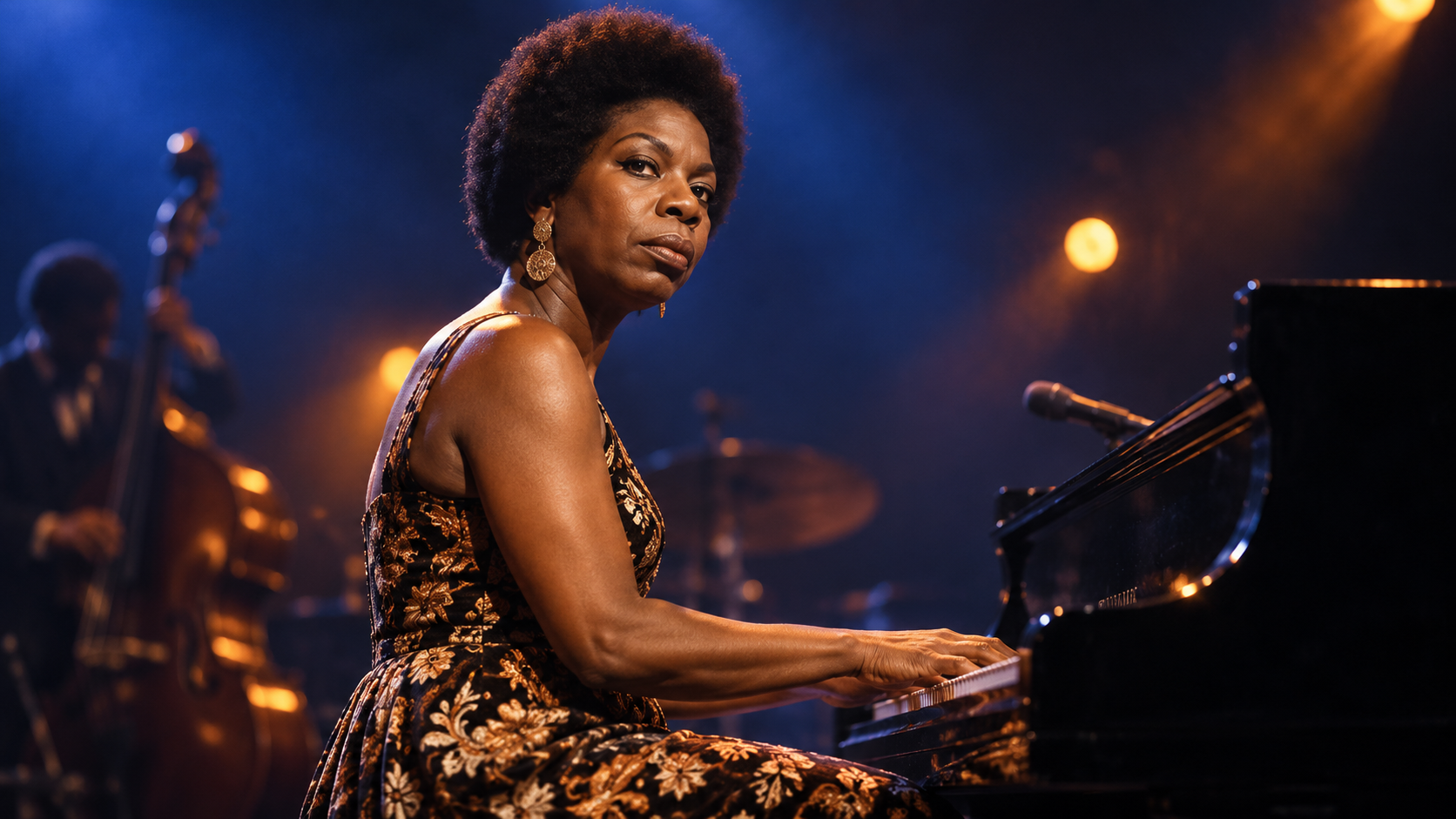
“An artist’s duty, as far as I’m concerned, is to reflect the times.”
In a 1969 interview, Nina Simone said, “An artist’s duty, as far as I’m concerned, is to reflect the times.” By then her music had addressed the murder of Medgar Evers, the Birmingham church bombing, racial violence, Black pride, and the demand for civil rights. She spoke not as an observer adding politics to a separate career, but as a musician whose classical training, jazz vocabulary, popular performance, and public anger had become inseparable. The interview makes clear that “reflect” meant revealing what a society was living through, including realities that entertainment markets might prefer to soften or ignore.
Reflection is more active than a mirror. Simone transformed events through tempo, harmony, repetition, irony, and the force of her performance. A song could mourn, accuse, organize, or make dignity audible. That artistic shaping is why topical work can outlast the news cycle. It does not merely mention an event; it gives listeners a form in which emotion and analysis can coexist. Simone’s statement also broadens the idea of duty. An artist records atmosphere as well as facts: fear, impatience, solidarity, exhaustion, and the distance between official language and lived experience.
The quote is Simone’s position, not a universal command that every artist must produce explicit protest work. Art can serve its time through intimacy, fantasy, humor, formal experiment, or the preservation of joy under pressure. A duty imposed from outside can become another form of control, especially when audiences expect marginalized artists to explain injustice endlessly. Reflection should not be confused with instant reaction either. Speed can flatten complicated events; some work needs distance before it finds an honest form.
In an era of constant commentary, Simone’s challenge is less about posting an opinion than about choosing an artistic response equal to the subject. Creators can ask what their medium can register that a headline cannot. Is it the sound of a crowd becoming a community, the private cost behind a public statistic, or the absurd language used to normalize harm? Then they must decide which formal choices make that reality perceptible. The line endures because it joins freedom with accountability. Artists do not owe audiences one approved message, but their work inevitably stands in relation to its time. Silence, escape, confrontation, and celebration all make claims. Simone asks that those claims be made consciously, with enough craft to remain clearly audible long after the immediate public argument has passed.
Simone made the statement in a 1969 interview during a period when songs such as “Mississippi Goddam” and “To Be Young, Gifted and Black” had made her art central to the cultural expression of the civil-rights and Black freedom movements.
Reflection involves transformation through form, not merely mentioning current events. The line expresses Simone’s artistic ethic, but it should not force every creator into explicit protest or require marginalized artists to educate audiences continually.
Ask what your medium can reveal that ordinary commentary cannot: an atmosphere, contradiction, private cost, or shared feeling. Build the work around that distinctive capacity instead of attaching a topical reference to an otherwise unchanged form.
Explore more "Quotes of The Day"
Discover more notable quotes from influential voices across politics, science, business, technology, sports, and culture. Each quote offers insight into how ideas, beliefs, and decisions shape the world around us.