

“Let’s all be on the right side of history.”
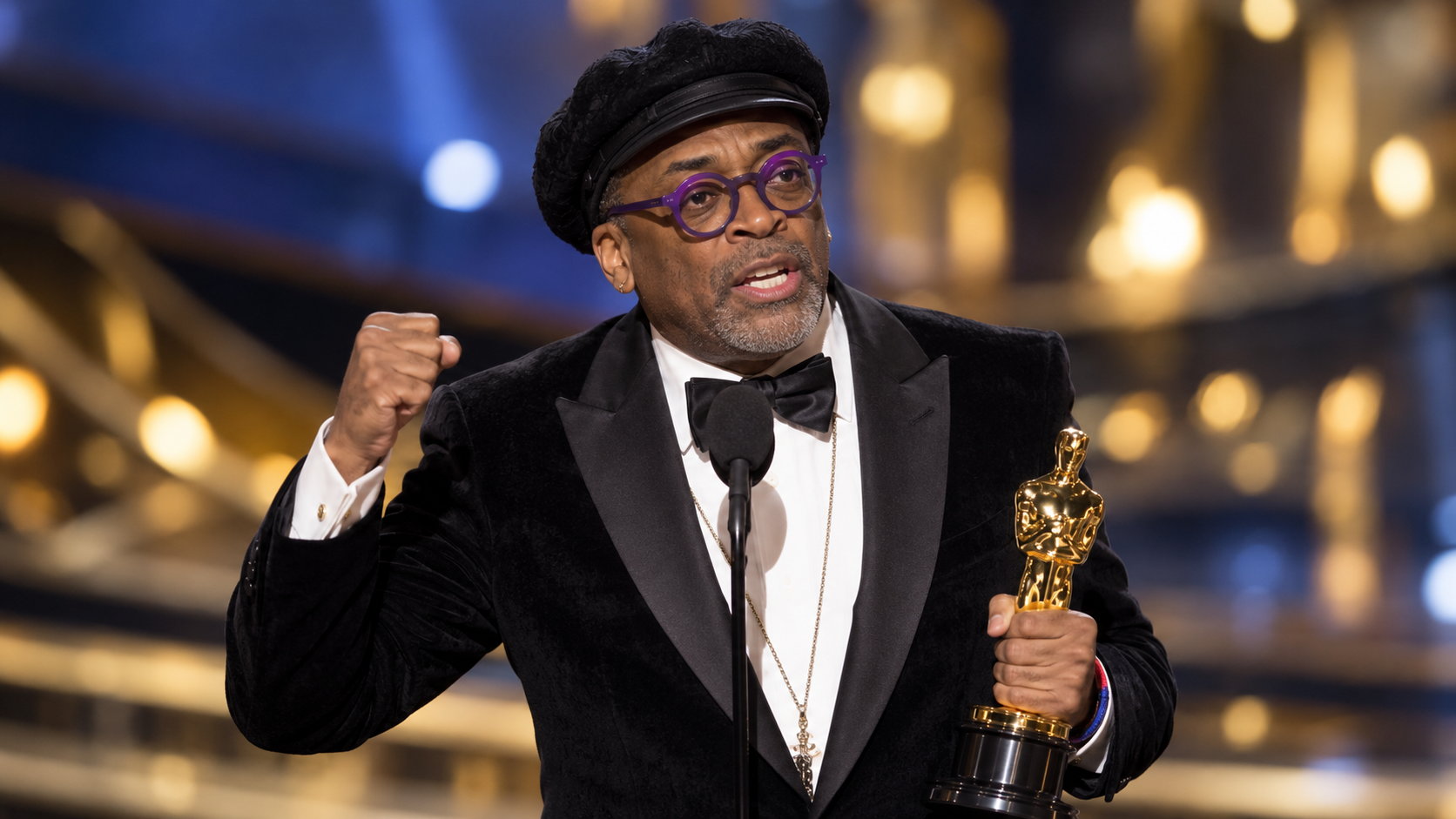
Spike Lee said, “Let’s all be on the right side of history.” in 2019. Lee ended his 2019 Academy Award acceptance speech for BlacKkKlansman with a call to civic action. He connected the moment to the forced arrival of enslaved Africans in Virginia, his grandmother’s sacrifices, and an approaching presidential election. The line was not a neutral flourish; it placed filmmaking, memory, and voting inside the same argument about historical responsibility. Read in full, the line belongs to a specific public moment rather than a floating piece of motivational language. That setting matters because it shows what problem the speaker was naming and which audience was being asked to respond.
The quotation’s force lies in the way it compresses a larger creative argument. History in this sentence is not a distant judge that automatically rewards good intentions. It is the record produced by present choices: which stories are funded, which facts are remembered, and which institutions people support. Popular culture helps construct that record by giving events faces, rhythms, heroes, and omissions. Lee asks audiences to recognize participation even when a choice feels small or ordinary. In popular culture, a short sentence travels farther than its original speech, but its value depends on keeping the work, relationships, and history around it visible. The line becomes more useful when it changes how a decision is made rather than merely decorating an image.
The useful reading also needs limits. Claims about being on the right side of history can become self-congratulatory. Future approval is never guaranteed, and moral language should not replace evidence about current harm. The phrase is most useful when it creates accountability rather than certainty. It should lead to questions about who bears the cost of a decision now, not merely whether the decision will look admirable in retrospect. Context protects the quotation from becoming a slogan that asks individuals to solve every structural problem alone. It also preserves room for disagreement, revision, and circumstances the original stage could not contain. A durable lesson should increase agency without simplifying the lives to which it is applied.
For a practical application, Choose one cultural or civic issue attached to your work and identify a concrete decision within reach: a vote, credit, hiring choice, correction, donation, or public record. Ask the people most affected what support would be useful. Then document the commitment so it can be evaluated later. Lee’s appeal becomes meaningful when historical language produces present-tense responsibility instead of a flattering identity. The aim is a repeatable behavior, not a burst of inspiration that disappears by tomorrow. A quotation earns its place in daily life when it sharpens observation, creates a better question, or supports a more responsible next choice. That is how a famous line can remain alive after the applause and the headline have passed.
Lee ended his 2019 Academy Award acceptance speech for BlacKkKlansman with a call to civic action. He connected the moment to the forced arrival of enslaved Africans in Virginia, his grandmother’s sacrifices, and an approaching presidential election. The line was not a neutral flourish; it placed filmmaking, memory, and voting inside the same argument about historical responsibility.
Claims about being on the right side of history can become self-congratulatory. Future approval is never guaranteed, and moral language should not replace evidence about current harm. The phrase is most useful when it creates accountability rather than certainty. It should lead to questions about who bears the cost of a decision now, not merely whether the decision will look admirable in retrospect.
Choose one cultural or civic issue attached to your work and identify a concrete decision within reach: a vote, credit, hiring choice, correction, donation, or public record. Ask the people most affected what support would be useful. Then document the commitment so it can be evaluated later. Lee’s appeal becomes meaningful when historical language produces present-tense responsibility instead of a flattering identity.
Explore more "Quotes of The Day"
Discover more notable quotes from influential voices across politics, science, business, technology, sports, and culture. Each quote offers insight into how ideas, beliefs, and decisions shape the world around us.