

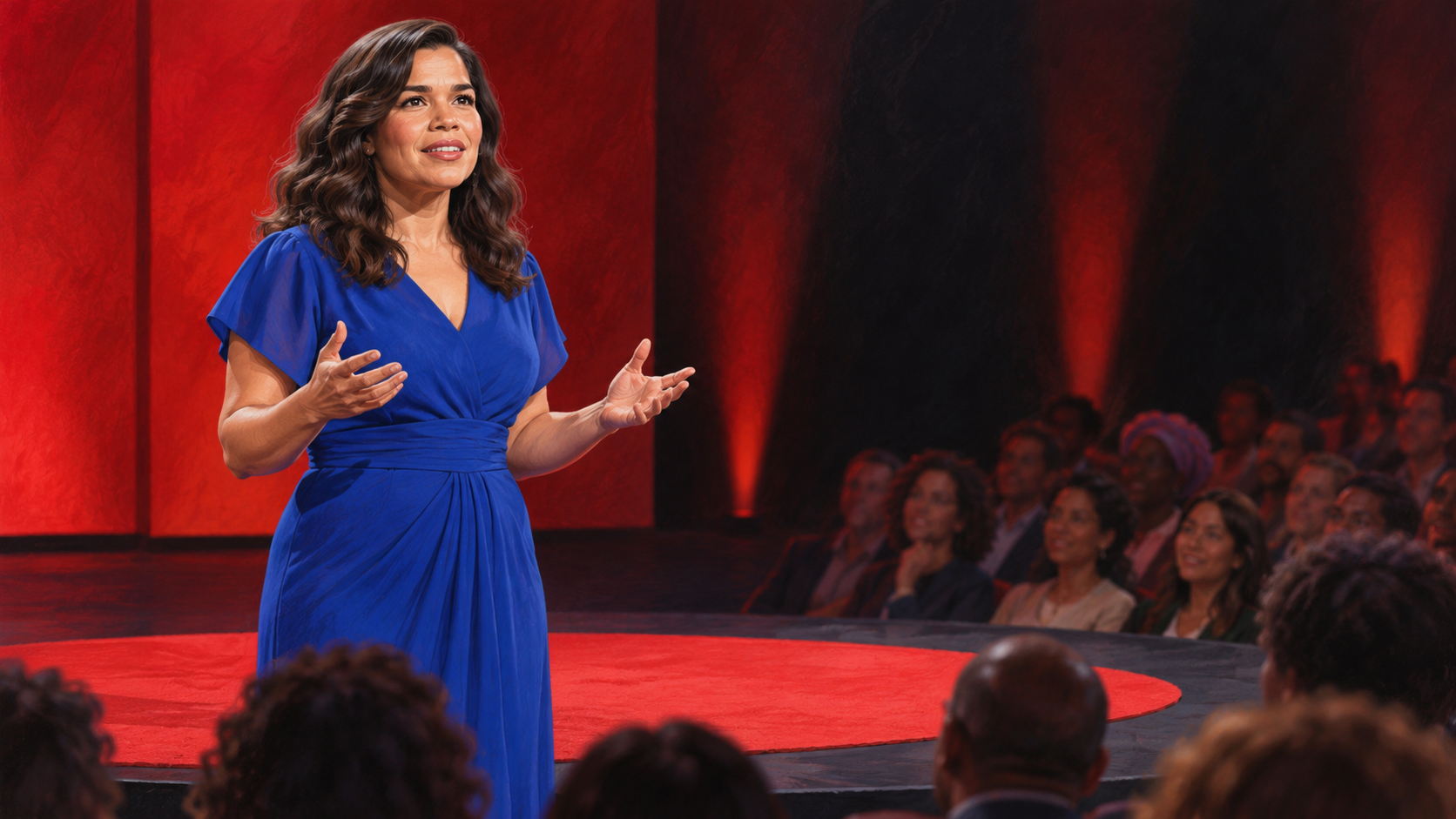
“My identity is not my obstacle. My identity is my superpower.”
America Ferrera delivered this line in a 2019 TED talk about navigating Hollywood as a Latina actor. She recalled being told to sound more Latino, facing assumptions about what roles people who looked like her could carry, and trying to change herself to fit an industry’s limited imagination. The turning point was recognizing that her identity had not created the obstacle. The obstacle was a system that treated one audience, appearance, and cultural experience as universal while classifying others as niche.
That distinction redirects both confidence and accountability. If identity itself is the problem, the burden falls on the performer to become less recognizable as who she is. If the system is the problem, executives, creators, critics, and audiences must examine the standards by which talent and marketability are judged. Ferrera also presents specificity as an artistic resource. Language, family history, humor, and social position can produce characters with textures unavailable to a story built from a generic center.
Superpower language can become another demand to perform exceptional value. Nobody should have to turn discrimination into inspiration or prove that every aspect of identity improves a product. People also inhabit several identities that can create different kinds of access and exclusion. The quote works best when it removes shame without simplifying those differences. Pride does not replace institutional reform, and one successful figure cannot stand as evidence that the gate has opened equally for everyone.
Review one creative or hiring decision that uses fit, relatability, or broad appeal as a reason. Define what the term actually means, whose familiarity sets the standard, and what evidence supports the assumption. Invite the intended audience into the decision early and compensate that expertise. Ferrera’s declaration becomes more than affirmation when organizations stop asking people to overcome their identities and begin redesigning processes that had mistaken exclusion for common sense. The result is not only fairer access; it is a larger vocabulary of stories. Track the outcome after the launch instead of returning to assumption. Audiences are often more curious than market categories allow, and specific work can travel precisely because its emotional stakes are clear. Evidence should be permitted to revise the old definition of universal. Keep failures in proportion as well. One disappointing project should be allowed to remain one project, not become a verdict on every creator perceived to share its identity. That ordinary freedom to fail is part of equality.
Ferrera gave the quotation in her 2019 TED talk My identity is a superpower—not an obstacle. She described a career shaped by Hollywood’s narrow ideas about Latina performers and audiences.
The statement followed years of trying to meet conflicting expectations. Ferrera realized that changing herself could not solve an industry structure that defined universality through a limited set of identities.
The phrase remains influential in conversations about representation. Its limit is that identity should not have to produce exceptional commercial value; equitable access is necessary even when difference is not packaged as a superpower.
Explore more "Quotes of The Day"
Discover more notable quotes from influential voices across politics, science, business, technology, sports, and culture. Each quote offers insight into how ideas, beliefs, and decisions shape the world around us.