

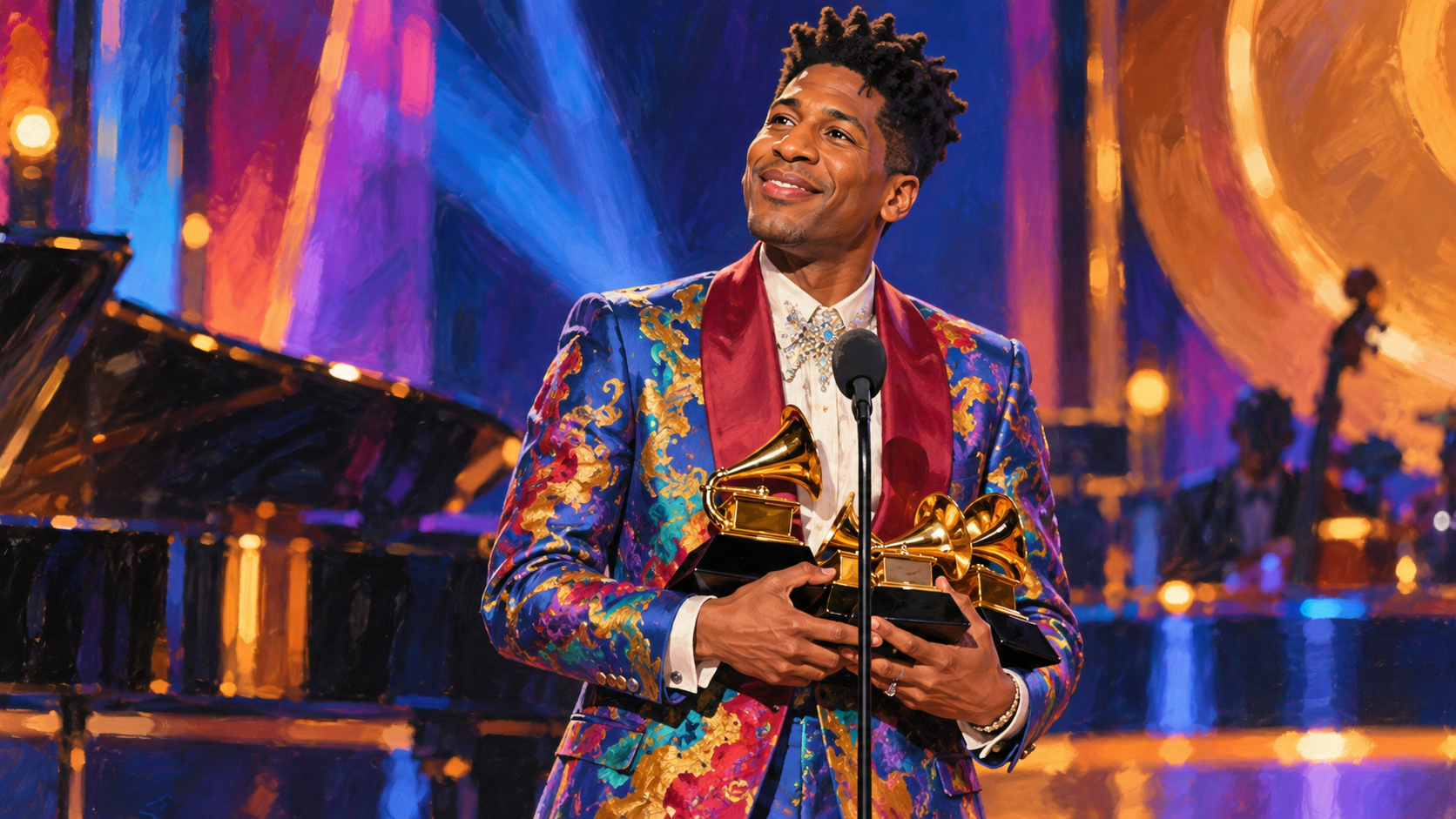
“There is no best musician, best artist, best dancer, best actor.”
Jon Batiste said this while accepting the 2022 Grammy for album of the year for We Are. Standing inside a ceremony organized around winners, he questioned the premise that art can be reduced to a single hierarchy. Batiste described music as something that finds people when they need it and emphasized that each artist has a distinct path. The comment did not reject the honor he had received; it used the honor to separate recognition from an absolute judgment about every other musician in the category.
Awards are useful cultural events because they focus attention, create shared conversation, and can materially change a career. Yet the language of best compresses unlike achievements into one result. A quiet record that accompanies grief, a dance track that unites a room, and an experimental work that changes another musician’s vocabulary may succeed through different values. Batiste’s line reminds audiences that art is relational. Meaning arises between a work and a listener, and that meeting cannot be completely measured by votes, sales, technical difficulty, or prestige.
Refusing a universal best does not make criticism pointless. People can evaluate craft, innovation, influence, and how well a work fulfills its aims. Institutions also must make decisions about prizes and resources. The danger is treating a verdict produced by a particular electorate and moment as a permanent map of value. Celebratory humility should not obscure inequity either; who gets nominated, promoted, and preserved still deserves scrutiny even if no ranking can capture artistic worth.
After encountering a ranked list or award result, choose one work outside the winning position and describe the specific experience it offers that the winner does not. Compare aims before comparing execution. If you recommend a favorite, say for whom and for what moment it might matter. Batiste’s speech allows excellence to remain plural without becoming vague. The reward is a culture in which recognition can guide discovery but does not close the door, and where another person’s connection to a different work need not threaten your own. Curators and critics can make the same adjustment by explaining criteria rather than presenting taste as natural law. A transparent judgment teaches audiences how to listen, while a final-sounding ranking can shrink curiosity to the question of who beat whom. Artists gain freedom too. If no single ladder measures every kind of contribution, a creator can pursue the work’s actual purpose instead of imitating whatever won last year.
Batiste delivered the line at the 2022 Grammys after We Are won album of the year. He questioned absolute rankings from the center of an event built to produce them.
The statement reflected his view that music reaches listeners according to their own needs and timing. Different artists can therefore achieve forms of value that are not directly interchangeable.
The quote remains useful in an era of constant charts and lists. It does not end criticism or awards; it asks that their results be treated as situated judgments rather than final definitions of worth.
Explore more "Quotes of The Day"
Discover more notable quotes from influential voices across politics, science, business, technology, sports, and culture. Each quote offers insight into how ideas, beliefs, and decisions shape the world around us.