

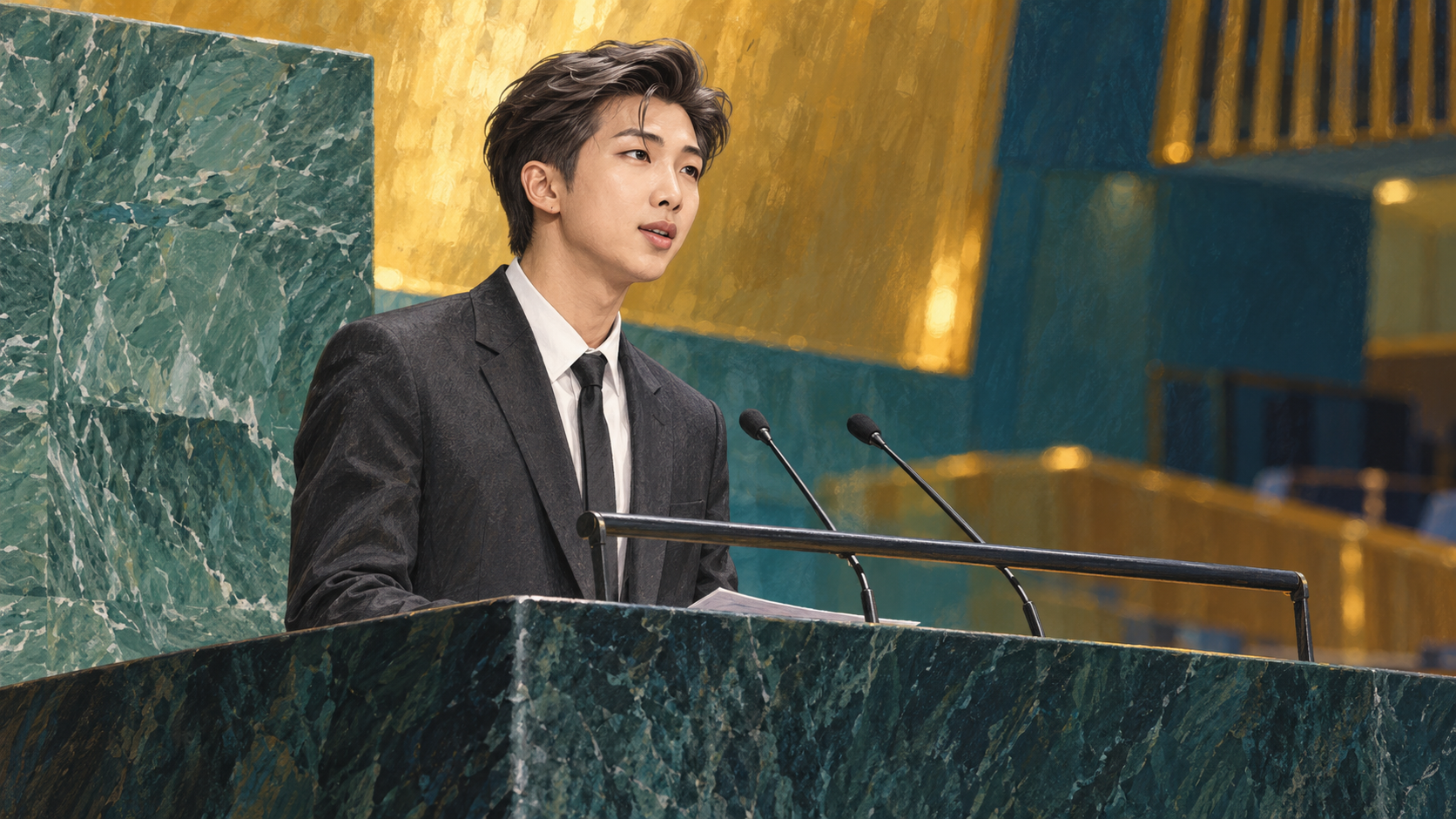
“No matter who you are, where you’re from, your skin colour, gender identity: speak yourself.”
RM, the leader of BTS, delivered this invitation at the United Nations in 2018 during the launch of Generation Unlimited, a youth initiative connected with UNICEF. Speaking in English, he described growing up as Kim Nam-joon in Ilsan, South Korea, losing touch with his own voice amid others’ expectations, and gradually learning to accept the mistakes and fears within his story. The final appeal expanded that personal journey outward, addressing listeners across nationality, race, and gender identity and asking them to name who they are.
Speak yourself develops the group’s Love Yourself message by adding public expression to private acceptance. Pop music often reaches audiences before formal institutions do, giving fans a shared vocabulary for emotions they may struggle to discuss elsewhere. RM’s speech used that cultural reach to frame identity as a story still being authored rather than a flaw to conceal. Voice in this sense includes art, conversation, language choice, and the courage to describe one’s experience without waiting for it to resemble somebody else’s approved narrative.
Speaking is not equally safe for everyone, and visibility can expose young people to harassment, family conflict, surveillance, or discrimination. The quote should not become an obligation to disclose identity before a person is ready. Celebrity testimony also cannot substitute for confidential support, legal protection, or mental-health care. Its responsible meaning includes the right to choose audience, timing, and form. A whispered truth to one trusted person can be as genuine as a statement made before millions.
Begin by writing a short account of yourself that does not lead with achievement or apology. Include one influence, one uncertainty, and one value you intend to carry forward. Decide whether it belongs in a private journal, a conversation, or a creative work, and respect the level of exposure that feels safe. RM’s line remains powerful because it does not prescribe the words. It offers the microphone in principle and recognizes that a person’s history—including mistakes—can become material for a voice rather than evidence that the voice should be withheld. Listening completes the invitation. If many people are encouraged to speak, communities need habits for receiving unfamiliar stories without instantly correcting them. Ask one open question, allow translation time, and resist turning another person’s account into a debate about your own identity. Translation itself can be creative rather than secondary. When words cross languages and fan communities, preserve nuance, credit translators, and acknowledge meanings that do not fit neatly into one English phrase.
RM delivered the quotation at the United Nations in September 2018 as BTS joined UNICEF in support of the Generation Unlimited youth initiative and continued the Love Myself campaign.
The statement followed his account of childhood dreams, lost confidence, mistakes, and the gradual recovery of his own voice. He transformed a personal story into a worldwide invitation.
The phrase remains important within global fan culture and youth advocacy. Its necessary limit is safety: nobody owes public disclosure, and speaking oneself may happen privately, gradually, or through art.
Explore more "Quotes of The Day"
Discover more notable quotes from influential voices across politics, science, business, technology, sports, and culture. Each quote offers insight into how ideas, beliefs, and decisions shape the world around us.