

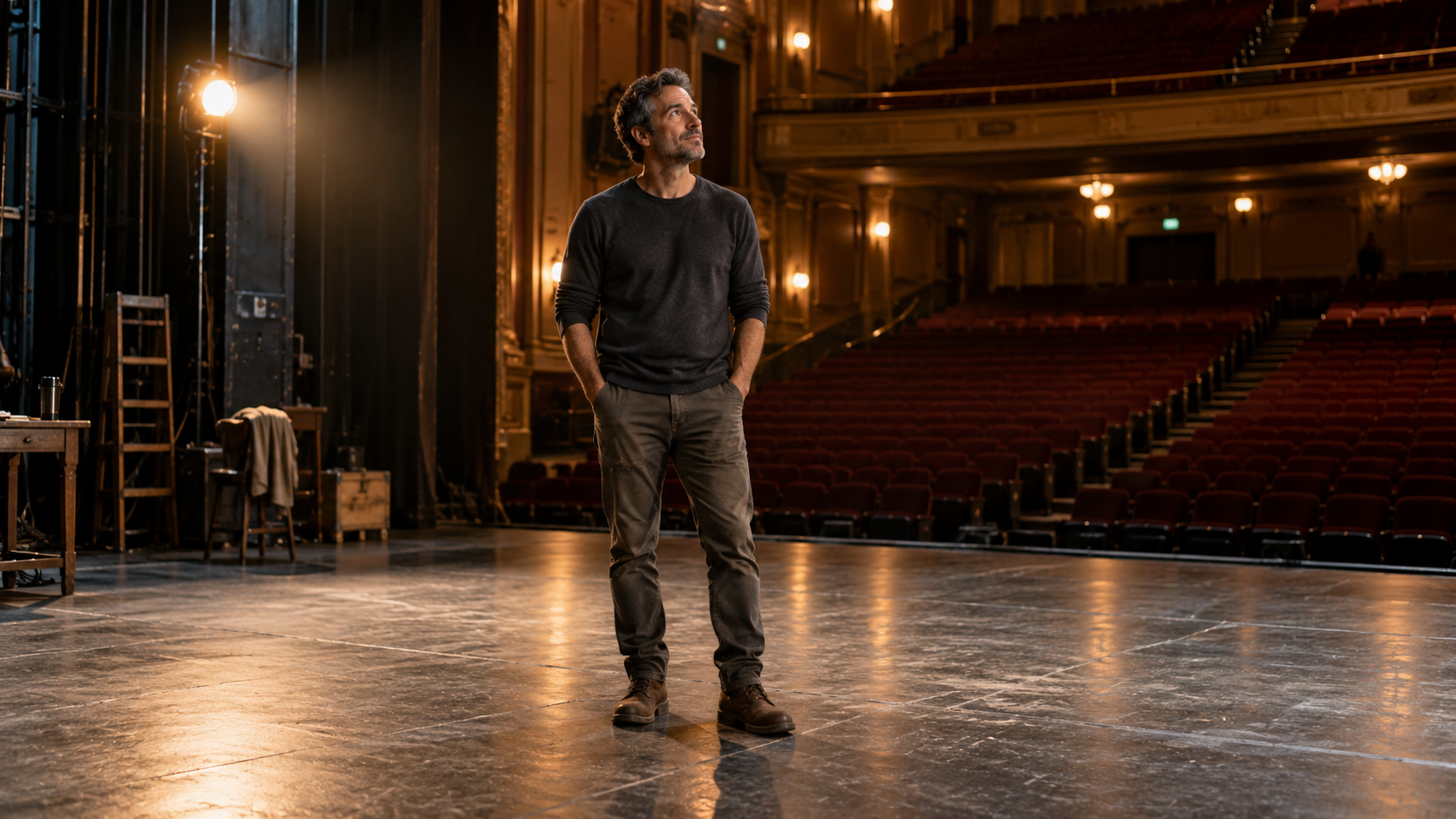
“Things didn’t come easily to me, but there was a facility that I didn’t appreciate at the time until it stopped.”
Fraser spoke after winning best actor for The Whale, roughly three decades after entering the film business. His emotional remarks acknowledged both struggle and a capacity for work that he had once taken for granted, framing the award as recognition after a long interruption. The wording is traceable to a documented public setting rather than a later quotation graphic or anonymous compilation. Reading the surrounding remarks matters because the event, audience, and neighboring ideas determine what the compact sentence can responsibly carry.
“Facility” names more than talent. It includes health, confidence, access, momentum, relationships, and the ordinary ability to keep practicing a craft. The line recognizes a common human pattern: people often understand an enabling condition only after it becomes unavailable or uncertain. Read closely, the line does not promise an effortless result. Its force comes from directing attention toward a choice, relationship, or condition that the larger speech makes visible. Popular culture can send a short phrase much farther than the full remarks, so a fair interpretation keeps the memorable wording connected to its original argument.
A comeback story can tempt audiences to turn structural difficulty into an uplifting individual arc. Careers are shaped by gatekeepers, workplace safety, health, family circumstances, and chance as well as resilience. Gratitude for restored opportunity should not romanticize the losses or imply that everyone receives a second opening. That limitation is essential, because an admired performer’s experience is evidence of one perspective, not a universal rule. A memorable sentence can open reflection, but it should never substitute for history, expertise, resources, or accountability. Context turns inspiration into a more honest standard and prevents admiration from flattening the people or problems being discussed.
The quote suggests a present-tense inventory. Which abilities, collaborators, and forms of access make today’s work possible, and how can they be protected before crisis exposes their value? Creative industries can build healthier careers by allowing pauses, supporting recovery, and resisting the idea that uninterrupted visibility is the only proof of worth. A practical way to use the line is to convert its value into one observable habit, decision, or question rather than merely repeating it. In creative life, ideals become credible through working conditions, credit, access, and sustained attention. The lasting value is not celebrity alone; it is the invitation to notice more carefully and act with greater purpose. That follow-through preserves the quotation’s energy while testing it against circumstances beyond the stage, screen, or auditorium where the words first drew attention. Repetition matters less than the quality of the next concrete choice.
Fraser spoke after winning best actor for The Whale, roughly three decades after entering the film business. His emotional remarks acknowledged both struggle and a capacity for work that he had once taken for granted, framing the award as recognition after a long interruption.
“Facility” names more than talent. It includes health, confidence, access, momentum, relationships, and the ordinary ability to keep practicing a craft. The line recognizes a common human pattern: people often understand an enabling condition only after it becomes unavailable or uncertain.
A comeback story can tempt audiences to turn structural difficulty into an uplifting individual arc. Careers are shaped by gatekeepers, workplace safety, health, family circumstances, and chance as well as resilience. Gratitude for restored opportunity should not romanticize the losses or imply that everyone receives a second opening.
Explore more "Quotes of The Day"
Discover more notable quotes from influential voices across politics, science, business, technology, sports, and culture. Each quote offers insight into how ideas, beliefs, and decisions shape the world around us.