

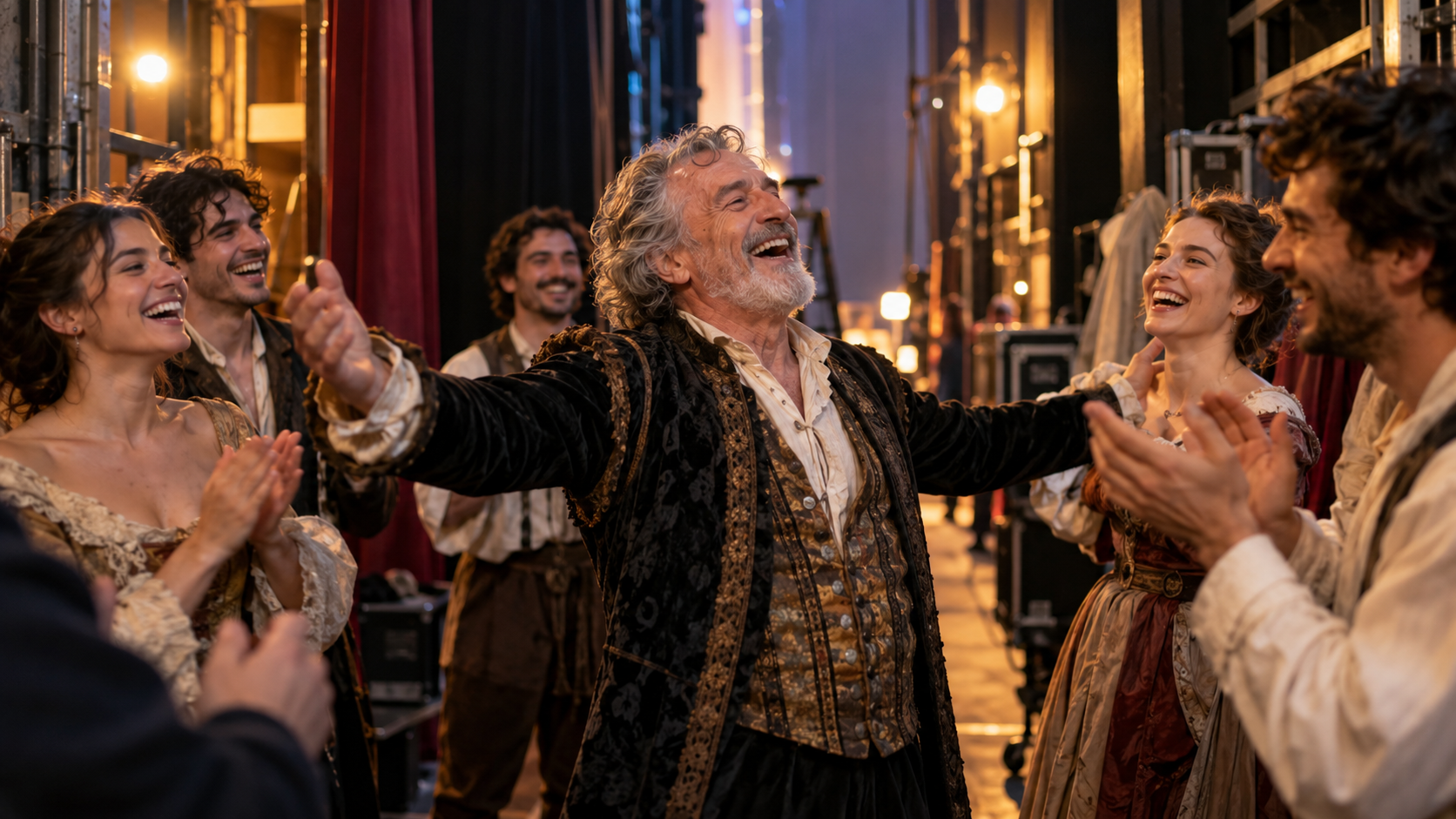
“This is a moment of joy and I want to kiss everybody.”
Benigni spoke after Life Is Beautiful won the Academy Award for international feature. His exuberant trip to the stage and expansive speech mixed comic energy, thanks to collaborators and family, literary references, and a dedication to people who lost their lives. The wording is traceable to a documented public setting rather than a later quotation graphic or anonymous compilation. Reading the surrounding remarks matters because the event, audience, and neighboring ideas determine what the compact sentence can responsibly carry.
The sentence makes joy relational. He does not describe happiness as private possession; he wants to return it to the room that helped create the moment. The performance also shows how an acceptance speech can reflect an artist’s distinctive physical and verbal style. Read closely, the line does not promise an effortless result. Its force comes from directing attention toward a choice, relationship, or condition that the larger speech makes visible. Popular culture can send a short phrase much farther than the full remarks, so a fair interpretation keeps the memorable wording connected to its original argument.
The film’s comic treatment of the Holocaust has long required careful discussion, and celebration must not displace historical accuracy or the voices of survivors and scholars. Benigni’s joy belongs to the award moment; it should not be mistaken for a simple emotional frame for genocide. That limitation is essential, because an admired performer’s experience is evidence of one perspective, not a universal rule. A memorable sentence can open reflection, but it should never substitute for history, expertise, resources, or accountability. Context turns inspiration into a more honest standard and prevents admiration from flattening the people or problems being discussed.
The quote can prompt artists to ask how joy circulates without erasing the seriousness of a work’s subject. Gratitude can be exuberant and still name collaborators, sources, and historical responsibility. Audiences can enjoy the memorable ceremony while continuing into museums, testimony, and scholarship. A practical way to use the line is to convert its value into one observable habit, decision, or question rather than merely repeating it. In creative life, ideals become credible through working conditions, credit, access, and sustained attention. The lasting value is not celebrity alone; it is the invitation to notice more carefully and act with greater purpose. That follow-through preserves the quotation’s energy while testing it against circumstances beyond the stage, screen, or auditorium where the words first drew attention. Repetition matters less than the quality of the next concrete choice.
Benigni spoke after Life Is Beautiful won the Academy Award for international feature. His exuberant trip to the stage and expansive speech mixed comic energy, thanks to collaborators and family, literary references, and a dedication to people who lost their lives.
The sentence makes joy relational. He does not describe happiness as private possession; he wants to return it to the room that helped create the moment. The performance also shows how an acceptance speech can reflect an artist’s distinctive physical and verbal style.
The film’s comic treatment of the Holocaust has long required careful discussion, and celebration must not displace historical accuracy or the voices of survivors and scholars. Benigni’s joy belongs to the award moment; it should not be mistaken for a simple emotional frame for genocide.
Explore more "Quotes of The Day"
Discover more notable quotes from influential voices across politics, science, business, technology, sports, and culture. Each quote offers insight into how ideas, beliefs, and decisions shape the world around us.