

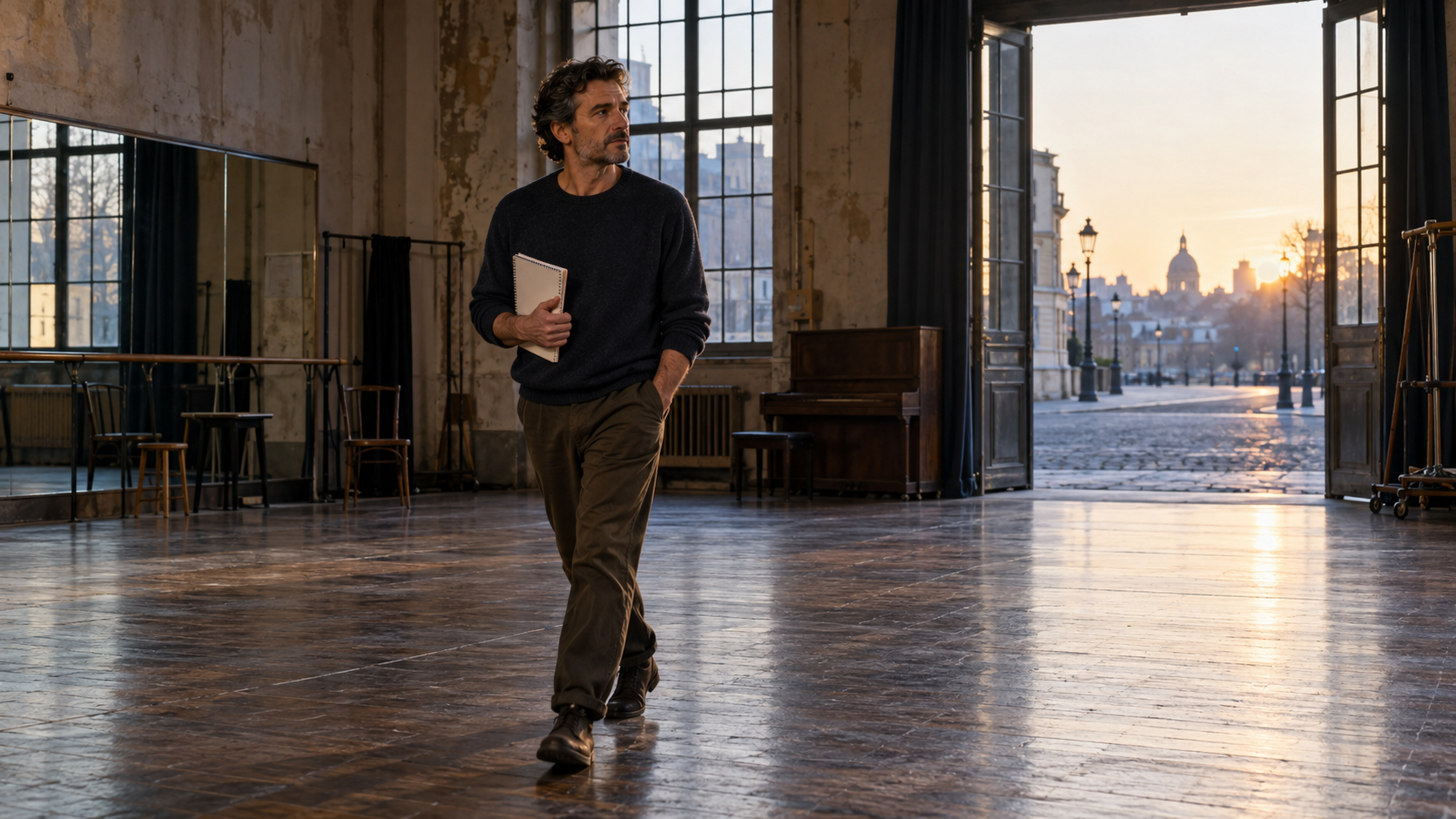
“There is no path till you walk it.”
Hawke used the line in a TED talk about giving oneself permission to be creative. Drawing on formative encounters with music, acting, and artistic community, he described expression as a way people understand themselves and connect during difficult periods. The wording is traceable to a documented public setting rather than a later quotation graphic or anonymous compilation. Reading the surrounding remarks matters because the event, audience, and neighboring ideas determine what the compact sentence can responsibly carry.
The path is not a hidden route waiting for perfect certainty. It emerges through decisions, attempts, corrections, and relationships. For a creator, practice produces information that planning cannot supply: what holds attention, which constraints help, and what the work may become. Read closely, the line does not promise an effortless result. Its force comes from directing attention toward a choice, relationship, or condition that the larger speech makes visible. Popular culture can send a short phrase much farther than the full remarks, so a fair interpretation keeps the memorable wording connected to its original argument.
Action without preparation can waste resources or expose others to avoidable risk. Some paths are restricted by money, disability, discrimination, or caregiving, not a lack of courage. Permission is meaningful when paired with access, craft, feedback, and conditions that allow experimentation to continue. That limitation is essential, because an admired performer’s experience is evidence of one perspective, not a universal rule. A memorable sentence can open reflection, but it should never substitute for history, expertise, resources, or accountability. Context turns inspiration into a more honest standard and prevents admiration from flattening the people or problems being discussed.
A practical version is to reduce the first step until it can be taken now: write one scene, rehearse one minute, make one sketch, or ask one collaborator. Review what the attempt teaches before choosing the next step. Direction becomes a record of movement rather than a demand for advance certainty. A practical way to use the line is to convert its value into one observable habit, decision, or question rather than merely repeating it. In creative life, ideals become credible through working conditions, credit, access, and sustained attention. The lasting value is not celebrity alone; it is the invitation to notice more carefully and act with greater purpose. That follow-through preserves the quotation’s energy while testing it against circumstances beyond the stage, screen, or auditorium where the words first drew attention. Repetition matters less than the quality of the next concrete choice.
Hawke used the line in a TED talk about giving oneself permission to be creative. Drawing on formative encounters with music, acting, and artistic community, he described expression as a way people understand themselves and connect during difficult periods.
The path is not a hidden route waiting for perfect certainty. It emerges through decisions, attempts, corrections, and relationships. For a creator, practice produces information that planning cannot supply: what holds attention, which constraints help, and what the work may become.
Action without preparation can waste resources or expose others to avoidable risk. Some paths are restricted by money, disability, discrimination, or caregiving, not a lack of courage. Permission is meaningful when paired with access, craft, feedback, and conditions that allow experimentation to continue.
Explore more "Quotes of The Day"
Discover more notable quotes from influential voices across politics, science, business, technology, sports, and culture. Each quote offers insight into how ideas, beliefs, and decisions shape the world around us.