

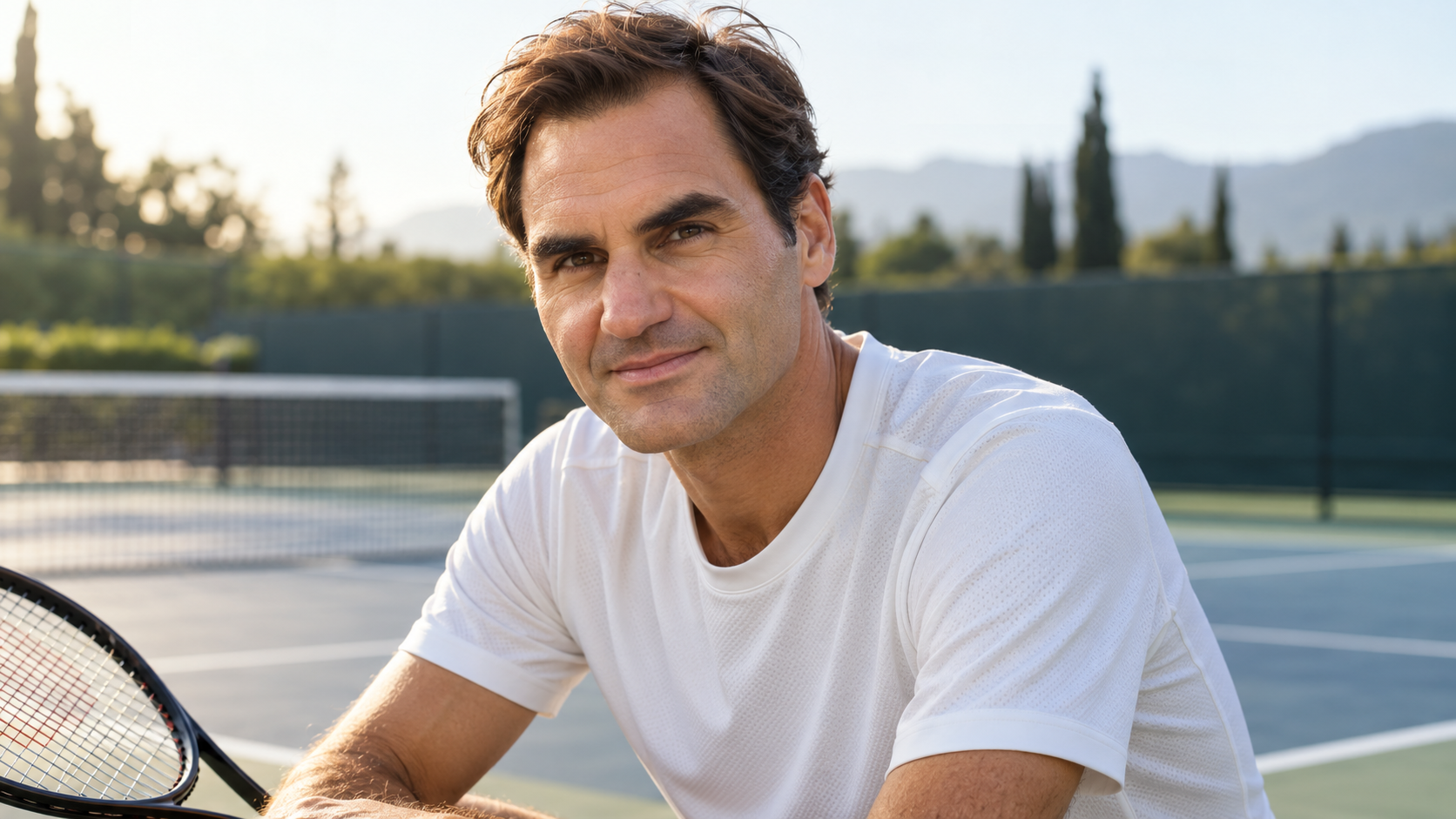
“Effortless”… is a myth.
Roger Federer made “effortless” tennis part of his public image, but he challenged that description in his June 9, 2024, commencement address at Dartmouth College. Speaking after the end of a professional career that included 20 major singles titles and eight Wimbledon championships, Federer organized the address around three “tennis lessons.” His first was blunt: “Effortless”… is a myth. The line did not dismiss natural ability. It corrected the audience’s view of polished performance by pointing toward the practice, frustration, and self-control that spectators rarely see.
Federer explained that praise for his apparently easy style sometimes irritated him. Early in his career, he was known for emotional outbursts, and an opponent’s public doubt about his mental discipline helped him recognize how much work remained. He responded by training harder and learning to sustain concentration after the first two hours of a match, when fatigue could unsettle both technique and judgment. The graceful strokes that later looked automatic were therefore not evidence that effort had disappeared. They were evidence that repetition and discipline had been absorbed into performance. His account turns composure into a learned skill. The calm visible late in his career was not his starting point; it was a competitive tool developed through feedback, physical preparation, and repeated exposure to long matches.
The speech also used statistics to complicate the usual story of dominance. Federer said he won nearly 80 percent of his 1,526 singles matches, yet only about 54 percent of the individual points he played. A champion could lose almost half the points and still build an extraordinary career by recovering, choosing the next response, and refusing to treat every error as a verdict. “Effortless” is a myth because the finished performance hides countless adjustments. It is also a myth because success in tennis is not a clean march from talent to victory; it is a pattern assembled from losses as well as wins.
That distinction matters throughout sports. Broadcasts compress preparation into highlights, and young athletes can mistake a veteran’s economy of movement for a gift that never required instruction, conditioning, analysis, or rest. Federer’s lesson encourages respect for invisible work without pretending that effort alone guarantees equal results. Coaching, health, resources, opportunity, and luck still shape careers. The quote is most useful when it makes excellence more concrete: apparent ease may be the surface produced by thousands of deliberate choices, including the choice to learn from the points that did not go as planned. It also helps coaches praise controllable habits rather than telling developing players that the best performers simply possess something others do not.
Federer delivered the line at Dartmouth’s 2024 commencement, where he translated lessons from his tennis career for graduates entering a new stage of life.
He immediately explained that descriptions of his “effortless” play had obscured years of harder training, emotional development, and work completed before tournaments began. Primary source; Additional source.
The statement separates a polished result from the process that created it. Technique can look natural only after repetition has made difficult decisions and movements more reliable.
Federer was not claiming that effort makes outcomes equal or that talent is irrelevant. His own point-by-point statistics showed that elite success can coexist with frequent losses.
Modern sports media favors highlights, which can hide the conditioning, coaching, recovery, and tactical study behind a few memorable shots.
The quote gives athletes and fans a healthier lens: admire grace, but also recognize the sustained practice and support systems that allow grace to appear under pressure.
Explore more "Quotes of The Day"
Discover more notable quotes from influential voices across politics, science, business, technology, sports, and culture. Each quote offers insight into how ideas, beliefs, and decisions shape the world around us.