

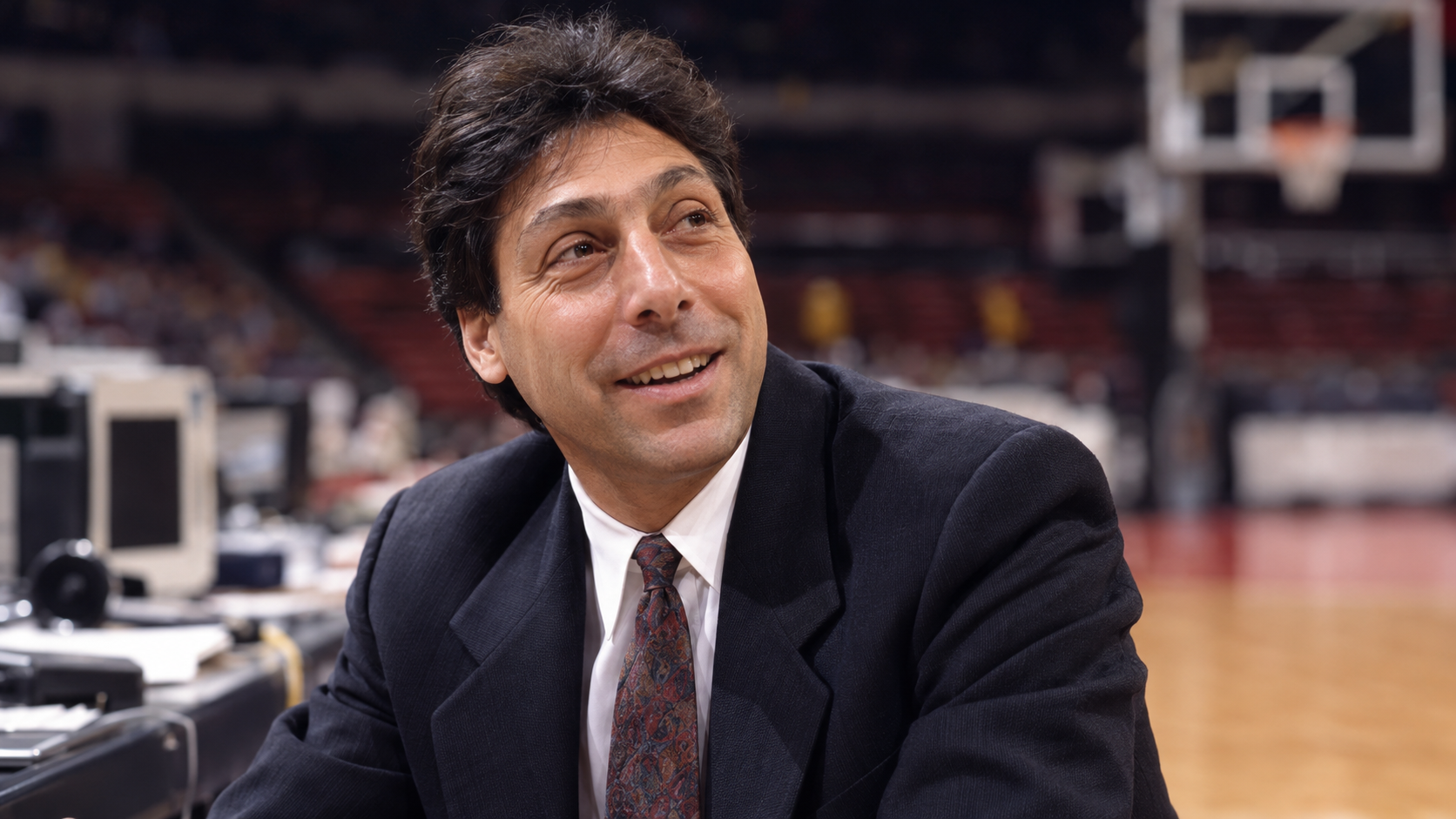
“Don’t give up. Don’t ever give up.”
Jim Valvano delivered his most remembered public address at the inaugural ESPYS on March 4, 1993, while accepting the Arthur Ashe Courage and Humanitarian Award. The former NC State basketball coach was seriously ill with metastatic cancer and used the televised moment to announce the V Foundation for Cancer Research with ESPN. “Don’t give up. Don’t ever give up” became the compact expression associated with the speech, but its force came from the wider message: time was precious, other people mattered, and research required a team larger than any one patient. NC State’s official history also records that he had used the phrase in speeches at Reynolds Coliseum, so the ESPYS moment gave an established personal motto a national platform.
Valvano mixed urgency with the humor and rhythm that had defined his coaching and broadcasting career. He asked listeners to spend each day laughing, thinking, and being moved to tears. He also said cancer could take away his physical abilities but could not touch his mind, heart, or soul. The speech did not look away from death—Valvano died less than two months later, on April 28—but it refused to let illness control the entire meaning of his life. He connected persistence to relationships, emotional range, and work that might benefit people he would never meet.
That context prevents the quotation from becoming a harsh command. “Never give up” does not mean that willpower cures cancer, that rest is weakness, or that changing a goal is failure. For someone who is ill, persistence might mean accepting help, pursuing evidence-based care, protecting energy, speaking honestly, or deciding how to use limited time. Outcomes are not moral verdicts on effort. Valvano directed his appeal toward collective action—funding research and sustaining hope—rather than blaming individuals whose bodies do not respond as they wish.
The message remains at home in sports because Valvano understood progress through teams, preparation, adaptation, and shared belief. His 1983 NC State team’s improbable national championship had already made him a symbol of persistence, but the ESPYS speech gave that language a purpose beyond winning games. Coaches and athletes still quote the line in moments of pressure. Its best use is neither sentimental nor reckless. It asks people to keep serving a meaningful goal while staying connected to humor, thought, emotion, and one another—the parts of life that make perseverance worth practicing in the first place. The line endures when it motivates that disciplined, shared effort; it becomes misleading when it is used to deny limits or silence people who need care.
Valvano spoke at the inaugural ESPYS on March 4, 1993, while accepting the Arthur Ashe Courage and Humanitarian Award during treatment for cancer.
He announced the V Foundation for Cancer Research with ESPN and placed his appeal for persistence inside a broader call to laugh, think, feel, and help others. Primary source; Additional source.
The line expresses sustained commitment, but the speech aimed that commitment toward collective research and a life of connection rather than solitary willpower.
It should never imply that illness is defeated by attitude alone. Rest, changed goals, medical care, and accepting help can all be forms of responsible perseverance.
Sports teams frequently borrow the quote because competition makes persistence visible through practice, adjustment, recovery, and mutual support.
Valvano’s fuller message keeps the phrase humane: continue meaningful work, but do it with emotional honesty and with people who can carry the effort together.
Explore more "Quotes of The Day"
Discover more notable quotes from influential voices across politics, science, business, technology, sports, and culture. Each quote offers insight into how ideas, beliefs, and decisions shape the world around us.