

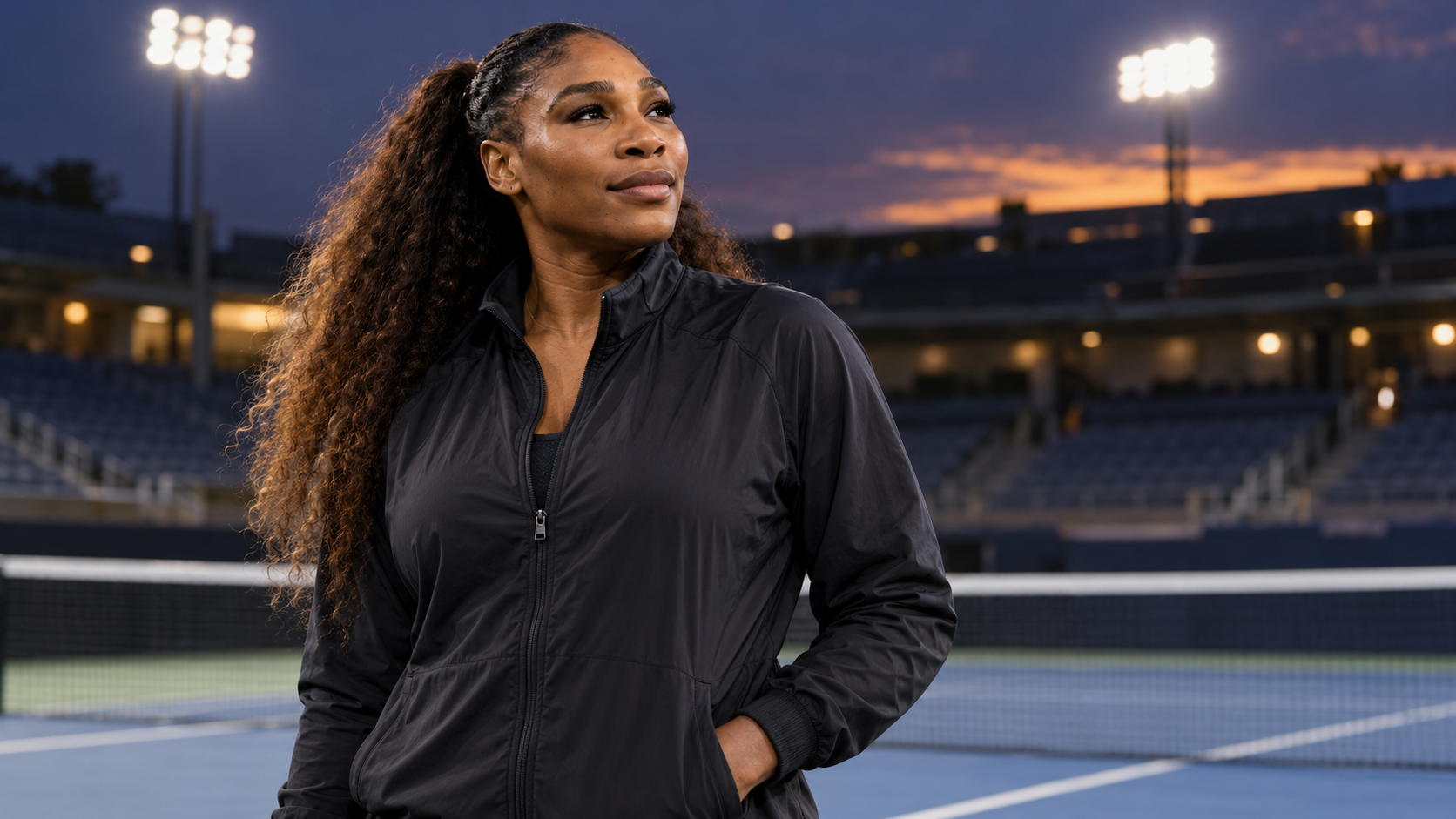
“I just wanted to keep trying and just do my best.”
Serena Williams said, “I just wanted to keep trying and just do my best.” Williams said this after defeating second-seeded Anett Kontaveit at the 2022 U.S. Open, a tournament surrounded by anticipation that it might be her final event. The match extended her run and turned a familiar competitive principle into a public farewell moment. She stayed focused on the next point even while the stadium and wider sports world treated every point as history. The words are compact, but their meaning depends on the occasion in which they were spoken.
Williams won twenty-three major singles titles in the Open Era and transformed expectations for power, longevity, and presence in women’s tennis. Her career also included injuries, scrutiny, motherhood, and repeated comebacks. The plainness of the quote matters beside that scale of achievement. “Trying” is not glamorous, but it describes the immediate behavior available when legacy and emotion threaten to overwhelm execution. That history keeps the quotation connected to practice rather than allowing it to drift into a generic slogan. It also explains why the line belongs in a sports series: competition made the principle visible, while the speaker’s wider life showed where the principle could help and where it could be misunderstood.
Doing one’s best is not a claim that every performance reaches a personal maximum. It is a commitment to honest engagement with current conditions. “Keep trying” can include tactical change, recovery, and acceptance that today’s capacity differs from yesterday’s. The phrase avoids the trap of treating a single result as a complete judgment while still respecting the obligation to compete with care. A careful reading preserves both its motivational value and the limits that real people and real competitions impose. Motivation becomes more credible when it respects context instead of treating every obstacle as identical or every result as a moral judgment.
Farewells, finals, and milestone matches can pull attention into the past and future at once. Williams’s sentence brings it back to the playable moment. The same method helps younger athletes under smaller but equally real pressure: choose the next action, adjust after the point, and let effort be specific. A career is built from those decisions, even though no athlete controls how the final chapter is scored. Used this way, the quotation supports better decisions as well as stronger effort. For readers, the practical question is not how to imitate a famous career. It is how to translate the underlying idea into one honest, proportionate action in the situation directly ahead.
Williams said this after defeating second-seeded Anett Kontaveit at the 2022 U.S. Open, a tournament surrounded by anticipation that it might be her final event. The match extended her run and turned a familiar competitive principle into a public farewell moment. She stayed focused on the next point even while the stadium and wider sports world treated every point as history.
The wording and surrounding record are documented in the primary source and supported by this additional source.
Doing one’s best is not a claim that every performance reaches a personal maximum. It is a commitment to honest engagement with current conditions. “Keep trying” can include tactical change, recovery, and acceptance that today’s capacity differs from yesterday’s. The phrase avoids the trap of treating a single result as a complete judgment while still respecting the obligation to compete with care.
The line is most responsible when it encourages deliberate action without pretending that effort controls every condition, injury, institution, or outcome.
Farewells, finals, and milestone matches can pull attention into the past and future at once. Williams’s sentence brings it back to the playable moment. The same method helps younger athletes under smaller but equally real pressure: choose the next action, adjust after the point, and let effort be specific. A career is built from those decisions, even though no athlete controls how the final chapter is scored.
Its continuing value lies in turning admiration into a practical question about preparation, support, judgment, and the next decision.
Explore more "Quotes of The Day"
Discover more notable quotes from influential voices across politics, science, business, technology, sports, and culture. Each quote offers insight into how ideas, beliefs, and decisions shape the world around us.