

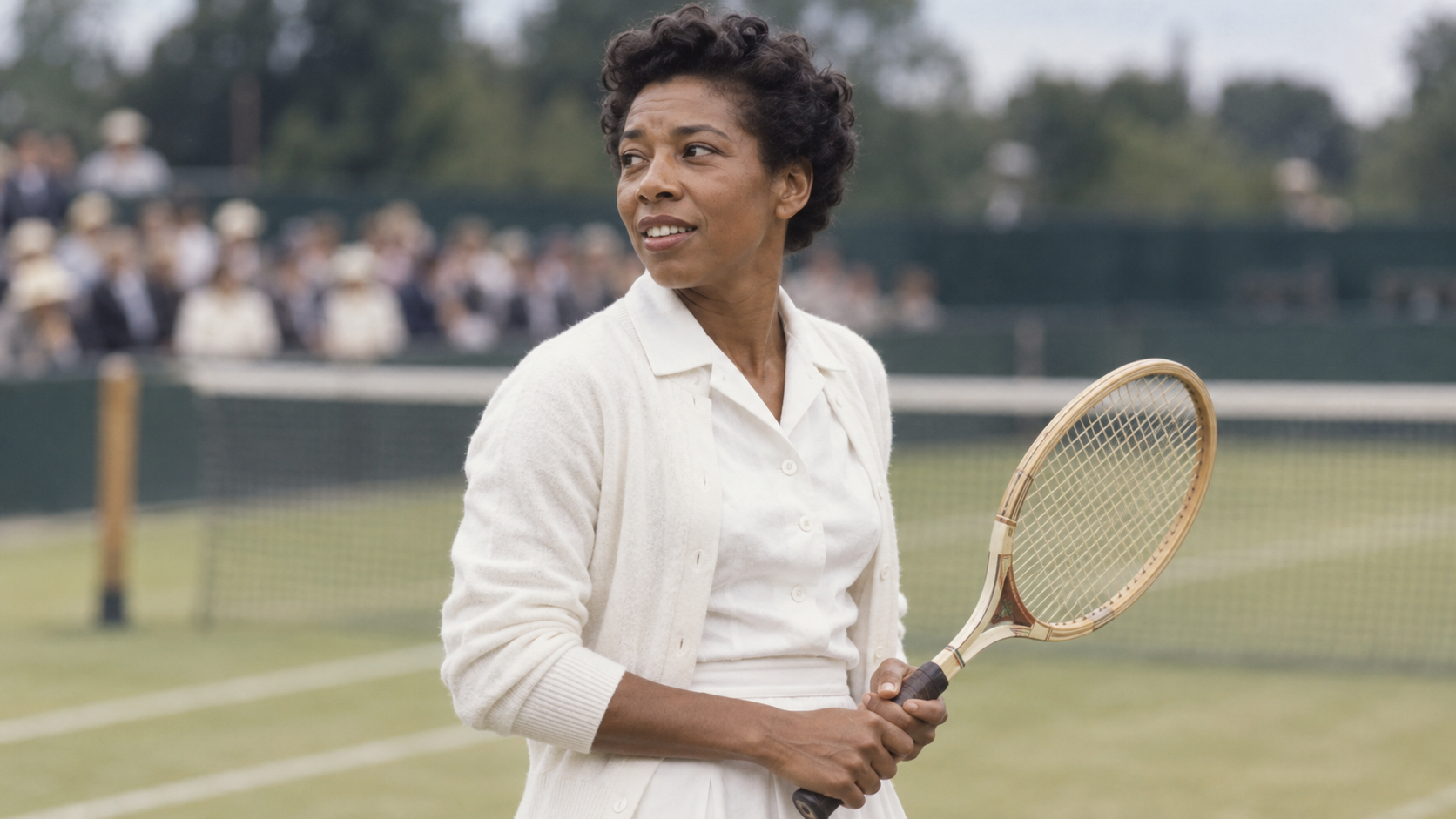
“No matter what accomplishments you make, somebody helped you.”
Althea Gibson said, “No matter what accomplishments you make, somebody helped you.” Gibson’s observation is widely associated with her reflections after breaking racial barriers in international tennis. By 1958, she had won consecutive Wimbledon and U.S. National singles titles and had become the first Black player to win those championships. The sentence redirected attention from a historic individual achievement toward the coaches, advocates, hosts, and communities who helped make access possible. Read alone, the sentence sounds universal; read in context, it becomes more precise and more useful.
Before reaching tennis’s largest stages, Gibson developed through public recreation programs, the American Tennis Association, and supporters who created opportunities barred elsewhere. Her victories did not erase segregation or guarantee financial security. She later played professional golf and again crossed a racial barrier. The breadth of that career shows both exceptional ability and the institutional gates that talent alone could not unlock. The record matters because it shows how the idea was tested through preparation, change, and public pressure. It also explains why the line belongs in a sports series: competition made the principle visible, while the speaker’s wider life showed where the principle could help and where it could be misunderstood.
Acknowledging help does not diminish achievement. It gives a more accurate account of how achievement happens. The helper may be a family member, practice partner, organizer, or someone who challenged an exclusionary rule. Gratitude should not turn unequal systems into heartwarming stories, but it can identify the relationships and structures worth strengthening so the next athlete needs fewer extraordinary interventions. That distinction is important whenever inspirational language is used around injury, inequality, or uncertain outcomes. Motivation becomes more credible when it respects context instead of treating every obstacle as identical or every result as a moral judgment.
Sports culture often packages pioneers as solitary heroes. Gibson’s line resists that simplification while preserving her agency. Athletes can name the chain of support behind a milestone, and organizations can ask who still lacks entry. The quote turns celebration into responsibility: honor the people who opened a door, then make the doorway wider, more durable, and less dependent on exceptional personal sponsorship. The result is a lesson that can guide preparation without flattening the complexity of a human life. For readers, the practical question is not how to imitate a famous career. It is how to translate the underlying idea into one honest, proportionate action in the situation directly ahead.
Gibson’s observation is widely associated with her reflections after breaking racial barriers in international tennis. By 1958, she had won consecutive Wimbledon and U.S. National singles titles and had become the first Black player to win those championships. The sentence redirected attention from a historic individual achievement toward the coaches, advocates, hosts, and communities who helped make access possible.
The wording and surrounding record are documented in the primary source and supported by this additional source.
Acknowledging help does not diminish achievement. It gives a more accurate account of how achievement happens. The helper may be a family member, practice partner, organizer, or someone who challenged an exclusionary rule. Gratitude should not turn unequal systems into heartwarming stories, but it can identify the relationships and structures worth strengthening so the next athlete needs fewer extraordinary interventions.
The line is most responsible when it encourages deliberate action without pretending that effort controls every condition, injury, institution, or outcome.
Sports culture often packages pioneers as solitary heroes. Gibson’s line resists that simplification while preserving her agency. Athletes can name the chain of support behind a milestone, and organizations can ask who still lacks entry. The quote turns celebration into responsibility: honor the people who opened a door, then make the doorway wider, more durable, and less dependent on exceptional personal sponsorship.
Its continuing value lies in turning admiration into a practical question about preparation, support, judgment, and the next decision.
Explore more "Quotes of The Day"
Discover more notable quotes from influential voices across politics, science, business, technology, sports, and culture. Each quote offers insight into how ideas, beliefs, and decisions shape the world around us.