

On This Day in Science: February 1, 2003
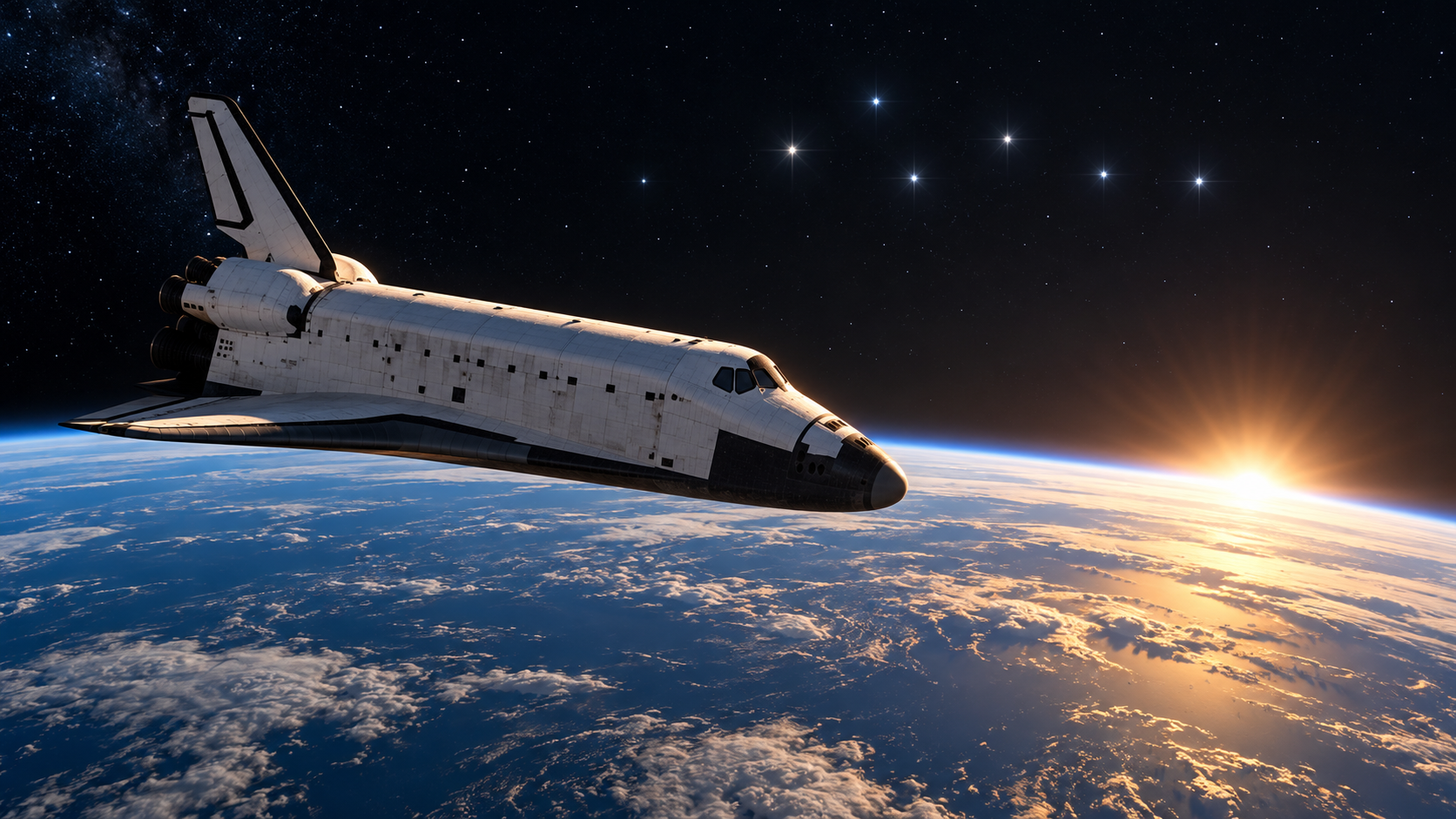
On February 1, 2003, Space Shuttle Columbia was returning to Earth after a sixteen-day research flight when communication with the orbiter broke up over Texas. The vehicle disintegrated during atmospheric reentry, and all seven members of mission STS-107 were killed: Rick Husband, William McCool, Michael Anderson, Kalpana Chawla, David Brown, Laurel Clark, and Ilan Ramon. Columbia had completed dozens of investigations in life sciences, combustion, materials, and Earth observation. The loss transformed a homecoming that should have closed a productive laboratory mission into one of the defining tragedies of the space program.
The physical cause began eighty-two seconds after launch on January 16. A piece of insulating foam separated from the external tank and struck the leading edge of Columbia’s left wing. Investigators later concluded that the impact opened a breach in the reinforced carbon-carbon panels. During reentry, superheated gas entered the wing through that opening, damaging internal structures and eventually causing the vehicle to lose control. The danger had not been visible to the crew, and mission controllers lacked a complete picture of the damage while the shuttle remained in orbit.
The Columbia Accident Investigation Board did more than trace the broken hardware. It found organizational failures in how NASA assessed risk, communicated uncertainty, and normalized recurring foam strikes. Engineers had raised questions about the launch imagery, yet assumptions built during earlier missions made the event seem less urgent than it was. The board argued that technical systems and management culture could not be separated: a spacecraft may fail at one component, but the conditions that allow that failure often develop across schedules, procedures, and decisions made long before a flight.
NASA grounded the shuttle fleet for more than two years and changed inspection, imaging, repair, and launch procedures before returning to flight. The agency also created enduring memorials and folded lessons from Columbia into later human-spaceflight programs. February 1 is remembered first as a day for the seven astronauts and their families, not as a spectacle. Its scientific legacy lies in a harder principle: exploration requires disciplined attention to weak signals, protection for dissenting technical judgments, and the willingness to stop when evidence remains incomplete. Those lessons continue to shape how complex missions are designed and reviewed. For science history, the episode is also a case study in how evidence moves from an observation or engineered test into a durable body of knowledge. Instruments supplied measurements, specialists debated interpretation, and later work refined what the first result could mean. Archives preserve the early record while new methods let researchers ask different questions of it. That continuing revision is not a weakness in the original achievement; it is the process through which a dated milestone remains scientifically useful.
STS-107 carried more than eighty experiments during a dedicated research mission in the Spacehab module.
Columbia broke apart during reentry sixteen minutes before its planned landing in Florida.
Foam from the external tank struck the left wing during launch and opened a path for superheated reentry gases.
The accident board also identified failures in risk assessment, communication, and institutional decision-making.
NASA introduced enhanced launch imaging, on-orbit inspections, and contingency planning before shuttle flights resumed.
The crew is honored through memorials, scholarships, scientific programs, and the continuing work of safer exploration.
Explore more of "On This Day ..."
Discover more events from the same date across news, politics, technology, sports, and other fields. Each link highlights significant moments that shaped history on different fronts.