

On This Day in Science: February 2, 1971
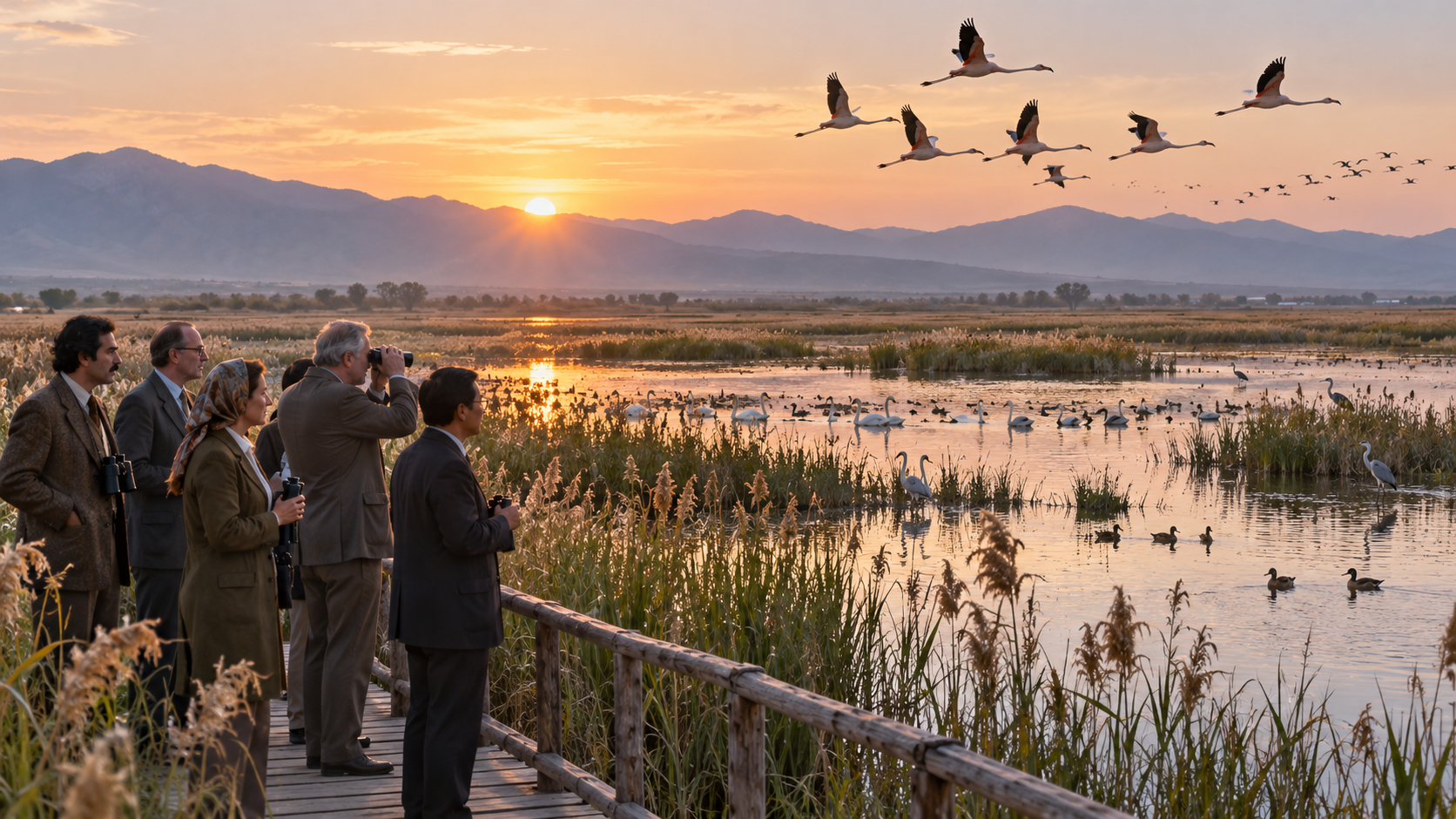
On February 2, 1971, representatives meeting in Ramsar, Iran, adopted an international agreement devoted specifically to wetlands. Formally known as the Convention on Wetlands of International Importance, the Ramsar Convention responded to accelerating losses of marshes, lakes, peatlands, estuaries, and other water-rich habitats. Early concern focused heavily on the disappearance of places used by migratory waterbirds, but the treaty’s scope grew to recognize wetlands as living systems that support people as well as wildlife. It became one of the earliest modern global environmental agreements and the only one centered on a particular ecosystem.
The convention asks participating countries to designate important wetlands for an international list, promote their effective management, and pursue the wise use of wetlands throughout their territories. Wise use does not mean sealing every site away from people. It means maintaining ecological character while balancing water supply, agriculture, fishing, tourism, flood management, and other needs. That framing was important because wetlands had often been treated as wastelands to drain or fill. Ramsar instead placed their biological productivity and public value at the center of policy.
Wetlands store carbon, filter pollutants, recharge aquifers, soften storm surges, and provide nurseries for fish and feeding grounds for birds. They also hold cultural meaning and sustain livelihoods in communities around the world. Yet their boundaries can shift seasonally, and the water feeding one site may originate far outside a protected area. Conservation therefore depends on hydrology, land use, and cooperation across political borders. The convention created a shared vocabulary and reporting system through which countries could identify sites, monitor change, and coordinate action on connected rivers and migration routes.
February 2 is now observed as World Wetlands Day, linking the 1971 decision to current restoration and climate work. The treaty has expanded to include thousands of listed sites across nearly every region, but designation alone does not guarantee protection. Pollution, water extraction, invasive species, infrastructure, and warming continue to alter wetlands rapidly. The Ramsar meeting remains significant because it changed the question governments were expected to ask. A wet place was no longer simply unused land awaiting conversion; it was infrastructure built by nature, with ecological functions that could be damaged, measured, and deliberately conserved. Seen across a longer timeline, the event also shows that scientific milestones are junctions rather than isolated beginnings. Earlier experiments, tools, and institutions made the work possible, while later teams tested its limits and carried the result into new settings. What survives is more than an anniversary fact: it is a traceable chain of evidence, correction, and application that allows one moment to remain relevant as knowledge and technology continue to change.
The convention was adopted in Ramsar, Iran, after years of international concern about disappearing wetland habitat.
Its official scope includes lakes, rivers, marshes, peatlands, estuaries, coastal areas, and many human-made wetlands.
Countries commit to maintaining the ecological character of listed wetlands and planning for responsible use more broadly.
The approach recognizes that conservation and human livelihoods often depend on the same functioning water systems.
Wetlands can store floodwater, filter pollution, protect coasts, and support exceptional biological diversity.
World Wetlands Day is observed each February 2 to connect the treaty's history with continuing restoration work.
Explore more of "On This Day ..."
Discover more events from the same date across news, politics, technology, sports, and other fields. Each link highlights significant moments that shaped history on different fronts.