

On This Day in Pop: August 7, 1997
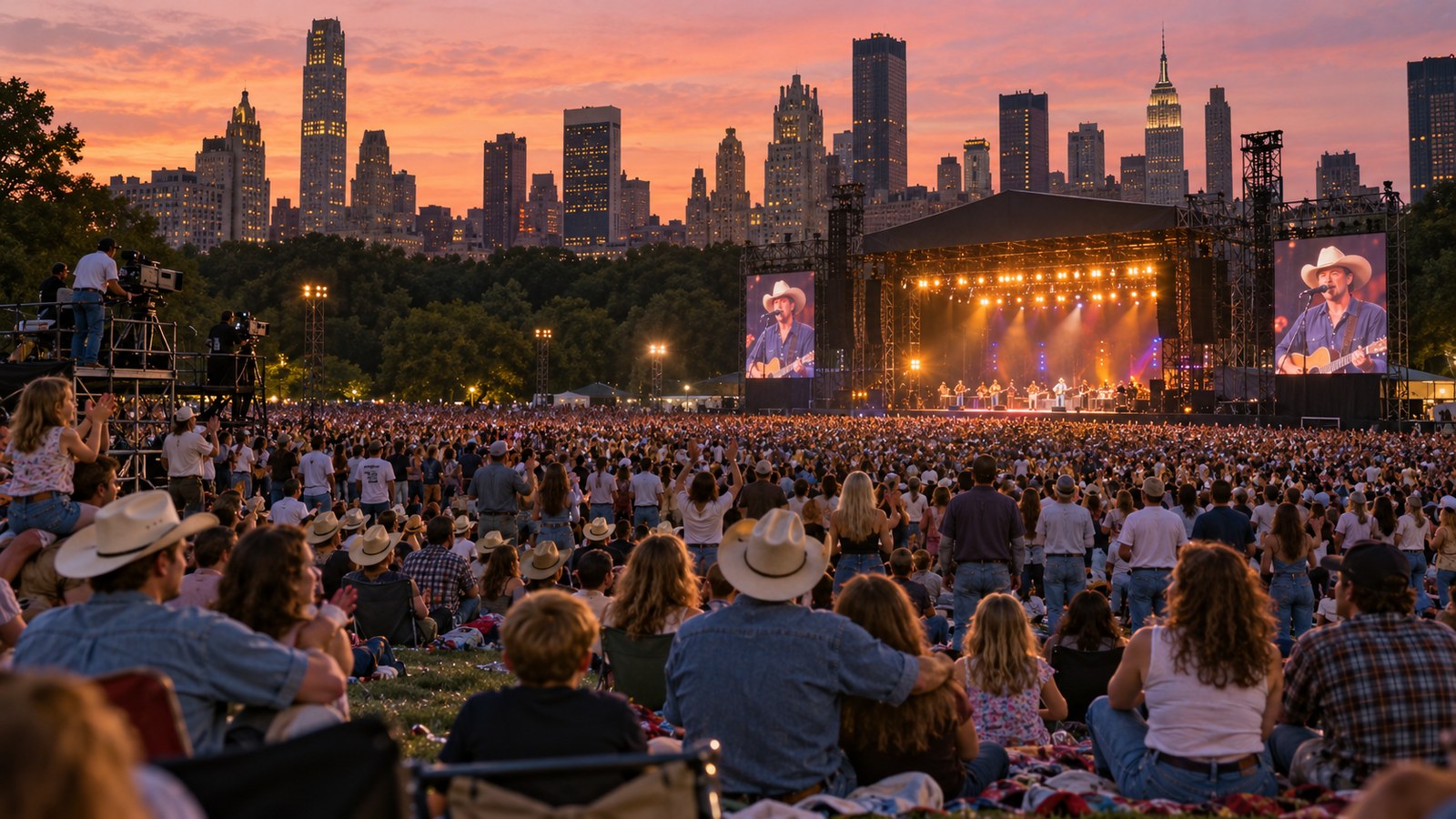
On August 7, 1997, Garth Brooks performed a free concert in Central Park. The country star took the stage on the park’s North Meadow before a crowd estimated in the hundreds of thousands, with the Manhattan skyline framing an event designed for both the people on the grass and an HBO broadcast audience. Guests included Don McLean and Billy Joel. Brooks was already one of the era’s largest-selling artists, known for arena-scale staging and an energetic performance style that challenged narrow ideas about how country music should look in concert. A free New York show placed that approach in a city not usually treated as the genre’s home territory. The date is a useful point of entry because it captures the event before later reputation made its consequences appear inevitable. Contemporary audiences encountered a new release, performance or public loss in real time, with incomplete information and expectations shaped by the media and institutions of the period.
The scale made the concert an argument about country music’s national reach. Families, dedicated fans and curious city residents shared the same field, while television cameras converted a local gathering into a mass-media event whose success depended on crowd management as much as song selection. Popular culture is created through more than the famous person at the center: producers, technicians, exhibitors, broadcasters, audiences and physical venues all affect what survives. Looking closely at those conditions prevents an anniversary from becoming a list of familiar names and restores the choices, limitations and competing interests that surrounded the moment.
The performance was preserved as Garth: Live from Central Park and became part of the mythology surrounding Brooks’s 1990s peak. Crowd estimates varied widely, a reminder that spectacular public events often acquire symbolic numbers that matter as much as precise counts. That later history matters because influence is not a straight line. Works are rediscovered, technologies change, communities attach new meanings and commercial owners repackage the past. The most durable pop events remain open to argument, allowing admiration for creative achievement to exist beside criticism of exclusion, labor, power or representation.
The anniversary recalls a moment when a genre associated with Nashville claimed one of New York’s most recognizable public spaces without charging admission. It demonstrated how broadcast, celebrity and civic space could combine to create a concert remembered as both promotion and communal experience. Anniversaries can flatten history into celebration, but they can also reopen it. Returning to this August date means separating what participants knew then from what later audiences added, and noticing how recordings, photographs, broadcasts and personal memories keep the event active. That distance between the immediate moment and its long afterlife is what makes this episode worth revisiting as part of popular culture.
Garth Brooks played a free Central Park concert on August 7, 1997.
On August 7, 1997, Garth Brooks performed a free concert in Central Park. The country star took the stage on the park's North Meadow before a crowd estimated in the hundreds of thousands, with the Manhattan skyline framing an event designed for both the people on the grass and an HBO broadcast audience.
HBO broadcast the event, with Don McLean and Billy Joel appearing as guests.
The scale made the concert an argument about country music's national reach. Families, dedicated fans and curious city residents shared the same field, while television cameras converted a local gathering into a mass-media event whose success depended on crowd management as much as song selection.
The enormous turnout signaled the mainstream national reach of 1990s country music.
The performance was preserved as Garth: Live from Central Park and became part of the mythology surrounding Brooks's 1990s peak. Crowd estimates varied widely, a reminder that spectacular public events often acquire symbolic numbers that matter as much as precise counts.
Explore more of "On This Day ..."
Discover more events from the same date across news, politics, technology, sports, and other fields. Each link highlights significant moments that shaped history on different fronts.