

On This Day in Pop: August 13, 1942
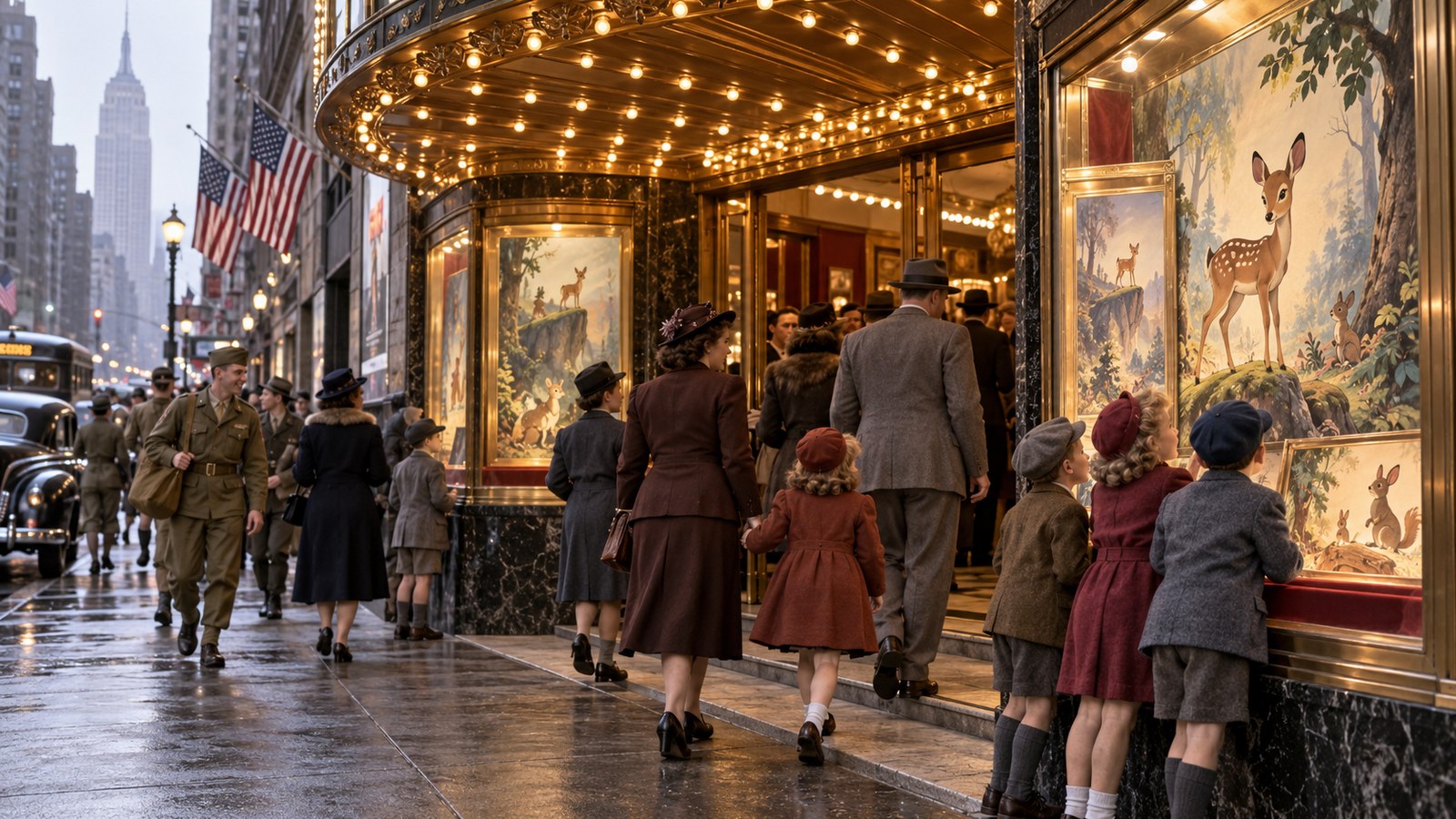
On August 13, 1942, Bambi opened in New York during its American release. Walt Disney’s animated feature reached the Radio City Music Hall after an August 9 world premiere in London. Adapted from Felix Salten’s novel, the film followed a young deer through friendship, danger, seasonal change and loss, using sparse dialogue and close observation of the forest. Artists studied live animals and natural movement while building a woodland environment from painted layers, effects animation and carefully controlled color. The story’s famous off-screen death challenged expectations that animation existed only for uncomplicated comedy. The date is a useful point of entry because it captures the event before later reputation made its consequences appear inevitable. Contemporary audiences encountered a new release, performance or public loss in real time, with incomplete information and expectations shaped by the media and institutions of the period.
The release came while the United States was deep in World War II, limiting international markets and shaping audience attention. Its delicate pace and serious emotional tone did not produce the immediate financial success later reputation might suggest. Popular culture is created through more than the famous person at the center: producers, technicians, exhibitors, broadcasters, audiences and physical venues all affect what survives. Looking closely at those conditions prevents an anniversary from becoming a list of familiar names and restores the choices, limitations and competing interests that surrounded the moment.
Reissues introduced Bambi to successive generations, and the film’s forest-fire imagery, music and character animation became deeply embedded in popular culture. Conservation campaigns also borrowed the character’s innocence, though the relationship between the film and environmental politics has remained complex. That later history matters because influence is not a straight line. Works are rediscovered, technologies change, communities attach new meanings and commercial owners repackage the past. The most durable pop events remain open to argument, allowing admiration for creative achievement to exist beside criticism of exclusion, labor, power or representation.
August 13 marks an American opening for a film whose meaning grew through repetition. What began as a risky, visually ambitious release became a childhood reference point and a durable example of animation’s ability to represent grief without abandoning wonder. Anniversaries can flatten history into celebration, but they can also reopen it. Returning to this August date means separating what participants knew then from what later audiences added, and noticing how recordings, photographs, broadcasts and personal memories keep the event active. That distance between the immediate moment and its long afterlife is what makes this episode worth revisiting as part of popular culture.
Disney lists Bambi's U.S. release date as August 13, 1942.
On August 13, 1942, Bambi opened in New York during its American release. Walt Disney's animated feature reached the Radio City Music Hall after an August 9 world premiere in London.
The film had premiered in London four days earlier.
The release came while the United States was deep in World War II, limiting international markets and shaping audience attention. Its delicate pace and serious emotional tone did not produce the immediate financial success later reputation might suggest.
Naturalistic animal motion and a serious coming-of-age story expanded expectations for animated features.
Reissues introduced Bambi to successive generations, and the film's forest-fire imagery, music and character animation became deeply embedded in popular culture. Conservation campaigns also borrowed the character's innocence, though the relationship between the film and environmental politics has remained complex.
Explore more of "On This Day ..."
Discover more events from the same date across news, politics, technology, sports, and other fields. Each link highlights significant moments that shaped history on different fronts.