

On This Day in Pop: August 16, 1977
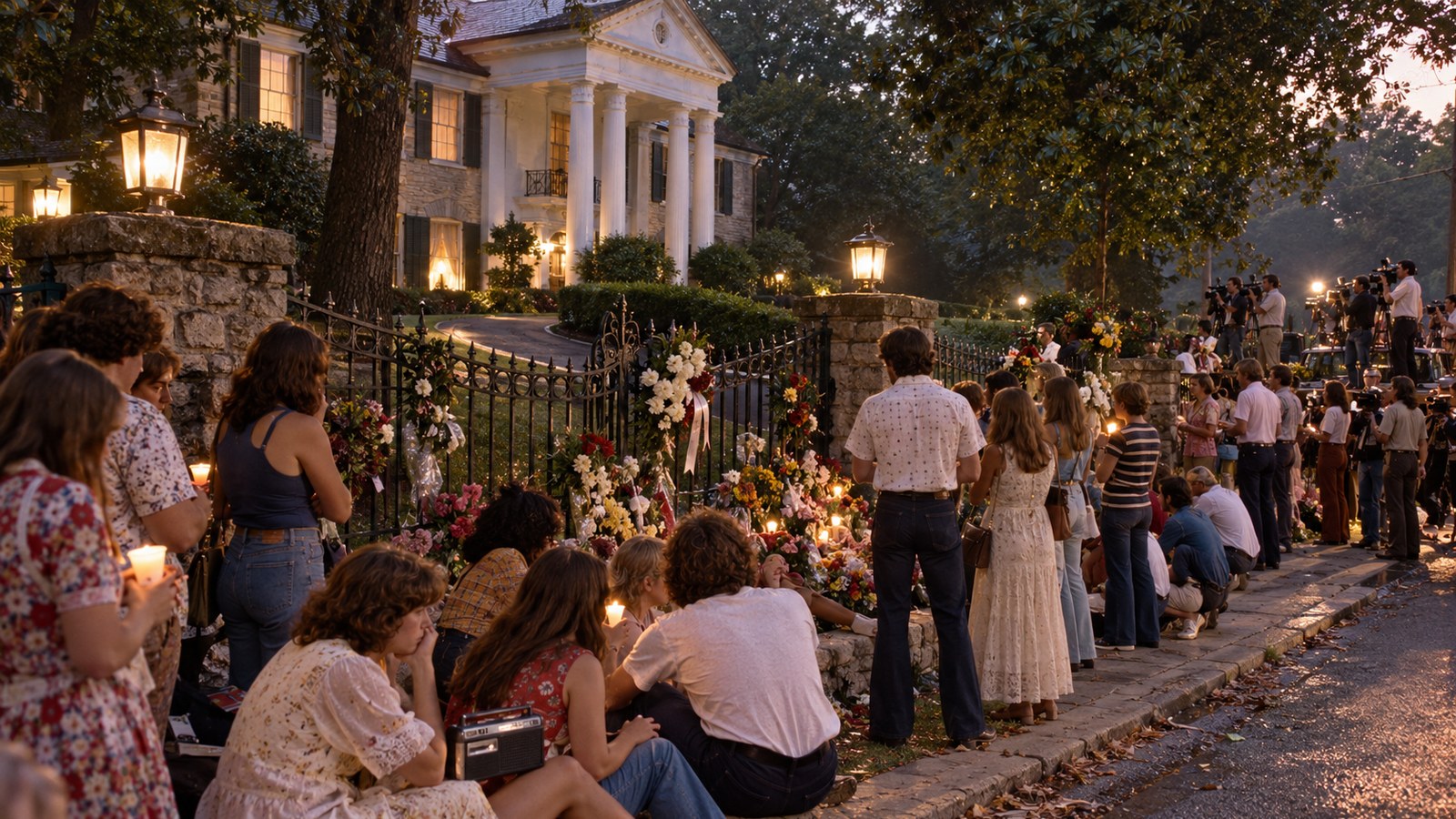
On August 16, 1977, Elvis Presley died at Graceland in Memphis. The singer was found unresponsive at his Memphis home and died at age forty-two. Radio stations interrupted programming, newspapers rushed special editions and fans began gathering outside Graceland, turning a private residence into the center of international mourning. Presley’s career had connected rhythm and blues, country, gospel, television, film and Las Vegas spectacle across two decades. His fame also exposed conflicts over race, borrowing, sexuality, youth culture and the commercial packaging of rebellion. The date is a useful point of entry because it captures the event before later reputation made its consequences appear inevitable. Contemporary audiences encountered a new release, performance or public loss in real time, with incomplete information and expectations shaped by the media and institutions of the period.
The shock came partly from the distance between the eternally youthful image preserved in early recordings and the visible health problems of his final years. Public grief therefore included affection, regret and argument about an industry that had both elevated and exhausted him. Popular culture is created through more than the famous person at the center: producers, technicians, exhibitors, broadcasters, audiences and physical venues all affect what survives. Looking closely at those conditions prevents an anniversary from becoming a list of familiar names and restores the choices, limitations and competing interests that surrounded the moment.
Graceland opened to the public in 1982 and became a major pilgrimage site, while reissues, documentaries and impersonation kept Presley’s image in constant circulation. Estate management turned memory into a large business, complicating the line between preservation and merchandising. That later history matters because influence is not a straight line. Works are rediscovered, technologies change, communities attach new meanings and commercial owners repackage the past. The most durable pop events remain open to argument, allowing admiration for creative achievement to exist beside criticism of exclusion, labor, power or representation.
August 16 remains one of popular music’s defining dates of loss. The best remembrance holds two truths together: Presley’s performances changed the language of mass entertainment, and that achievement emerged from musical traditions and collaborators whose contributions also deserve attention. Anniversaries can flatten history into celebration, but they can also reopen it. Returning to this August date means separating what participants knew then from what later audiences added, and noticing how recordings, photographs, broadcasts and personal memories keep the event active. That distance between the immediate moment and its long afterlife is what makes this episode worth revisiting as part of popular culture.
Elvis Presley died at Graceland on August 16, 1977, at age forty-two.
On August 16, 1977, Elvis Presley died at Graceland in Memphis. The singer was found unresponsive at his Memphis home and died at age forty-two.
Fans gathered in Memphis as news spread around the world.
The shock came partly from the distance between the eternally youthful image preserved in early recordings and the visible health problems of his final years. Public grief therefore included affection, regret and argument about an industry that had both elevated and exhausted him.
His recordings and performance style reshaped popular music, while his legacy remains connected to debates about race and cultural borrowing.
Graceland opened to the public in 1982 and became a major pilgrimage site, while reissues, documentaries and impersonation kept Presley's image in constant circulation. Estate management turned memory into a large business, complicating the line between preservation and merchandising.
Explore more of "On This Day ..."
Discover more events from the same date across news, politics, technology, sports, and other fields. Each link highlights significant moments that shaped history on different fronts.