

On This Day in Science: January 12, 2005
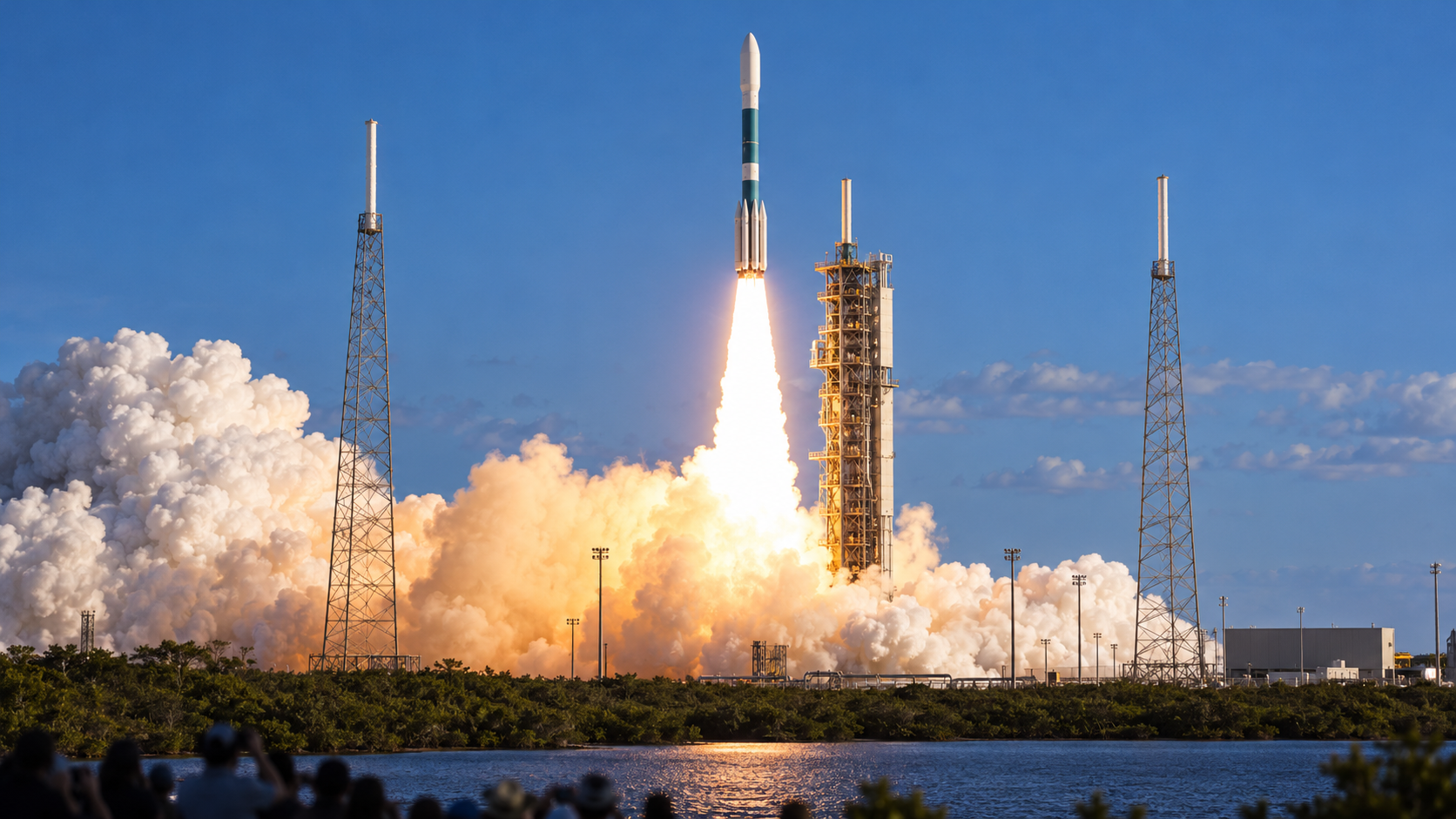
On January 12, 2005, NASA’s Deep Impact spacecraft lifted off from Cape Canaveral aboard a Delta II rocket. The mission carried two connected vehicles: a flyby spacecraft equipped with cameras and an infrared spectrometer, and a copper-rich impactor designed to collide with comet 9P/Tempel 1. Comets preserve material from the early solar system, but sunlight alters their exposed surfaces. By excavating a fresh crater and observing the debris, researchers hoped to sample layers that had remained shielded since the planets began forming about 4.6 billion years ago.
After a 431-million-kilometer journey, the spacecraft approached Tempel 1 in July. The flyby vehicle released the 372-kilogram impactor on July 3 and adjusted its own path to pass safely by the nucleus. Twenty-four hours later, on July 4, the impactor struck at roughly 10 kilometers per second. Deep Impact photographed the approach until moments before collision, while the flyby craft, space telescopes, and observatories around Earth watched the expanding plume. The event was an experiment, not an attempt to redirect the comet; the impact changed Tempel 1’s enormous orbit by an immeasurably small amount.
The plume contained fine dust, water ice, carbon-bearing compounds, and minerals that form at very different temperatures. Those mixtures complicated simple pictures of where comets assembled, suggesting that material moved widely through the young solar system. The impact also showed that Tempel 1’s outer layers were porous and weak. Bright ejecta obscured the crater in Deep Impact’s immediate images, limiting an important measurement, but the Stardust-NExT spacecraft revisited the comet in 2011 and photographed the impact region. Science advanced through the combination of a planned disturbance, remote sensing, laboratory analysis, and a later return.
Deep Impact continued after Tempel 1 under the name EPOXI, using the surviving flyby spacecraft for observations of extrasolar planetary systems and a close pass of comet Hartley 2 in 2010. Contact ended in 2013 after nearly nine years in space. Its January 12 launch began one of planetary science’s most direct experiments: instead of waiting for nature to reveal a comet’s interior, engineers created a controlled impact and watched the response. The mission demonstrated how a small spacecraft could turn a brief encounter into a test of the materials and processes that shaped the solar system. It also showed the value of coordinated observing, with instruments on the flyby craft, in Earth orbit, and on the ground measuring the same event from different perspectives.
The impactor targeted Tempel 1 while the flyby craft carried the instruments needed to record the collision and debris.
Separating the vehicles let the observer pass the comet rather than being destroyed with the impactor.
Fresh dust and ice in the plume exposed material that had been insulated beneath the comet's weathered surface.
The mixture of minerals and carbon compounds showed that early solar-system material had been transported across large temperature zones.
The surviving spacecraft later observed distant planetary systems and flew past comet Hartley 2 as part of EPOXI.
A 2011 visit by Stardust-NExT supplied a later view of Tempel 1's impact region and extended the experiment across missions.
Explore more of "On This Day ..."
Discover more events from the same date across news, politics, technology, sports, and other fields. Each link highlights significant moments that shaped history on different fronts.