

On This Day in Science: January 18, 2000
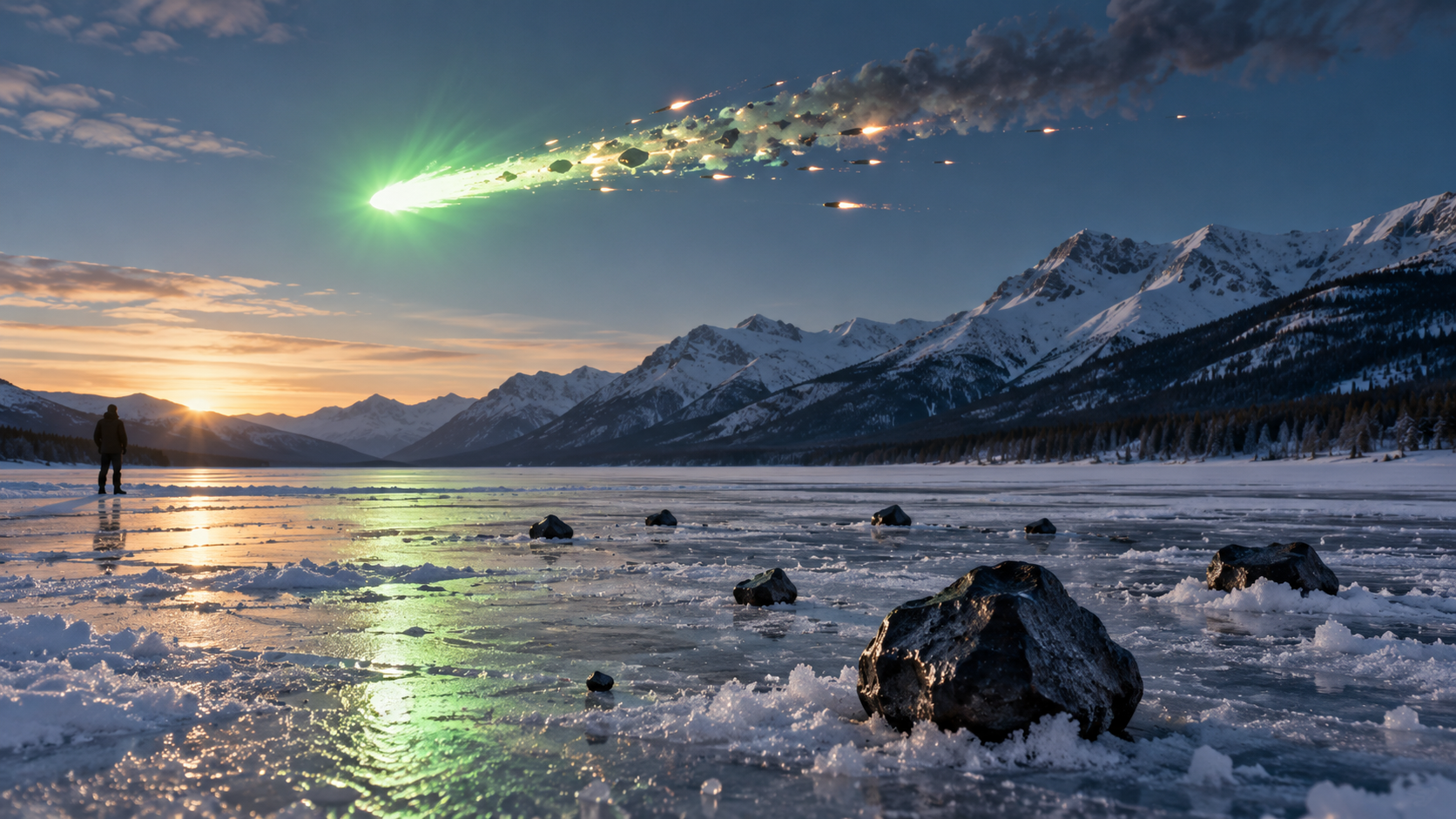
On January 18, 2000, a brilliant fireball crossed the morning sky above Yukon and northern British Columbia before fragments fell across the frozen Tagish Lake region. Satellites, cameras, and hundreds of witnesses recorded the atmospheric event, allowing researchers to reconstruct the object’s path. The incoming body was several meters across before it broke apart high in the atmosphere, releasing energy comparable to a small explosive event. Most of its mass became dust or vapor, but dark, fragile stones scattered onto snow and lake ice, where winter conditions created an exceptional opportunity for recovery.
Local resident Jim Brook collected the first pieces from the frozen Taku Arm of Tagish Lake about a week later. He avoided touching them with bare hands and kept them cold, helping preserve volatile compounds and limit contamination. Later searches recovered hundreds of additional fragments, but the earliest frozen specimens became especially valuable. Many meteorites lie exposed to rain, soil, microbes, and handling before scientists see them. Tagish Lake arrived on clean ice in subfreezing weather and entered controlled storage quickly, approaching the conditions of a deliberately returned asteroid sample.
Analysis classified the meteorite as an unusual carbon-rich chondrite containing primitive minerals, organic compounds, presolar grains, and abundant fine material altered by water on its parent asteroid. Researchers identified amino acids and other carbon chemistry while carefully separating extraterrestrial material from Earthly contamination. The rock is extremely porous and weak, which helps explain why so little survived the atmosphere. Its chemistry does not imply that life arrived ready-made from space, but it shows that asteroids carried diverse organic building blocks and water-related minerals during the solar system’s early history.
The January 18 fall linked observation, citizen response, curation, and laboratory science. Fireball records constrained the original orbit, while disciplined collection preserved material that could answer questions far removed from the dramatic streak in the sky. Tagish Lake has since served as a comparison for asteroid missions and for studies of how carbon and water were distributed to young planets. Its importance rests as much on what did not happen as on what did: the most prized fragments were not warmed, washed, or heavily handled. A frozen landscape briefly became a natural clean room for matter older than Earth. Continued work on separately stored fragments also lets researchers measure how handling and thawing change the chemistry of unusually fragile meteorites. That comparison improves methods for preserving future samples returned directly from carbon-rich asteroids.
Multiple observations recorded the breakup, helping scientists estimate the incoming path and energy of the event.
The winter landing surface made the black fragments easier to spot and reduced exposure to liquid water and soil.
Early fragments were collected without bare-hand contact and kept frozen, preserving volatile and organic material.
That care gave researchers samples closer to a controlled return than most naturally recovered meteorites.
Tagish Lake contains carbon compounds, primitive grains, and minerals changed by water inside its parent asteroid.
The material helps test how organic ingredients and water-bearing rocks moved through the young solar system.
Explore more of "On This Day ..."
Discover more events from the same date across news, politics, technology, sports, and other fields. Each link highlights significant moments that shaped history on different fronts.