

On This Day in Pop: October 16, 1923
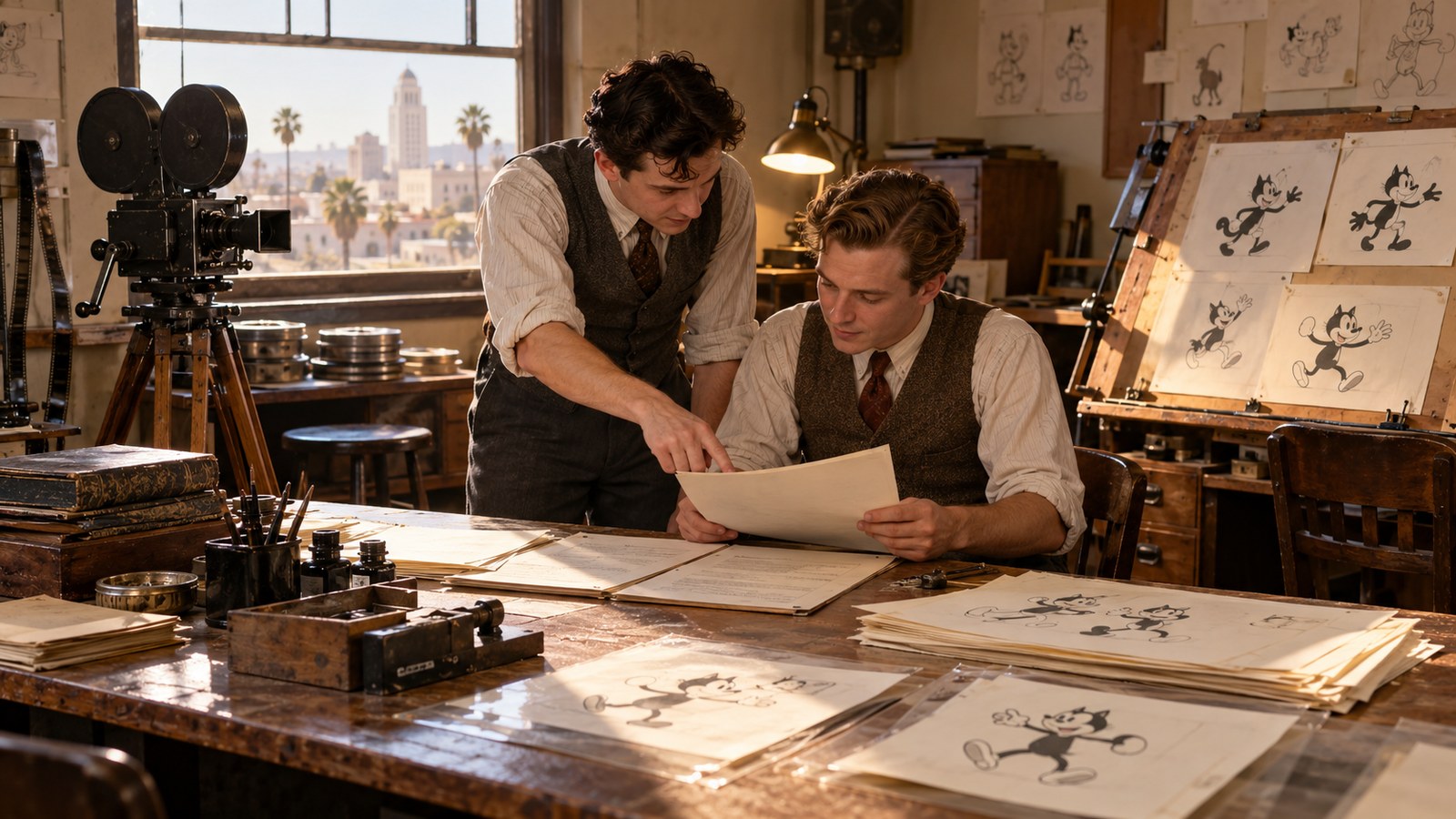
On October 16, 1923, Walt and Roy Disney formally began the company that became The Walt Disney Company. The brothers’ agreement with distributor Margaret Winkler covered a series combining a live-action girl with animated adventures. Work began in modest Los Angeles rooms with Walt focused on filmmaking and Roy managing finances and operations. Walt had arrived from Kansas City after the failure of Laugh-O-Gram, carrying experience, unfinished material and a determination to continue animation. The Alice Comedies provided enough business to establish the Disney Brothers Cartoon Studio. The date captures the event before later reputation made its consequences look inevitable, when audiences encountered a new release, performance or institution with only the expectations available at the time.
The date represents an enterprise before its famous characters, parks or corporate reach. Survival depended on short-film contracts, cash flow, technical labor and relationships with distributors who controlled access to theaters. Popular culture is never made by a famous name alone. Writers, performers, producers, technicians, broadcasters, retailers, venues and audiences shape what becomes visible and what survives. Their collaboration also determines which experiments reach the public and which disappear before they can build momentum. Looking at those conditions turns an anniversary from a list entry into a record of choices, limits and competing interests.
The studio later created Oswald the Lucky Rabbit, lost control of that character and then developed Mickey Mouse. Sound cartoons, features, television and themed entertainment expanded the company far beyond its original rented workspace. That afterlife matters because influence does not move in a straight line. Reruns, reissues, new technology, criticism and community memory can change the meaning of a work long after its first appearance. Durable pop history therefore holds creative achievement beside questions of labor, access, power and representation.
The anniversary is useful because it restores uncertainty to a story often told as destiny. The company began not with a castle but with a contract, two brothers and the need to deliver the next film. Returning to this October date means separating what participants knew then from what later audiences added. Recordings, photographs, broadcasts and recollections keep the moment active, but they also select and reshape it. That distinction protects against hindsight: a chart position, premiere, publication, concert or opening may become a neat milestone later, but the people present still faced uncertainty. Reading the moment in both directions—through its original conditions and its accumulated meanings—keeps celebration from replacing history. The distance between the immediate event and its continuing interpretation is what makes this episode worth revisiting.
The founding contract was signed on October 16, 1923.
On October 16, 1923, Walt and Roy Disney formally began the company that became The Walt Disney Company. The brothers' agreement with distributor Margaret Winkler covered a series combining a live-action girl with animated adventures.
Walt and Roy Disney formed the Disney Brothers Cartoon Studio.
The date represents an enterprise before its famous characters, parks or corporate reach. Survival depended on short-film contracts, cash flow, technical labor and relationships with distributors who controlled access to theaters.
The early business produced the Alice Comedies.
The studio later created Oswald the Lucky Rabbit, lost control of that character and then developed Mickey Mouse. Sound cartoons, features, television and themed entertainment expanded the company far beyond its original rented workspace.
Explore more of "On This Day ..."
Discover more events from the same date across news, politics, technology, sports, and other fields. Each link highlights significant moments that shaped history on different fronts.