

On This Day in Pop: October 28, 1994
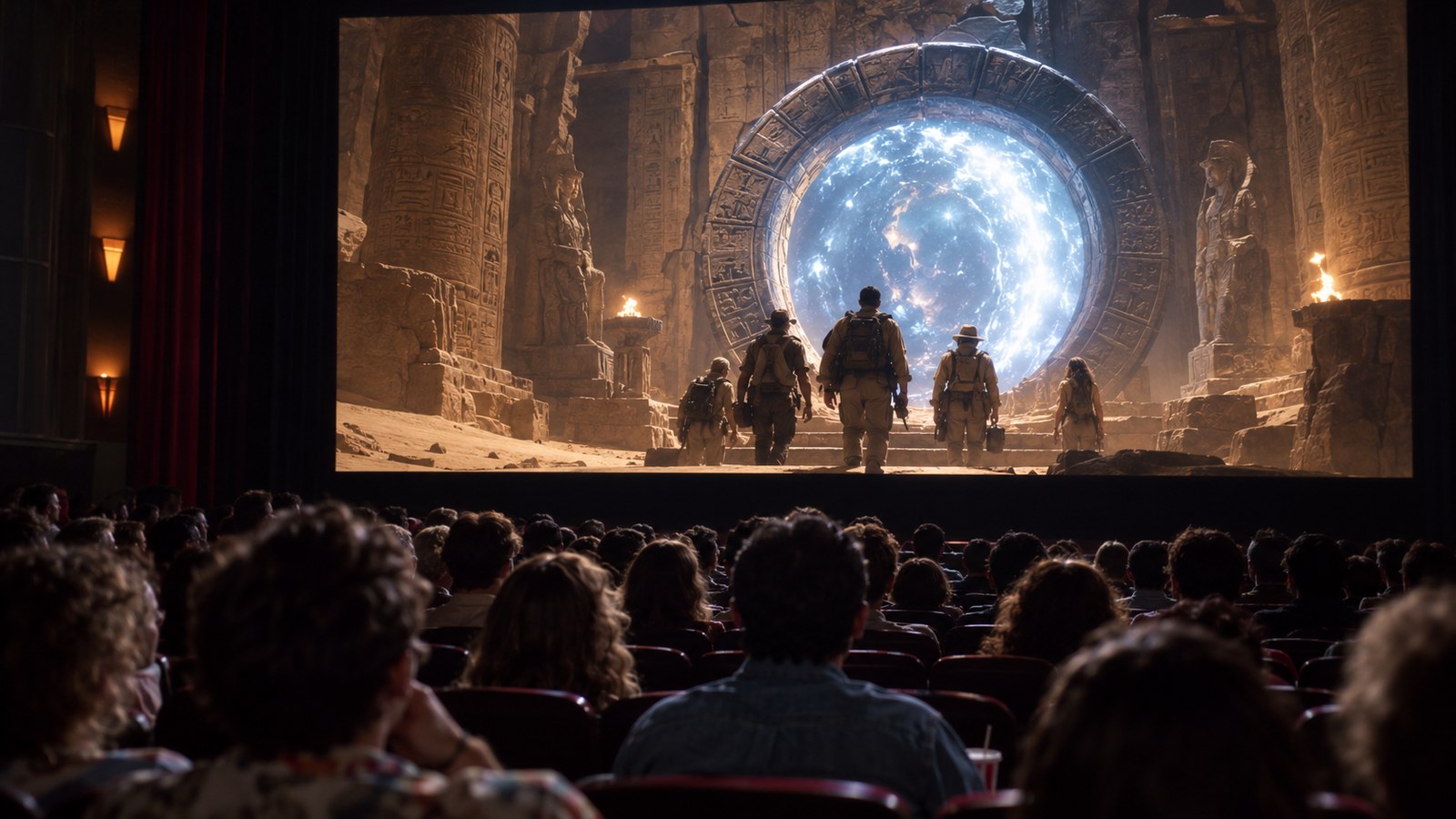
On October 28, 1994, Roland Emmerich’s science-fiction adventure Stargate opened in U.S. theaters. James Spader played linguist Daniel Jackson and Kurt Russell played Colonel Jack O’Neil, members of a team passing through an ancient circular portal to a distant world. The story joined Egyptian imagery, military science fiction and large-scale desert spectacle. Emmerich wrote the film with producer Dean Devlin, using practical sets, location work and digital effects to build a mythology in which ancient gods were advanced extraterrestrials. David Arnold’s orchestral score reinforced the epic tone. The date captures the event before later reputation made its consequences look inevitable, when audiences encountered a new release, performance or institution with only the expectations available at the time.
The film treated archaeology and translation as action skills alongside weapons and command. Its use of Egyptian culture relied on sensational invention, but the portal concept offered an unusually clear engine for future stories and worlds. Popular culture is never made by a famous name alone. Writers, performers, producers, technicians, broadcasters, retailers, venues and audiences shape what becomes visible and what survives. Their collaboration also determines which experiments reach the public and which disappear before they can build momentum. Looking at those conditions turns an anniversary from a list entry into a record of choices, limits and competing interests.
The theatrical release succeeded strongly enough to inspire television expansion rather than immediate film sequels. Stargate SG-1 began in 1997 and helped turn one movie premise into a long-running screen franchise. That afterlife matters because influence does not move in a straight line. Reruns, reissues, new technology, criticism and community memory can change the meaning of a work long after its first appearance. Durable pop history therefore holds creative achievement beside questions of labor, access, power and representation.
Opening day introduced a doorway more durable than any single villain or effect. The idea that each address could lead to another culture made exploration, encounter and return the franchise’s renewable structure. Returning to this October date means separating what participants knew then from what later audiences added. Recordings, photographs, broadcasts and recollections keep the moment active, but they also select and reshape it. That distinction protects against hindsight: a chart position, premiere, publication, concert or opening may become a neat milestone later, but the people present still faced uncertainty. Reading the moment in both directions—through its original conditions and its accumulated meanings—keeps celebration from replacing history. The distance between the immediate event and its continuing interpretation is what makes this episode worth revisiting.
Stargate opened widely on October 28, 1994.
On October 28, 1994, Roland Emmerich's science-fiction adventure Stargate opened in U. S.
Roland Emmerich directed and co-wrote the film.
The film treated archaeology and translation as action skills alongside weapons and command. Its use of Egyptian culture relied on sensational invention, but the portal concept offered an unusually clear engine for future stories and worlds.
Its premise later expanded into several television series.
The theatrical release succeeded strongly enough to inspire television expansion rather than immediate film sequels. Stargate SG-1 began in 1997 and helped turn one movie premise into a long-running screen franchise.
Explore more of "On This Day ..."
Discover more events from the same date across news, politics, technology, sports, and other fields. Each link highlights significant moments that shaped history on different fronts.