

On This Day in Pop: November 16, 1959
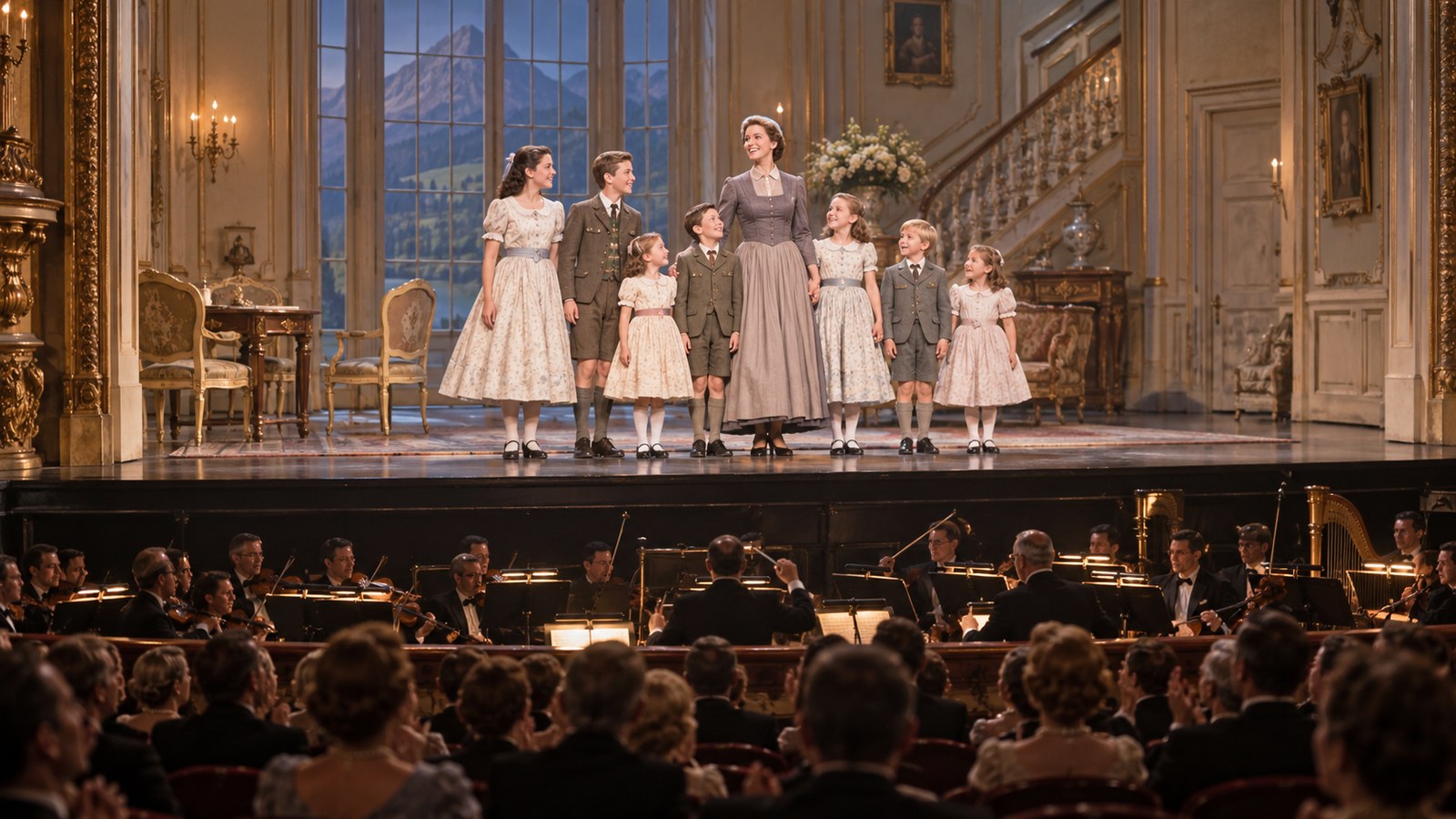
On November 16, 1959, The Sound of Music opened on Broadway at the Lunt-Fontanne Theatre. Mary Martin played Maria and Theodore Bikel played Captain von Trapp in a production staged by director Vincent J. Donehue. Richard Rodgers and Oscar Hammerstein II built songs around family, vocation and the political danger of Austria in 1938. Howard Lindsay and Russel Crouse adapted Maria von Trapp’s memoir after producers first considered using existing Austrian songs. Rodgers and Hammerstein instead created a full original score, their final Broadway collaboration. The date captures the event before later reputation made its consequences look inevitable, when audiences encountered a new release, performance or institution with only the expectations available at the time.
The opening balanced comforting family entertainment with the approach of fascism and forced exile. Its emotional directness made the musical widely accessible, though later adaptations simplified and rearranged parts of the real family’s history. Popular culture is never made by a famous name alone. Writers, performers, producers, technicians, broadcasters, retailers, venues and audiences shape what becomes visible and what survives. Their collaboration also determines which experiments reach the public and which disappear before they can build momentum. Looking at those conditions turns an anniversary from a list entry into a record of choices, limits and competing interests.
The production ran 1,443 performances and won five Tony Awards. A 1965 film substantially expanded the audience and made many songs independent standards, often overshadowing the stage version that introduced them. That afterlife matters because influence does not move in a straight line. Reruns, reissues, new technology, criticism and community memory can change the meaning of a work long after its first appearance. Durable pop history therefore holds creative achievement beside questions of labor, access, power and representation.
Opening night launched a work whose familiarity can conceal careful theatrical engineering. Reprises change meaning as the story darkens, allowing melody to carry memory from domestic play into political departure. Returning to this November date means separating what participants knew then from what later audiences added. Recordings, photographs, broadcasts and recollections keep the moment active, but they also select and reshape it. That distinction protects against hindsight: a chart position, premiere, publication, concert or opening may become a neat milestone later, but the people present still faced uncertainty. Reading the moment in both directions—through its original conditions and its accumulated meanings—keeps celebration from replacing history. The distance between the immediate event and its continuing interpretation is what makes this episode worth revisiting.
The Broadway production opened on November 16, 1959.
On November 16, 1959, The Sound of Music opened on Broadway at the Lunt-Fontanne Theatre. Mary Martin played Maria and Theodore Bikel played Captain von Trapp in a production staged by director Vincent J.
Mary Martin originated Maria on Broadway.
The opening balanced comforting family entertainment with the approach of fascism and forced exile. Its emotional directness made the musical widely accessible, though later adaptations simplified and rearranged parts of the real family's history.
It ran for 1,443 performances.
The production ran 1,443 performances and won five Tony Awards. A 1965 film substantially expanded the audience and made many songs independent standards, often overshadowing the stage version that introduced them.
Explore more of "On This Day ..."
Discover more events from the same date across news, politics, technology, sports, and other fields. Each link highlights significant moments that shaped history on different fronts.