

On This Day in Science: March 22, 1995
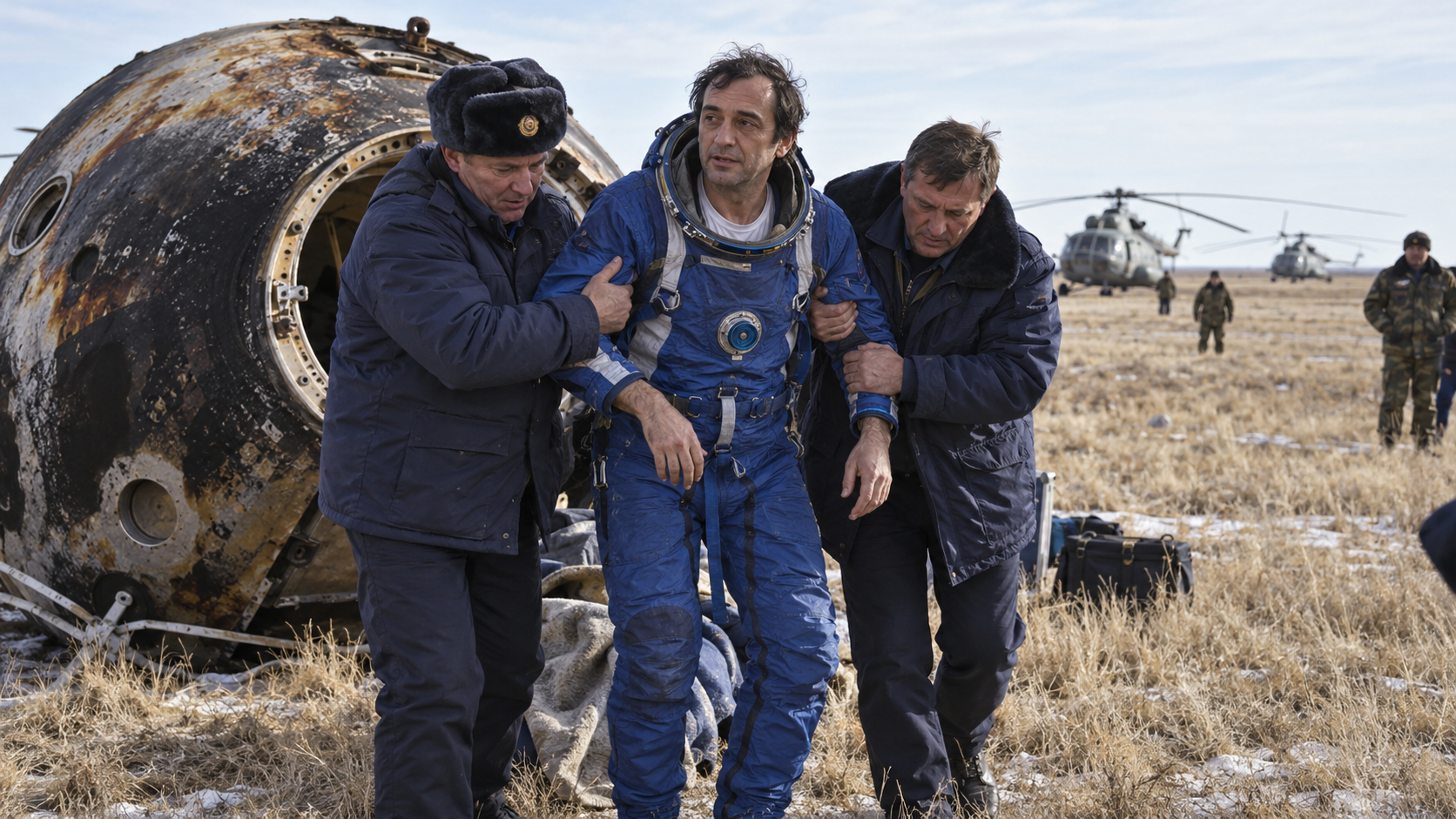
On March 22, 1995, physician-cosmonaut Valeri Polyakov returned to Earth aboard Soyuz TM-20 after more than 437 continuous days in space. He had launched in January 1994 and lived aboard the Mir station through multiple crew rotations. His flight remains the longest single space mission by one person. Polyakov chose to walk from the capsule after landing, a carefully observed demonstration of function after fourteen and a half months in microgravity.
The mission’s purpose extended beyond endurance. Polyakov participated in medical and psychological studies examining cardiovascular change, muscle and bone loss, balance, sleep, workload, mood, and team performance. Mir provided a compact laboratory where daily life, maintenance, exercise, and experiments continued while the crew remained isolated from ordinary society. Countermeasures included regular physical training, but no exercise system could reproduce all effects of gravity.
A journey to Mars and back could require comparable time away from Earth, making long-duration evidence central to mission planning. Polyakov’s experience showed that a trained person could remain productive for more than a year, yet one case could not define the full range of human responses. Genetics, age, workload, spacecraft design, radiation, and group dynamics all influence risk, so later station crews expanded the dataset through different durations and conditions.
Polyakov had also completed an earlier long Mir mission, giving him unusual perspective on adaptation. His record is not proof that months in space are harmless; it is a boundary case that helps scientists ask more precise questions about protection and recovery. The landing connected human determination with clinical observation, making one individual’s experience part of the evidence required for future voyages far from immediate rescue. Seen across a longer timeline, the event also shows that scientific milestones are junctions rather than isolated beginnings. Earlier experiments, tools, and institutions made the work possible, while later teams tested its limits and carried the result into new settings. What survives is more than an anniversary fact: it is a traceable chain of evidence, correction, and application that allows one moment to remain relevant as knowledge and technology continue to change. The anniversary also highlights the difference between a first result and a finished understanding. A successful observation can settle one question while opening several harder ones, and even a failed objective can return measurements that reshape later designs. Preserved data, specimens, photographs, and hardware allow new generations to revisit the work with better tools. Science advances through that continuity, where a specific date marks progress without pretending that inquiry stopped there. Its place on the calendar is therefore useful as an entry point, not an endpoint. The people involved worked with the instruments, assumptions, and social conditions of their time, and later research has both extended and corrected their conclusions. Reconstructing the event carefully means separating what was known that day from what became clear afterward. That distinction protects the history from myth while showing how cumulative evidence turns a memorable episode into lasting scientific knowledge.
Polyakov lived through several crew rotations and completed more than 437 continuous days in orbit.
The duration remains the record for a single human spaceflight.
Medical studies tracked circulation, muscle, bone, balance, sleep, and psychological performance.
Exercise reduced some changes without recreating the full influence of gravity.
Mars-class missions may expose crews to isolation and microgravity for comparable periods.
One record flight cannot answer every question, but it helps define risks and recovery needs.
Explore more of "On This Day ..."
Discover more events from the same date across news, politics, technology, sports, and other fields. Each link highlights significant moments that shaped history on different fronts.