

On This Day in Science: May 7, 1992
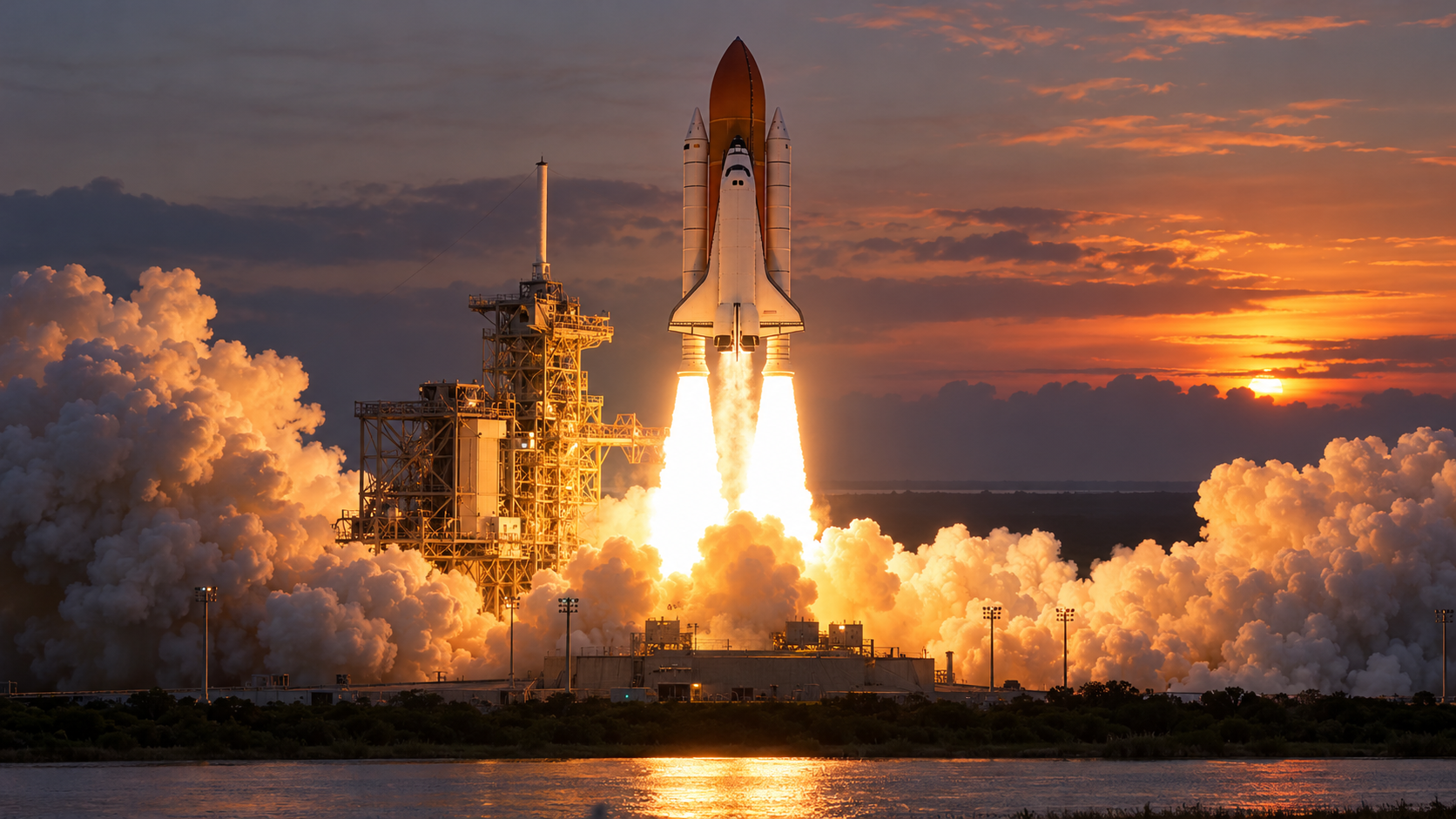
On May 7, 1992, Space Shuttle Endeavour launched from Kennedy Space Center on STS-49, the newest orbiter’s first mission. Commander Daniel Brandenstein led a seven-person crew assigned to rendezvous with Intelsat VI-F3, a communications satellite stranded in a low orbit after an earlier launch problem. The plan was to capture the satellite, attach a new rocket motor, and release it toward geosynchronous orbit.
Two attempts by spacewalkers using a specially designed capture bar did not secure the slowly spinning satellite. Mission Control and the crew improvised a third approach. Pierre Thuot, Richard Hieb, and Thomas Akers stood in the open payload bay and grasped Intelsat by hand, performing the first three-person spacewalk. The orbiter’s robotic arm then positioned the satellite for repair and redeployment.
The mission also tested assembly techniques for a future space station and set records for spacewalking. Endeavour returned with a drag-chute landing system used operationally for the first time on a shuttle. The flight therefore combined recovery, repair, human factors, robotics, and contingency planning rather than serving only as a ceremonial debut.
STS-49 demonstrated that complex missions cannot script every physical interaction in advance. Training and hardware created options, but observation and teamwork solved the actual problem. Endeavour went on to support astronomy, station construction, and scientific research over nineteen years. The anniversary highlights the difference between a first result and a finished understanding. A successful observation can settle one question while opening several harder ones, and even a failed objective can reshape later designs. Preserved data, specimens, photographs, and hardware allow new generations to revisit the work with better tools. Science advances through that continuity rather than stopping on a memorable date. Its calendar date is an entry point, not an endpoint. The people involved worked with the instruments, assumptions, and social conditions of their time, and later research has both extended and corrected their conclusions. Separating what was known that day from what became clear afterward protects the history from myth and shows how cumulative evidence turns an episode into lasting scientific knowledge. For science history, the event also shows how evidence moves from an observation or engineered test into a durable body of knowledge. Instruments supplied measurements, specialists debated interpretation, and later work refined what the first result could mean. Archives preserve the early record while new methods let researchers ask different questions of it. That continuing revision is the process through which a dated milestone remains scientifically useful. Seen across a longer timeline, scientific milestones are junctions rather than isolated beginnings. Earlier experiments, tools, and institutions made the work possible, while later teams tested limits and carried the result into new settings. What survives is a traceable chain of evidence, correction, and application that allows one moment to remain relevant as knowledge and technology continue to change.
Intelsat VI lacked the energy to reach its intended geosynchronous orbit after an earlier launch failure.
Endeavour carried a replacement rocket motor and tools for an orbital rescue.
After capture-bar attempts failed, three astronauts manually steadied the satellite.
It was the first three-person spacewalk and an improvised solution to unexpected motion.
Endeavour supported rendezvous, robotics, repair, redeployment, and extended spacewalks.
The mission established capabilities later used in space-station assembly.
Explore more of "On This Day ..."
Discover more events from the same date across news, politics, technology, sports, and other fields. Each link highlights significant moments that shaped history on different fronts.