

On This Day in Science: May 11, 2009
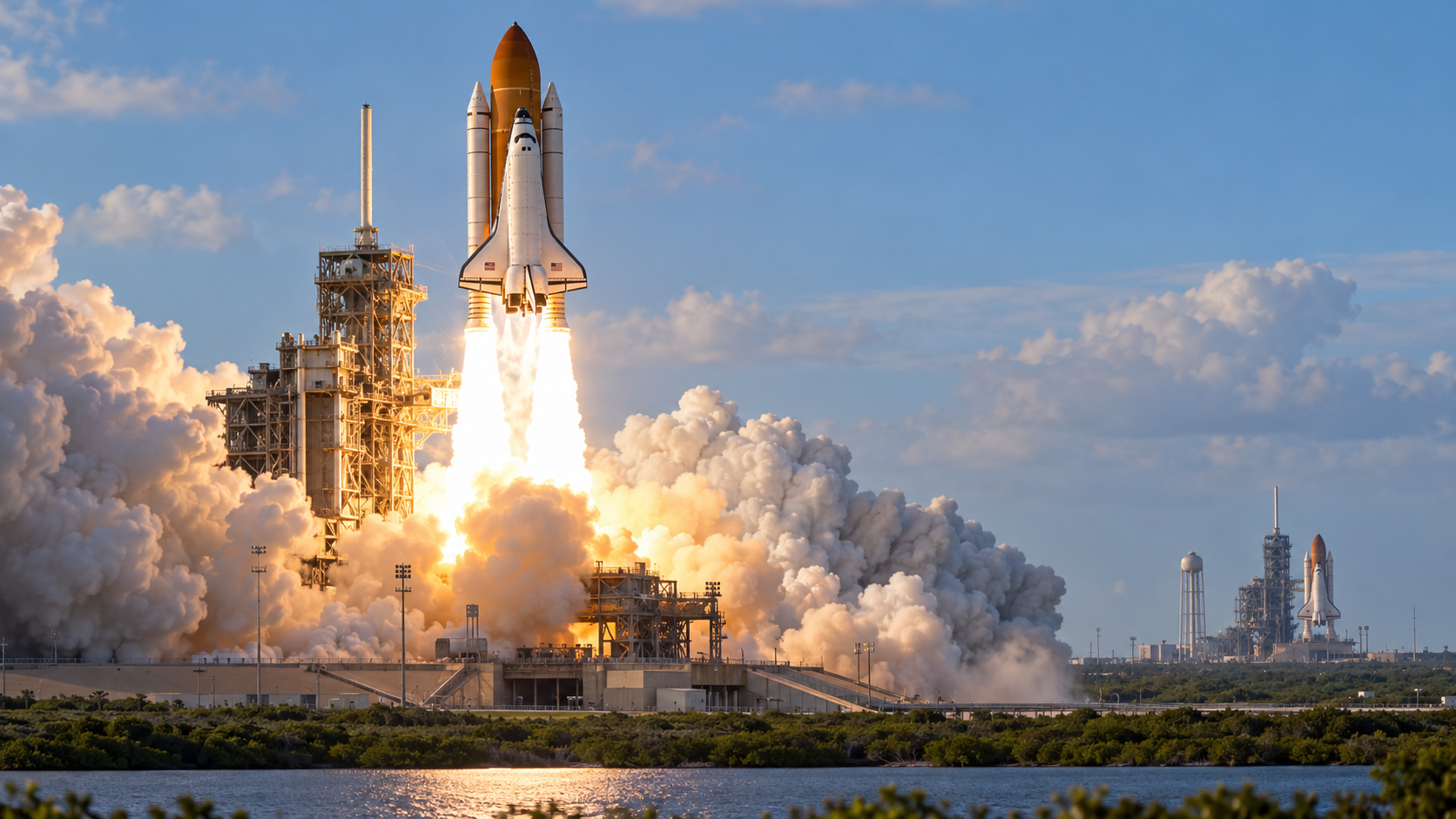
On May 11, 2009, Space Shuttle Atlantis launched from Kennedy Space Center with seven astronauts on STS-125, the fifth and final servicing mission to the Hubble Space Telescope. Hubble orbited too high and at the wrong inclination for refuge at the International Space Station, so Endeavour waited on another pad as a rescue option. Atlantis instead carried the tools, replacement parts, and procedures needed for an unusually self-contained repair mission.
The crew captured Hubble with the shuttle’s robotic arm and secured it in the payload bay. Across five spacewalks, astronauts installed Wide Field Camera 3 and the Cosmic Origins Spectrograph, replaced gyroscopes, batteries, insulation, and a guidance sensor, and attached a mechanism that could support a future robotic rendezvous. They also repaired two instruments never designed for orbital servicing by opening protective panels and replacing electronic boards.
The new camera broadened Hubble’s imaging from ultraviolet through near-infrared wavelengths, while the spectrograph increased sensitivity to faint ultraviolet sources. Repairing the Space Telescope Imaging Spectrograph and Advanced Camera for Surveys restored valuable capabilities rather than discarding them. The work demanded careful choreography around sharp edges, tiny fasteners, and fragile optics.
Atlantis landed on May 24 after extending Hubble’s life far beyond original expectations. The launch began a mission that treated a space observatory as maintainable scientific infrastructure, showing how access, modular design, and human dexterity can preserve an irreplaceable instrument. The anniversary highlights the difference between a first result and a finished understanding. A successful observation can settle one question while opening several harder ones, and even a failed objective can reshape later designs. Preserved data, specimens, photographs, and hardware allow new generations to revisit the work with better tools. Science advances through that continuity rather than stopping on a memorable date. Its calendar date is an entry point, not an endpoint. The people involved worked with the instruments, assumptions, and social conditions of their time, and later research has both extended and corrected their conclusions. Separating what was known that day from what became clear afterward protects the history from myth and shows how cumulative evidence turns an episode into lasting scientific knowledge. For science history, the event also shows how evidence moves from an observation or engineered test into a durable body of knowledge. Instruments supplied measurements, specialists debated interpretation, and later work refined what the first result could mean. Archives preserve the early record while new methods let researchers ask different questions of it. That continuing revision is the process through which a dated milestone remains scientifically useful. Seen across a longer timeline, scientific milestones are junctions rather than isolated beginnings. Earlier experiments, tools, and institutions made the work possible, while later teams tested limits and carried the result into new settings. What survives is a traceable chain of evidence, correction, and application that allows one moment to remain relevant as knowledge and technology continue to change.
Hubble's orbit did not allow Atlantis to reach the International Space Station in an emergency.
Endeavour therefore stood ready for a possible rescue flight.
Astronauts installed new instruments and replaced power, pointing, and thermal-control hardware.
They also repaired electronics inside instruments not originally designed for that work.
Wide Field Camera 3 and the Cosmic Origins Spectrograph greatly expanded observing capability.
The servicing mission enabled years of additional astronomy across the electromagnetic spectrum.
Explore more of "On This Day ..."
Discover more events from the same date across news, politics, technology, sports, and other fields. Each link highlights significant moments that shaped history on different fronts.