

How Antibiotic Resistance Evolves Explainer
Antibiotic resistance occurs when bacteria survive drugs that once killed them or stopped their growth. The person does not become resistant; the bacterial population changes. Random mutations may alter a drug target or regulation, and bacteria can acquire resistance genes from other cells. Antibiotic exposure then removes susceptible competitors, giving resistant survivors a greater chance to multiply.
Resistance mechanisms vary. Bacteria may produce enzymes that destroy a drug, change the molecule it binds, pump it out, reduce entry, or bypass the blocked pathway. One cell can carry several mechanisms, and one gene can sometimes protect against several related drugs. Resistance does not make a bacterium universally invulnerable, but it can sharply limit treatment choices.
Genes move vertically to daughter cells and horizontally through plasmids, viruses that infect bacteria, or uptake of free DNA. Hospitals, communities, farms, wastewater, animals, and travel connect microbial populations. A resistant strain can spread even after the original antibiotic pressure ends. Infection prevention therefore matters as much as choosing the right drug.
Any antibiotic use can select resistance, but unnecessary exposure adds risk without benefit. Antibiotics do not treat viruses, and using an overly broad drug can affect many helpful bacteria. Incomplete or inappropriate regimens may leave surviving pathogens, while excessively long treatment also increases exposure. The correct dose and duration depend on the infection and current medical guidance.
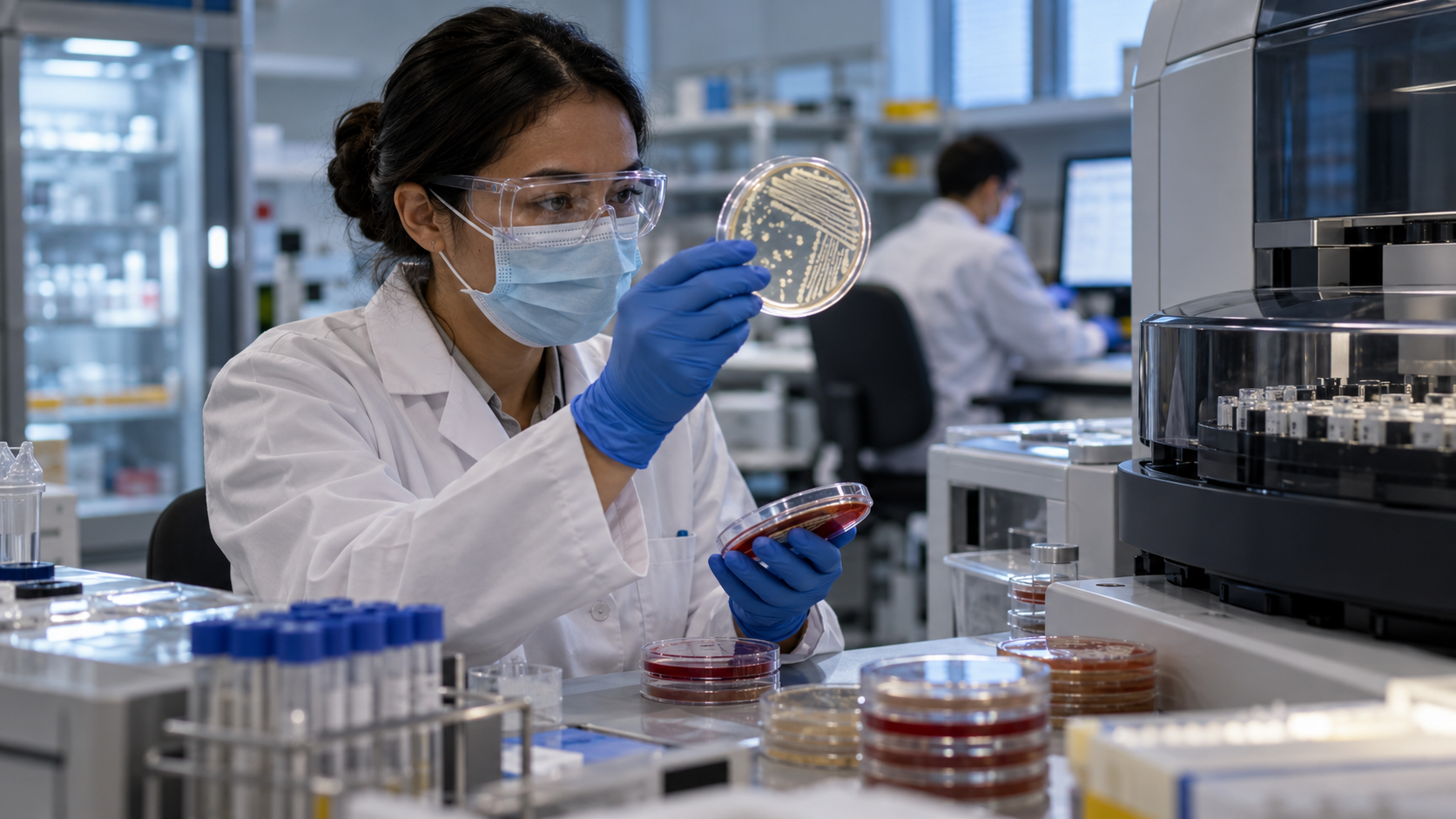
Laboratories identify organisms and test which drugs inhibit them. Rapid diagnostics can shorten the time to targeted therapy, but a specimen may not represent every infection site and resistance can change. Clinicians combine test results with drug penetration, allergies, kidney or liver function, severity, and local resistance patterns. Some urgent cases require broad initial therapy before results arrive.
Stewardship programs improve prescribing, while vaccination, sanitation, ventilation, hand hygiene, safe food practices, and hospital precautions prevent infections and transmission. New antibiotics and alternative treatments are important but cannot remove evolutionary pressure. Preserving effectiveness requires using drugs only when likely to help, monitoring resistance, and stopping resistant organisms from spreading.
Resistance belongs to bacteria, and antibiotic exposure selects surviving resistant variants.
Enzymes, altered targets, efflux, reduced entry, and metabolic bypass can defeat drugs.
Resistance genes spread both through reproduction and horizontal gene transfer.
Unnecessary, overly broad, or poorly chosen treatment creates avoidable selection pressure.
Diagnostic testing guides therapy but must be interpreted with the patient and infection site.
Stewardship and infection prevention slow both the emergence and transmission of resistance.
Explore more "Explainers"
Discover additional explainers across politics, science, business, technology, and other fields. Each explainer breaks down a complex idea into clear, everyday language—helping you better understand how major concepts, systems, and debates shape the world around us.