

On This Day in Science: July 3, 2005
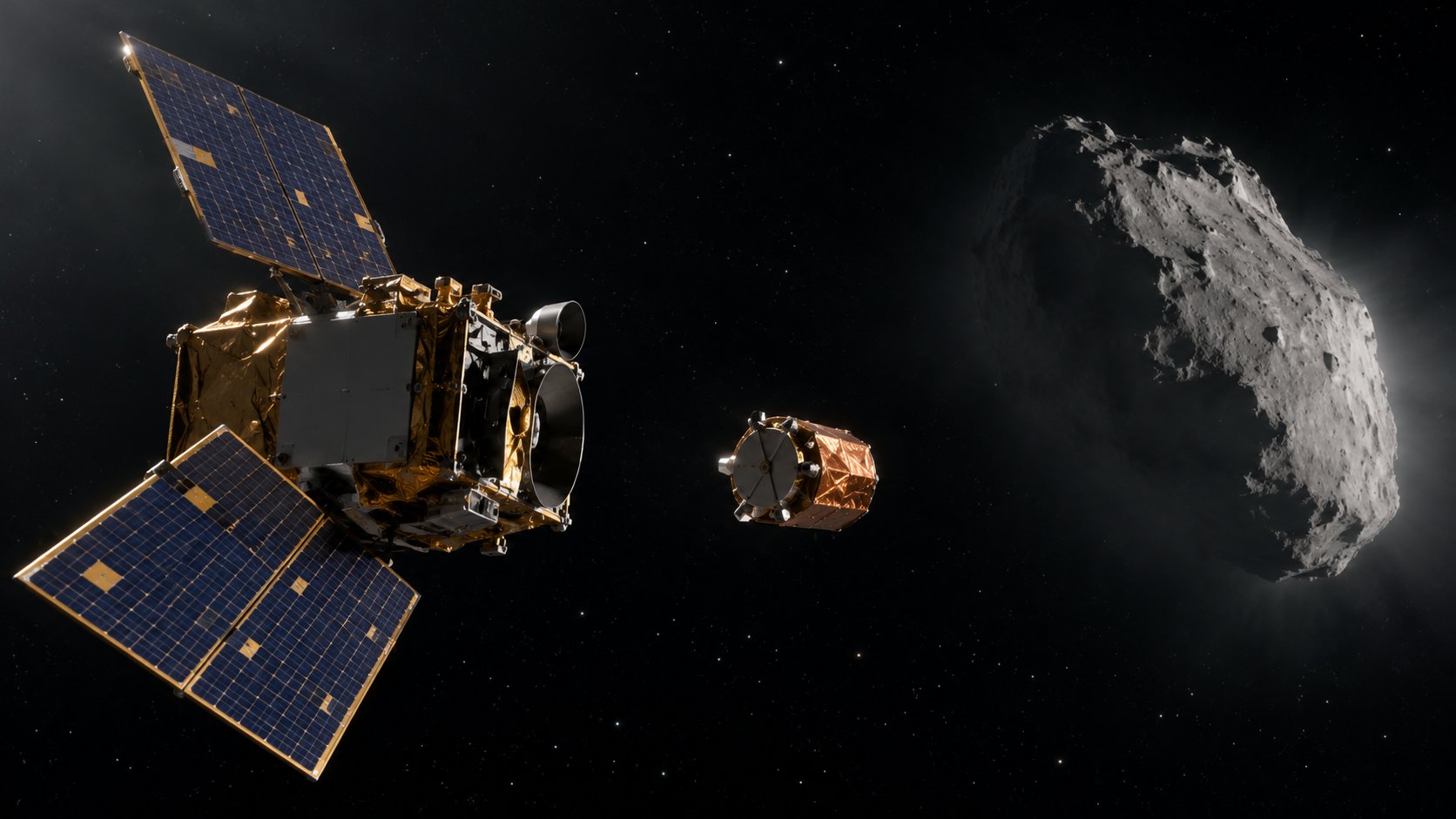
On July 3, 2005, NASA’s Deep Impact spacecraft released an 820-pound copper-and-aluminum impactor on a collision course with comet 9P/Tempel 1. The separation occurred about twenty-four hours before the planned encounter. The main flyby spacecraft adjusted its path so it could observe the collision while passing the comet at a safer distance.
The impactor carried its own camera and navigation system. As the irregular comet grew larger in view, autonomous guidance made small trajectory corrections. The mission was designed to expose material below the dark, altered surface, allowing instruments on the flyby spacecraft and telescopes on and around Earth to study freshly excavated dust and gas.
Release was a critical commitment because the two vehicles could no longer be recovered as one. Controllers at the Jet Propulsion Laboratory monitored communications while the spacecraft handled the fastest final decisions. On July 4, the impactor struck Tempel 1 and produced a bright plume that temporarily obscured the crater.
The experiment showed that a planned impact could reveal a comet’s interior properties and composition. Later missions revisited Tempel 1 and imaged the impact site. Deep Impact also provided experience with precise autonomous targeting of a small moving body, a capability relevant to exploration and planetary-defense research. The anniversary highlights the difference between a first result and a finished understanding. A successful observation can settle one question while opening several harder ones, and even a failed objective can reshape later designs. Preserved data, specimens, photographs, and hardware allow new generations to revisit the work with better tools. Science advances through that continuity rather than stopping on a memorable date. Its calendar date is an entry point, not an endpoint. The people involved worked with the instruments, assumptions, and social conditions of their time, and later research has both extended and corrected their conclusions. Separating what was known that day from what became clear afterward protects the history from myth and shows how cumulative evidence turns an episode into lasting scientific knowledge. For science history, the event also shows how evidence moves from an observation or engineered test into a durable body of knowledge. Instruments supplied measurements, specialists debated interpretation, and later work refined what the first result could mean. Archives preserve the early record while new methods let researchers ask different questions of it. That continuing revision is the process through which a dated milestone remains scientifically useful. Seen across a longer timeline, scientific milestones are junctions rather than isolated beginnings. Earlier experiments, tools, and institutions made the work possible, while later teams tested limits and carried the result into new settings. What survives is a traceable chain of evidence, correction, and application that allows one moment to remain relevant as knowledge and technology continue to change.
The impactor was released one day before collision.
The flyby craft changed course to preserve its observing geometry and avoid the nucleus.
The impactor's camera tracked the comet during its final approach.
Onboard guidance corrected the path faster than Earth-based commands could arrive.
The collision excavated material hidden beneath the comet's surface.
Observations helped scientists study structure, dust, gas, and volatile compounds.
Explore more of "On This Day ..."
Discover more events from the same date across news, politics, technology, sports, and other fields. Each link highlights significant moments that shaped history on different fronts.