

On This Day in Science: July 31, 1964
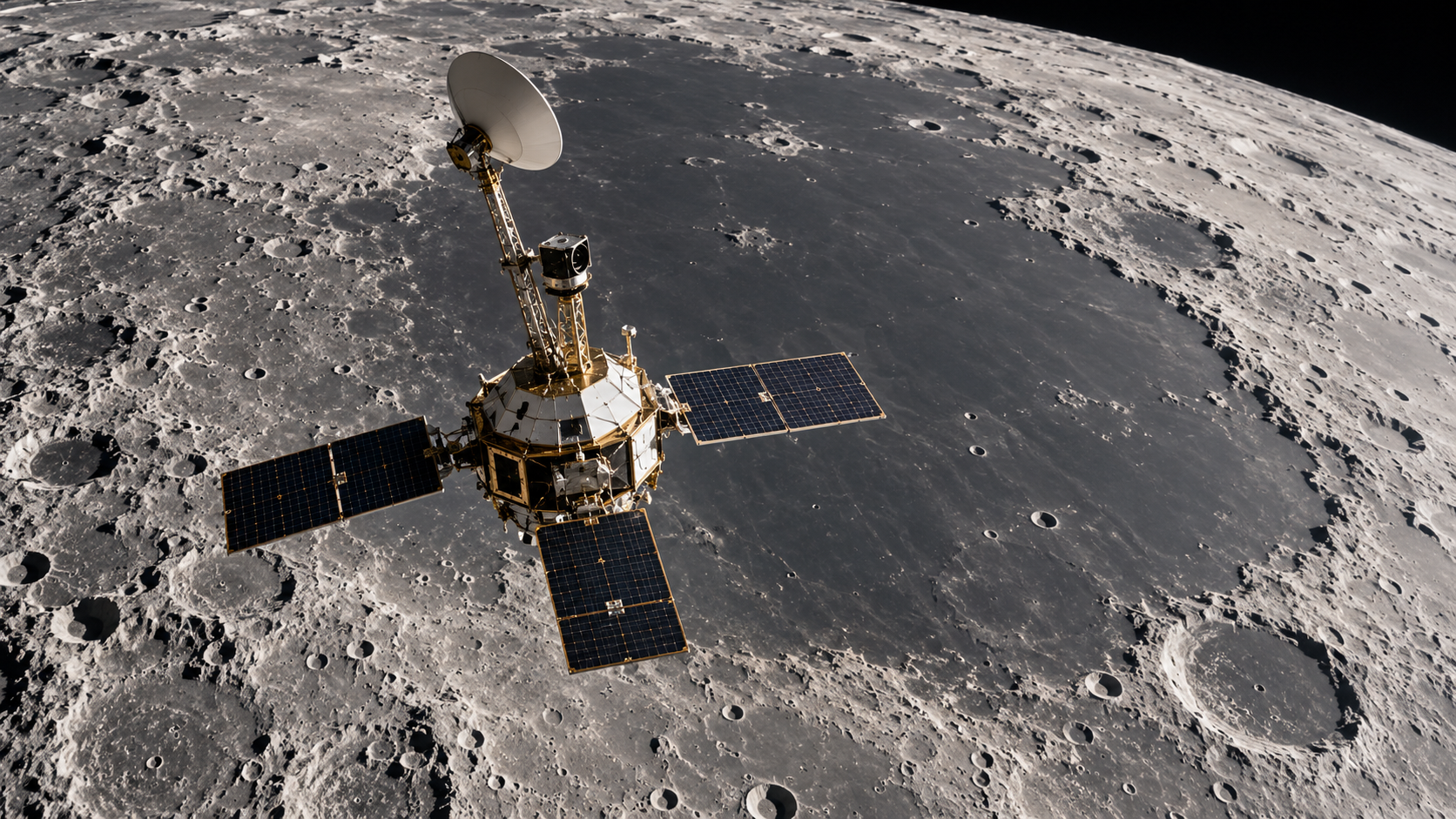
On July 31, 1964, NASA’s Ranger 7 transmitted more than 4,300 photographs during the final seventeen minutes of its flight to the Moon. The spacecraft’s six television cameras began operating as it approached Mare Nubium, sending progressively finer views until the probe struck the surface as designed.
Ranger was a series of impact missions intended to photograph possible landing terrain before destruction. Earlier flights had failed to return the planned lunar images because of launch, power, guidance, or spacecraft problems. Ranger 7’s success therefore represented both a scientific result and validation of redesigned systems and testing.
The final frames resolved features far smaller than Earth-based telescopes could show. Analysts used the images to study craters, boulders, and surface texture, improving estimates of terrain roughness for future robotic and crewed landings. The target area was later named Mare Cognitum, the “Sea That Has Become Known.”
Ranger 7 did not slow down, orbit, or survive impact. Its value came from transmitting data continuously while altitude fell and resolution improved. The mission established a direct close-range photographic record of the Moon and helped restore confidence in the American robotic program on the path toward Surveyor and Apollo. The anniversary highlights the difference between a first result and a finished understanding. A successful observation can settle one question while opening several harder ones, and even a failed objective can reshape later designs. Preserved data, specimens, photographs, and hardware allow new generations to revisit the work with better tools. Science advances through that continuity rather than stopping on a memorable date. Its calendar date is an entry point, not an endpoint. The people involved worked with the instruments, assumptions, and social conditions of their time, and later research has both extended and corrected their conclusions. Separating what was known that day from what became clear afterward protects the history from myth and shows how cumulative evidence turns an episode into lasting scientific knowledge. For science history, the event also shows how evidence moves from an observation or engineered test into a durable body of knowledge. Instruments supplied measurements, specialists debated interpretation, and later work refined what the first result could mean. Archives preserve the early record while new methods let researchers ask different questions of it. That continuing revision is the process through which a dated milestone remains scientifically useful. Seen across a longer timeline, scientific milestones are junctions rather than isolated beginnings. Earlier experiments, tools, and institutions made the work possible, while later teams tested limits and carried the result into new settings. What survives is a traceable chain of evidence, correction, and application that allows one moment to remain relevant as knowledge and technology continue to change.
Six television cameras transmitted continuously during the final descent.
Each succeeding frame covered a smaller area with finer surface detail.
Ranger 7 carried no landing system or braking engine.
It was designed to keep sending images until it struck the Moon.
Several earlier Rangers had missed their scientific goals.
The successful camera sequence validated improvements and informed later landing missions.
Explore more of "On This Day ..."
Discover more events from the same date across news, politics, technology, sports, and other fields. Each link highlights significant moments that shaped history on different fronts.