

How Continental Rifts Open New Oceans Explainer
A continental rift begins where Earth’s lithosphere is pulled apart. Tectonic forces stretch the crust and uppermost mantle, producing normal faults that lower blocks into valleys while neighboring blocks remain high as shoulders. The mechanism links local conditions to larger circulation, chemistry, or geologic structure.
As stretching thins the lithosphere, hot mantle rises to replace displaced material. Lower pressure can cause partial melting, supplying magma that intrudes into fractures or erupts, although the amount and timing of volcanism differ among rifts. Water, heat, rock, and air move along gradients, but terrain and timing shape the route.
Faulting, earthquakes, sedimentation, and magma progressively weaken and reshape the plate. Drainage may collect in elongated lakes, and the crust becomes thinner until continental rocks can no longer accommodate the extension as one connected plate. Feedbacks can strengthen or weaken the process, which is why similar settings do not produce identical outcomes.
If rifting continues, the continent splits and seawater may enter the low basin. New basaltic oceanic crust then forms along a spreading center as magma rises, cools, and moves outward, creating a young ocean between diverging continental margins. Observations must cover enough space and time to distinguish a persistent pattern from a brief event.
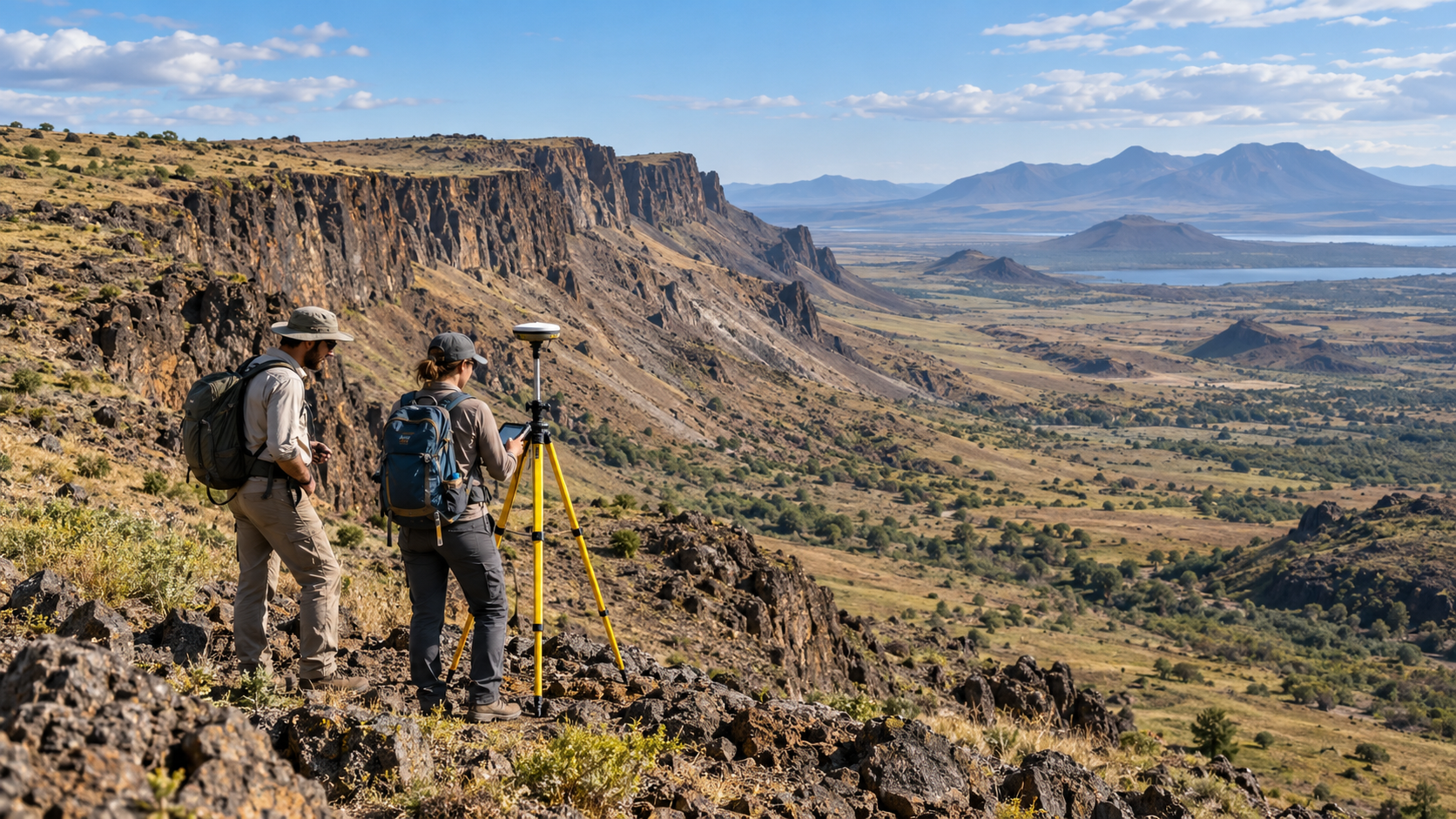
Geologists map faults, date volcanic rocks, image deep structure with seismic waves, and measure motion with satellites. Magnetic patterns and crustal composition distinguish true seafloor spreading from a stretched basin that has not reached breakup. Researchers combine field instruments, remote sensing, samples, and models because no single view captures every stage.
Many rifts fail before opening an ocean because regional forces change or extension shifts elsewhere. Successful examples unfold over millions of years, so present landscapes represent stages in a process rather than guaranteed previews of a future ocean. The explanation is strongest when those independent lines of evidence agree within measured uncertainty.
Tectonic extension stretches continental lithosphere.
Normal faults lower crustal blocks into rift valleys.
Thinning permits hot mantle to rise and sometimes melt.
Continued extension can split the continental crust.
A spreading ridge then creates new basaltic ocean floor.
Many rifts stop before reaching complete breakup.
Explore more "Explainers"
Discover additional explainers across politics, science, business, technology, and other fields. Each explainer breaks down a complex idea into clear, everyday language—helping you better understand how major concepts, systems, and debates shape the world around us.