

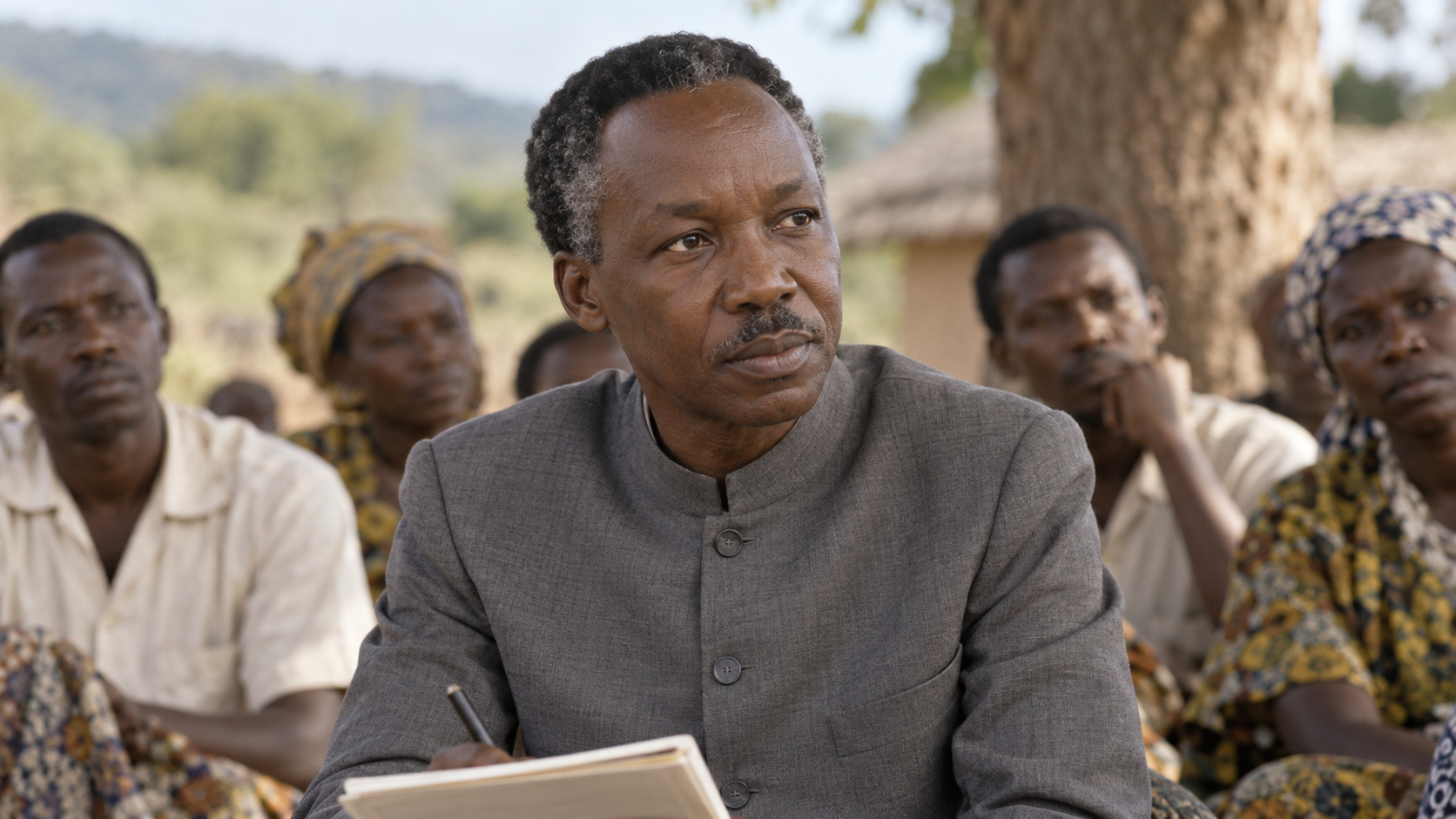
“But people cannot be developed; they can only develop themselves.”
Julius Nyerere argued that development must involve the people whose lives it is intended to improve in Freedom and Development, a statement associated with 1968 and preserved by the Mwalimu Nyerere Foundation. A later discussion of development in the journal Innovations quotes the same sentence from its collected publication. The opening word But connects it to his preceding claim about development and freedom. Nyerere was distinguishing the construction of things from the growth of people’s ability to understand, choose, and act. The quote concerns political participation as well as economic policy, because decisions about development also decide who has power over its direction.
His explanation gives the sentence a more specific meaning than a general appeal to self-help. An outsider can provide a house or equipment, but cannot simply hand over the confidence and understanding that come from participation. Nyerere described learning, making decisions, and joining discussion as elements of people’s development. He also assigned education and leadership a role in creating the conditions for that work. The argument therefore does not make public institutions unnecessary. It challenges institutions to support a person’s capacity to act, rather than treating compliance with an externally designed programme as proof that the person has become more capable or free.
This distinction can be applied to a community project. Installing a facility may meet an immediate need, yet its lasting value also depends on whether residents understand its operation, can influence its use, and have a workable way to address problems. Those considerations do not erase the need for technical expertise. They establish a relationship between expertise and the experience of the people who will live with the result. The example is an application of Nyerere’s argument, not a project described in this sentence. It shows why counting completed structures alone can leave important questions about agency and sustainability unanswered.
The statement is best read as a standard for evaluating development, including the conduct of leaders who invoke it. Its emphasis on voluntary participation and decision-making should not be treated as a blanket endorsement of a government or of every policy pursued in its name. A programme can claim to serve people while giving them little opportunity to question its assumptions. The quote directs attention to that gap. Readers can ask whether consultation can change a decision, whether knowledge is shared, and whether people acquire greater control over their circumstances. Development becomes more substantial when its intended beneficiaries can take part in defining what improvement means.
The Foundation preserves Freedom and Development, Nyerere’s argument associated with 1968. Innovations later quotes the sentence from its collected publication.
The opening But follows his discussion of development and freedom. The subject is people’s capacity to participate, understand, and decide.
Nyerere distinguished material construction from the development of human agency. Education and leadership should help people make informed choices.
Participation needs to affect decisions. A programme that only demands compliance can meet a material target while leaving people with little control.
Community projects can be evaluated by asking who influences their design, how knowledge is shared, and how problems can be corrected.
The quote supplies a standard for scrutinizing leaders and programmes, including those that use the language of people’s development.
Explore more "Quotes of The Day"
Discover more notable quotes from influential voices across politics, science, business, technology, sports, and culture. Each quote offers insight into how ideas, beliefs, and decisions shape the world around us.