

Cataracts Explainer
A cataract is a cloudy area in the lens inside the eye. The lens normally helps focus light, so clouding can make vision blurred, hazy or less colourful. Cataracts commonly develop with age and may initially cause little noticeable difficulty. Later they can interfere with reading, driving or other daily activities. They can occur in one or both eyes, with different effects on each side. They do not spread from one eye to the other like an infection.
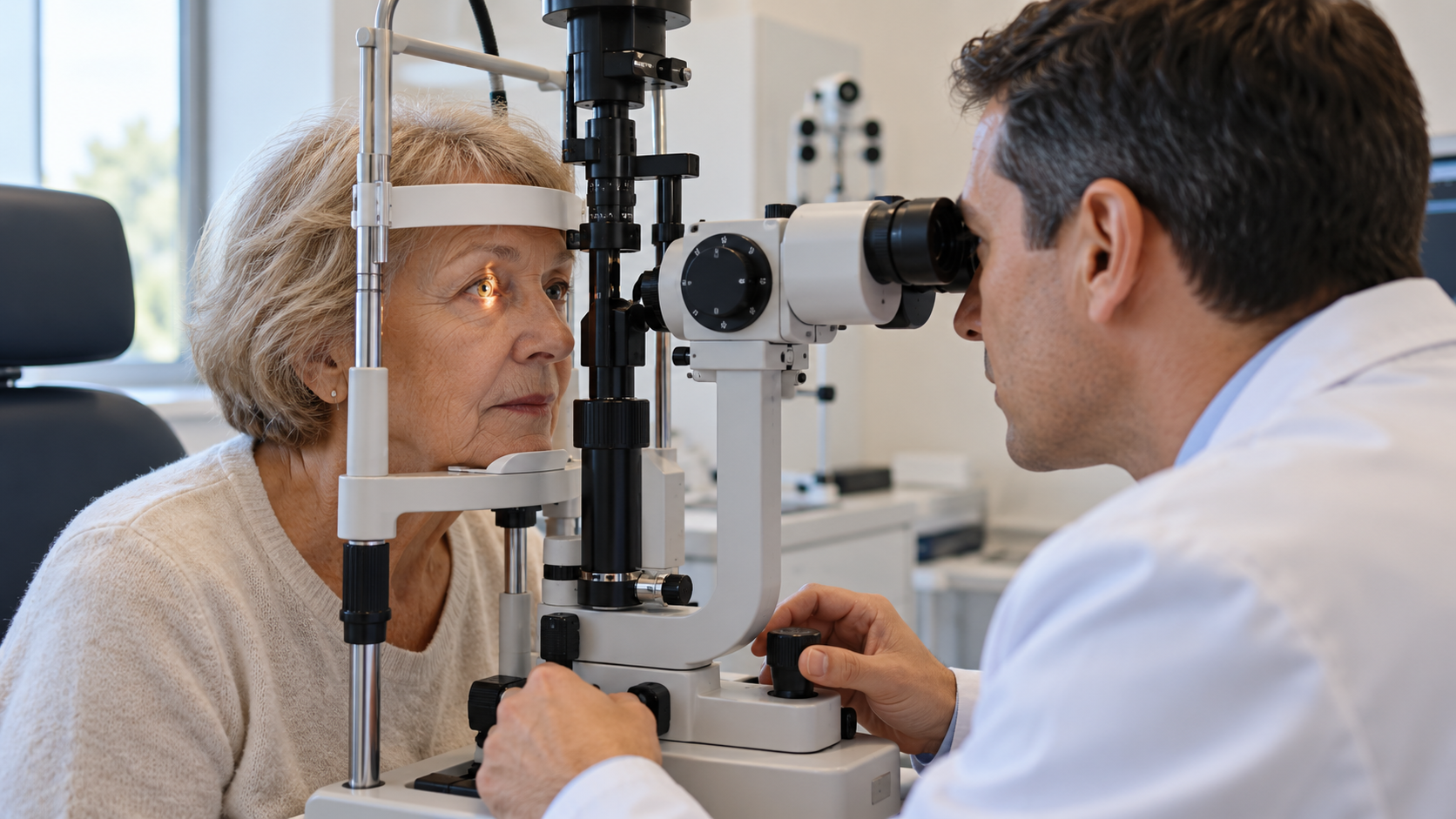
Glare, halos around lights, trouble seeing at night and frequent changes in a glasses prescription can be clues. However, those symptoms also occur with other eye problems. An eye examination can identify whether a cataract is responsible and check the rest of the eye. Explaining the activities that have become difficult is useful. A blurred view is a symptom, while the examination establishes its cause and whether another condition also limits vision.
Surgery removes the cloudy lens and replaces it with an artificial lens. It is the established way to get rid of a cataract, but a diagnosis does not automatically mean surgery is needed immediately. The decision usually considers how much vision interferes with daily life, the eye’s overall health and the expected benefits and risks. Updated glasses or brighter reading light may help early on. These measures can improve function temporarily without removing the underlying clouding.
Cataract surgery often improves vision, but the outcome also depends on other eye conditions and healing. The care team measures the eye, discusses the replacement lens and explains preparation and recovery. Follow the individual instructions about medicines, eye drops and activity rather than applying someone else’s schedule. Arrange safe transport after the procedure. Surgery is common and effective, yet it still requires informed decisions, follow-up appointments and prompt contact if concerning symptoms develop.
Age-related changes are the most common cause, but cataracts can also follow an eye injury or occur in connection with radiation exposure or other circumstances. Diabetes and steroid use can be relevant risk factors. Tell the eye professional about past injuries, operations and medicines. That history helps explain the problem and plan care without assuming every cataract has exactly the same background.
Children can also have cataracts, including cataracts present from birth. Their assessment and treatment differ from routine adult care because vision is still developing. A cataract that interferes with a child's vision may require prompt treatment to avoid additional visual problems. Adult advice about watching a mild cataract for a while should therefore not be generalized to a child without specialist guidance.
Describe specific problems such as reading labels, managing glare or seeing safely after dark. That information makes a discussion about surgery more concrete than describing vision only as worse. Ask how much improvement is expected and whether another eye condition could limit it. Choosing the timing is a shared decision that connects the examination findings with the person's needs and preferences.
If both eyes need treatment, surgery is usually performed on separate days. The team should explain the plan and how the eyes will be assessed between procedures. Lens choices and expectations for glasses afterward deserve discussion before surgery. A new artificial lens can restore clearer focusing through the previously cloudy lens, but it does not make every other cause of poor vision disappear.
Use prescribed drops and any protective shield as directed, and attend the scheduled checks. Contact the eye team promptly for worsening vision, severe or persistent pain, marked redness or new flashes and floaters after surgery. Do not dismiss those changes as routine recovery. Clear instructions about which symptoms need help and whom to call are part of a safe postoperative plan.
Cloudy vision can sometimes return later because the capsule behind the replacement lens becomes cloudy, a condition called posterior capsule opacification. It is sometimes called a secondary cataract, although the removed natural lens has not grown back. Laser treatment may help when that is the cause. New visual changes still need assessment, since not every later problem has that explanation and other eye conditions require different care.
Explore more "Explainers"
Discover additional explainers across politics, science, business, technology, and other fields. Each explainer breaks down a complex idea into clear, everyday language—helping you better understand how major concepts, systems, and debates shape the world around us.