

On This Day in Politics: February 1, 1960
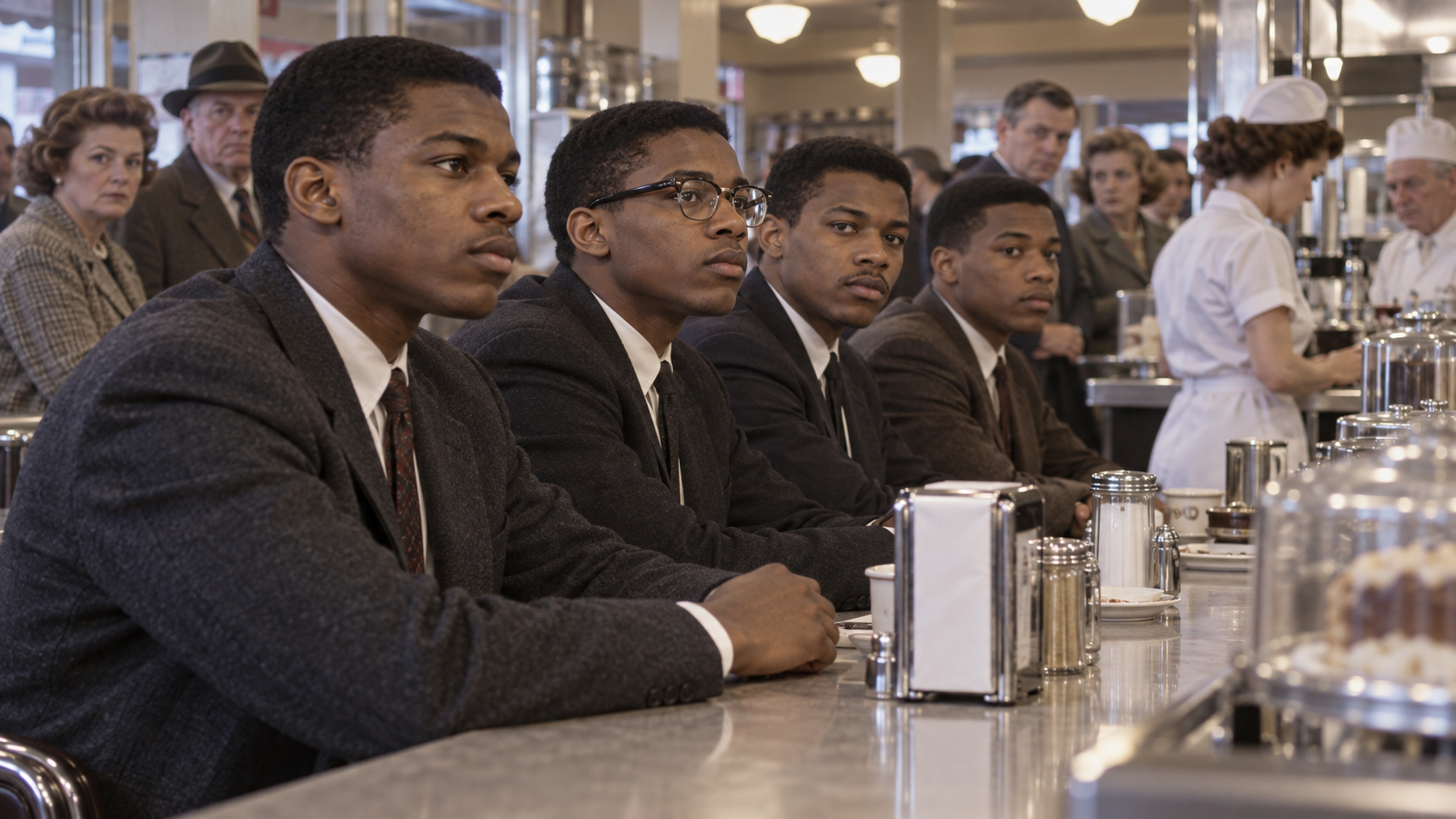
On February 1, 1960, four freshmen from North Carolina Agricultural and Technical State University sat at the whites-only lunch counter inside the F. W. Woolworth store in downtown Greensboro. Ezell Blair Jr., David Richmond, Franklin McCain, and Joseph McNeil first purchased small items elsewhere in the store, then took seats and asked to be served coffee. Staff refused because they were Black. The students remained quietly at the counter until closing, resisting segregation through their presence rather than leaving when service was denied. Their disciplined action challenged a business that accepted Black customers’ money at retail counters while excluding them from equal service at its lunch counter.
The protest was carefully discussed, even if its national consequences could not be predicted. The students had talked in their dormitory about segregation and the need to act, drawing on earlier civil-rights challenges and principles of nonviolent protest. They chose Woolworth because the contradiction in its policy was visible and because a downtown chain store could be pressured economically and publicly. On the next day, more students joined them. Participation grew rapidly as women from Bennett College and students from other campuses became essential organizers. Newspapers and television carried the images beyond Greensboro, giving young people elsewhere a method they could adapt without waiting for established leaders to direct them.
Sit-ins spread across North Carolina and then throughout the South. Participants trained to endure insults, food thrown at them, arrests, and physical attacks without retaliating. Boycotts reinforced the occupation of lunch counters by denying stores other sales. In Greensboro, the campaign continued for nearly six months before the Woolworth counter served Black customers on July 25, 1960; Black store employees were among the first served under the changed policy. The victory was concrete but limited. One counter’s integration did not end discrimination in housing, schools, employment, voting, or other public accommodations, and many businesses resisted until local pressure or federal law forced change.
The Greensboro action helped shift the civil-rights movement’s pace and leadership. Sit-in organizers gathered in April 1960 at Shaw University, where the Student Nonviolent Coordinating Committee emerged as an independent force. Student activists went on to support freedom rides, voter registration, and community organizing, often pressing older organizations to take bolder risks. The original Woolworth counter is now preserved by the Smithsonian, and its Greensboro building houses the International Civil Rights Center and Museum. The four students’ decision endures as a political lesson in direct action: a rule that appeared routine became indefensible when they occupied the space, exposed its contradiction, and invited others to join a campaign sustained long enough to change it.
The four students attended a historically Black land-grant college in Greensboro. Their dormitory debates centered on whether accepting segregation through routine compliance allowed an unjust system to continue unchallenged.
Earlier sit-ins had occurred in other cities, but the Greensboro protest arrived when television networks and student networks could spread a replicable tactic quickly. Its visibility turned a local action into a regional catalyst.
The first day ended without service or arrest. Returning with additional participants transformed a symbolic refusal into an organized campaign capable of maintaining pressure on the store.
Desegregating a lunch counter addressed one form of public exclusion. Activists still faced violence, legal retaliation, and entrenched barriers to voting and economic opportunity far beyond the retail setting.
The sit-in wave expanded the movement’s base by placing college students at the center of strategy and risk. SNCC’s formation gave that generation an organization of its own.
Modern campaigns continue to borrow the sit-in’s logic: use disciplined physical presence to make an unequal rule visible, disrupt normal operations, and create a moral and economic cost for maintaining the status quo.
Explore more of "On This Day ..."
Discover more events from the same date across news, politics, technology, sports, and other fields. Each link highlights significant moments that shaped history on different fronts.