

On This Day in Tech: September 4, 1882
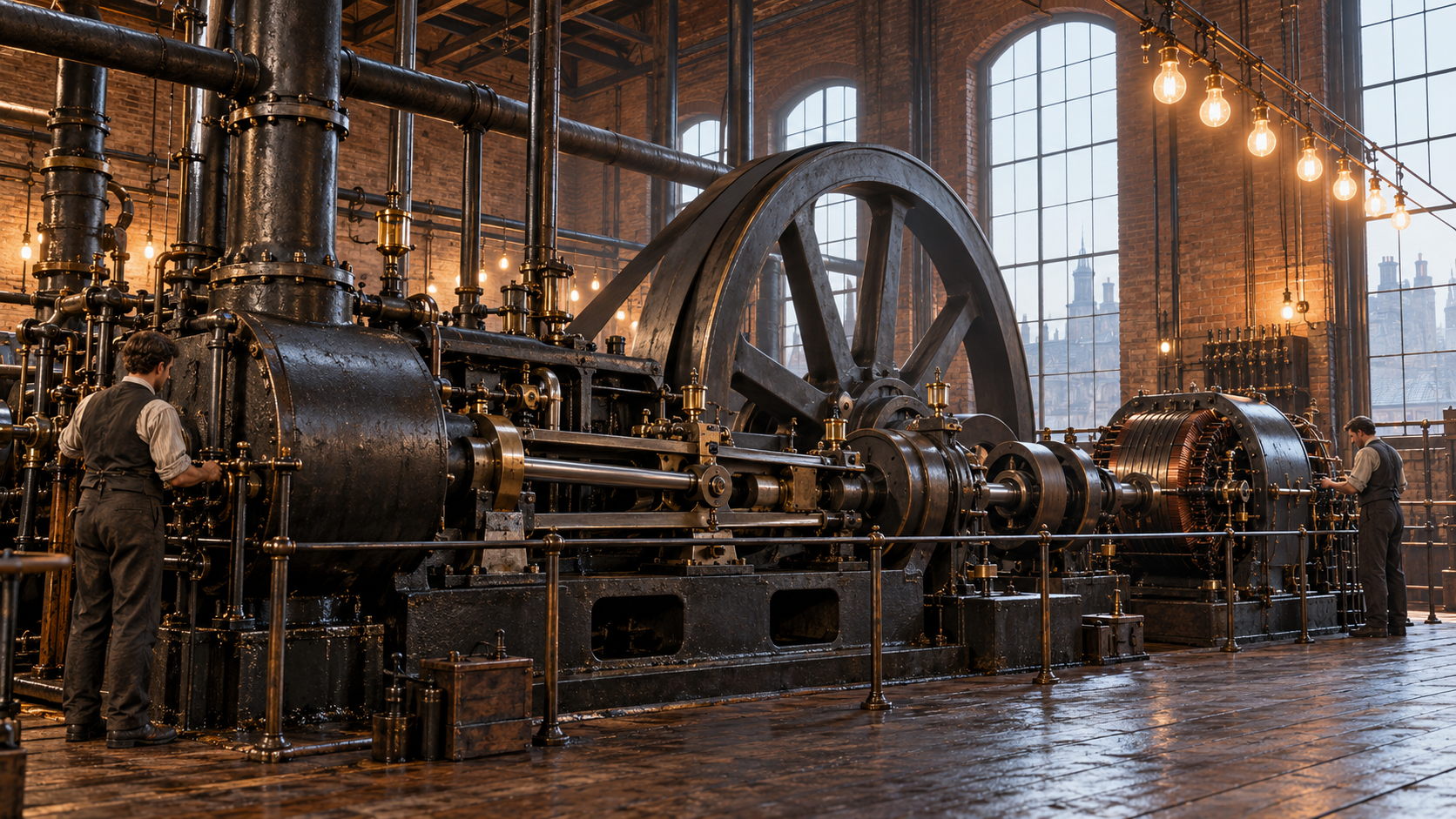
On September 4, 1882, the Edison Electric Illuminating Company began commercial service from Pearl Street Station at 255–257 Pearl Street in lower Manhattan. Developed under Thomas Edison’s direction, the station supplied direct-current electricity through underground conductors to a compact district of offices, stores and homes. About 400 lamps were illuminated during the first day of service. The milestone was not simply the operation of a generator; it was the start of an integrated central system designed to produce electricity, distribute it safely, measure its use and support customers who wanted electric light without maintaining their own generating equipment.
Edison and his collaborators had spent years working on the entire chain. Durable incandescent lamps needed sockets, switches, wiring, fuses and meters, while the station required dependable steam engines and dynamos. Pearl Street housed six large generators commonly called Jumbo dynamos, each weighing about 27 tons and rated to supply roughly 1,200 lamps. A network of underground copper conductors carried power outward. The station’s location placed it close to a dense business district, where a limited service radius could still reach many potential customers and where gas lighting was already economically entrenched.
When the system was placed in regular operation on September 4, engines turned the dynamos and the underground network delivered approximately 110-volt direct current. Operators had to match generation to demand while monitoring equipment that combined electrical and mechanical technologies on an unfamiliar scale. The initial load was small relative to the plant’s capacity, but it established that centralized supply could work outside a laboratory demonstration. IEEE historical material records that within about a year the system served 513 customers and powered roughly 10,000 lamps, evidence of a rapid expansion from the cautious opening day.
Pearl Street’s reach remained limited because low-voltage direct current suffered substantial losses over distance. Later alternating-current systems could change voltage efficiently and transmit power much farther, a decisive advantage as networks expanded. The original station also suffered a major fire in 1890, although one Jumbo dynamo survived and is preserved as a historic artifact. Those limitations do not reduce the importance of the 1882 opening. Pearl Street combined generation, distribution, metering and service into a working commercial utility. Its system helped move electric light from isolated installations toward shared urban infrastructure and established operating practices that became fundamental to the modern electric grid. The project also demonstrated that customers could buy electricity as a metered service, helping define the commercial relationship between urban utilities and the public.
Pearl Street was built as a system, not a single invention. Lamps, generators, conductors, meters, switches and safety devices all had to work together before central service could be dependable.
Lower Manhattan offered concentrated demand within a short radius. That density made the area suitable for an early low-voltage direct-current network, even though installing underground conductors was expensive.
About 400 lamps were illuminated on the first day. Regular service showed that one station could generate electricity for many separate customers and measure their consumption commercially.
Direct current at the supplied voltage could not travel efficiently across a large city. Pearl Street’s compact service territory reflected a technical limit that alternating-current networks later overcame.
The station helped define the electric utility as a coordinated public service. Within about a year, its customer count and connected lamps had expanded many times beyond the opening load.
Although fire damaged the plant in 1890, a surviving Jumbo dynamo became a museum artifact. The machine represents the shift from individual generators to shared electrical infrastructure.
Explore more of "On This Day ..."
Discover more events from the same date across news, politics, technology, sports, and other fields. Each link highlights significant moments that shaped history on different fronts.