

On This Day in Tech: October 15, 1997
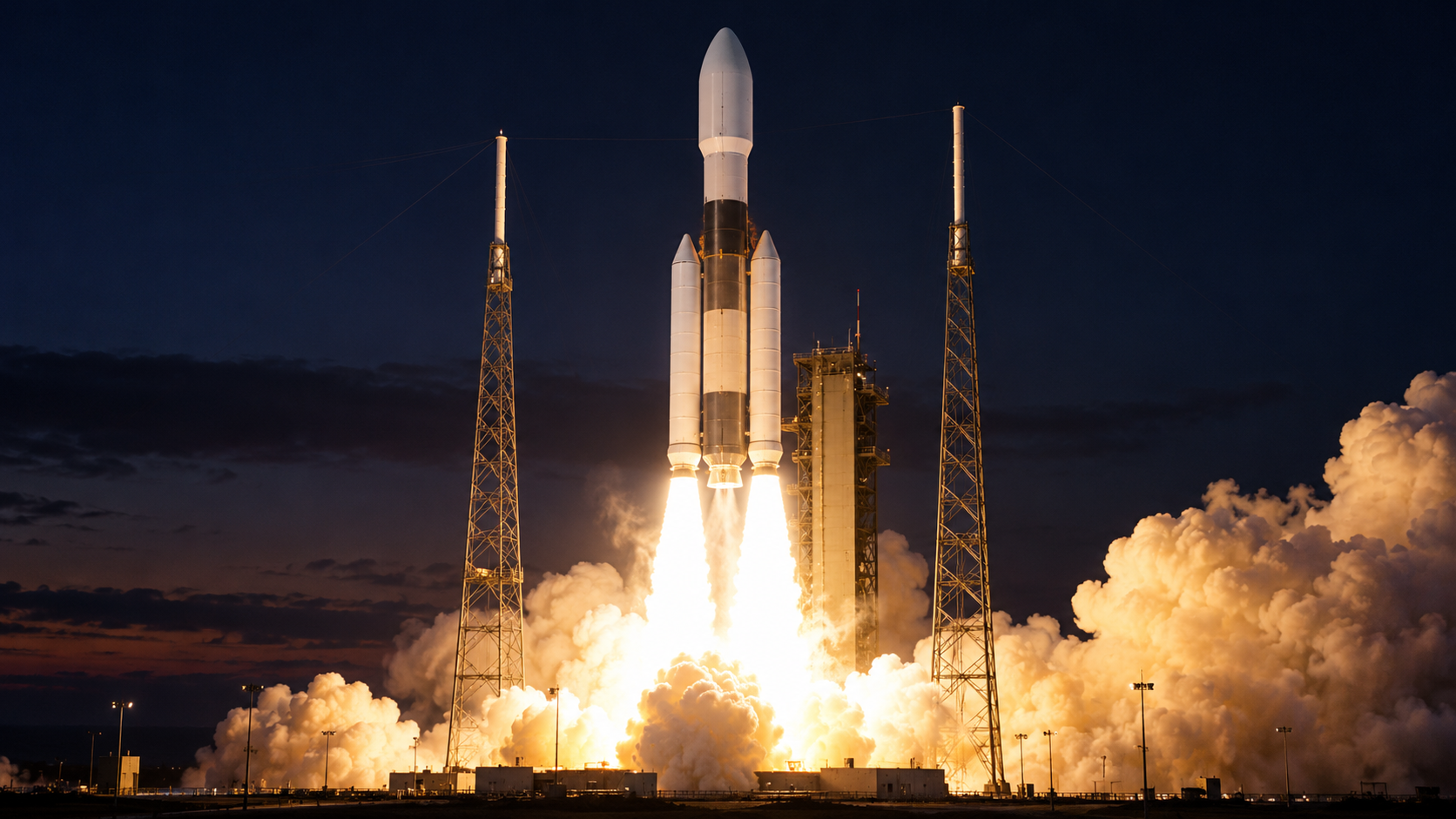
On October 15, 1997, a Titan IVB rocket with a Centaur upper stage launched Cassini-Huygens from Cape Canaveral Air Force Station in Florida. Liftoff at 4:43 a.m. Eastern Daylight Time began a journey of nearly seven years to Saturn. The mission joined NASA’s Cassini orbiter with the European Space Agency’s Huygens probe, with important participation from the Italian Space Agency. Their combined purpose was to investigate Saturn, its rings and moons, and to send Huygens through the atmosphere of Titan. The spacecraft carried instruments and autonomous systems designed to remain useful far beyond the reach of direct human servicing.
Saturn’s distance made the launch only the beginning of the transportation problem. Cassini-Huygens could not travel directly to its destination with the energy available from the launch vehicle alone. Mission planners therefore designed a route using gravity assists at Venus, Earth, and Jupiter to reshape and accelerate the trajectory. The spacecraft also needed dependable power, thermal control, navigation, communications, and propulsion throughout the long cruise. Radioisotope generators supplied electrical power where sunlight would be much weaker than near Earth. These requirements turned the mission into a carefully coordinated exercise in endurance, navigation, and international systems engineering.
The launch vehicle placed the spacecraft on its interplanetary path, with Cassini and Huygens initially traveling as one combined system. After the gravity-assist sequence, Cassini reached Saturn in 2004 and used its main engine to enter orbit. Huygens separated later and descended to Titan in January 2005, measuring the atmosphere and returning images and data from the surface. Those events were later achievements, not outcomes completed on the October launch date. They depended on the hardware surviving years of cruise and on teams preparing operations for conditions that could not be reproduced completely on Earth.
Cassini’s long investigation revealed changing rings, active plumes at Enceladus, complex weather, and Titan’s lakes and seas of liquid hydrocarbons. The mission continued beyond its original planned lifetime and ended in September 2017 with a controlled descent into Saturn’s atmosphere. That ending protected potentially habitable moons from accidental contamination by the spacecraft. The October 1997 launch is remembered as the start of this exceptionally productive robotic expedition. Its technological importance includes the integration of many instruments, long-distance radio operations, repeated gravity assists, and a separate atmospheric probe. Together they showed how an international team could design a machine to work for decades across an enormous range of environments and distances.
Cassini-Huygens combined an American-led Saturn orbiter with a European atmospheric probe. Italy contributed important technology and scientific participation.
The combined spacecraft launched from Florida on October 15, 1997, aboard a Titan IVB/Centaur and began a multiyear cruise.
Gravity assists at Venus, Earth, and Jupiter supplied energy that the launcher alone could not provide. Navigation and long-duration reliability were central to the design.
Arrival at Saturn occurred in 2004, and Huygens reached Titan in 2005. These later successes should be distinguished from the original launch milestone.
Cassini investigated the rings, moons, atmosphere, and magnetic environment for many years. Its findings transformed understanding of the Saturn system.
The mission ended with a planned plunge into Saturn in 2017. Long-term operations and planetary protection shaped the final engineering decisions.
Explore more of "On This Day ..."
Discover more events from the same date across news, politics, technology, sports, and other fields. Each link highlights significant moments that shaped history on different fronts.