

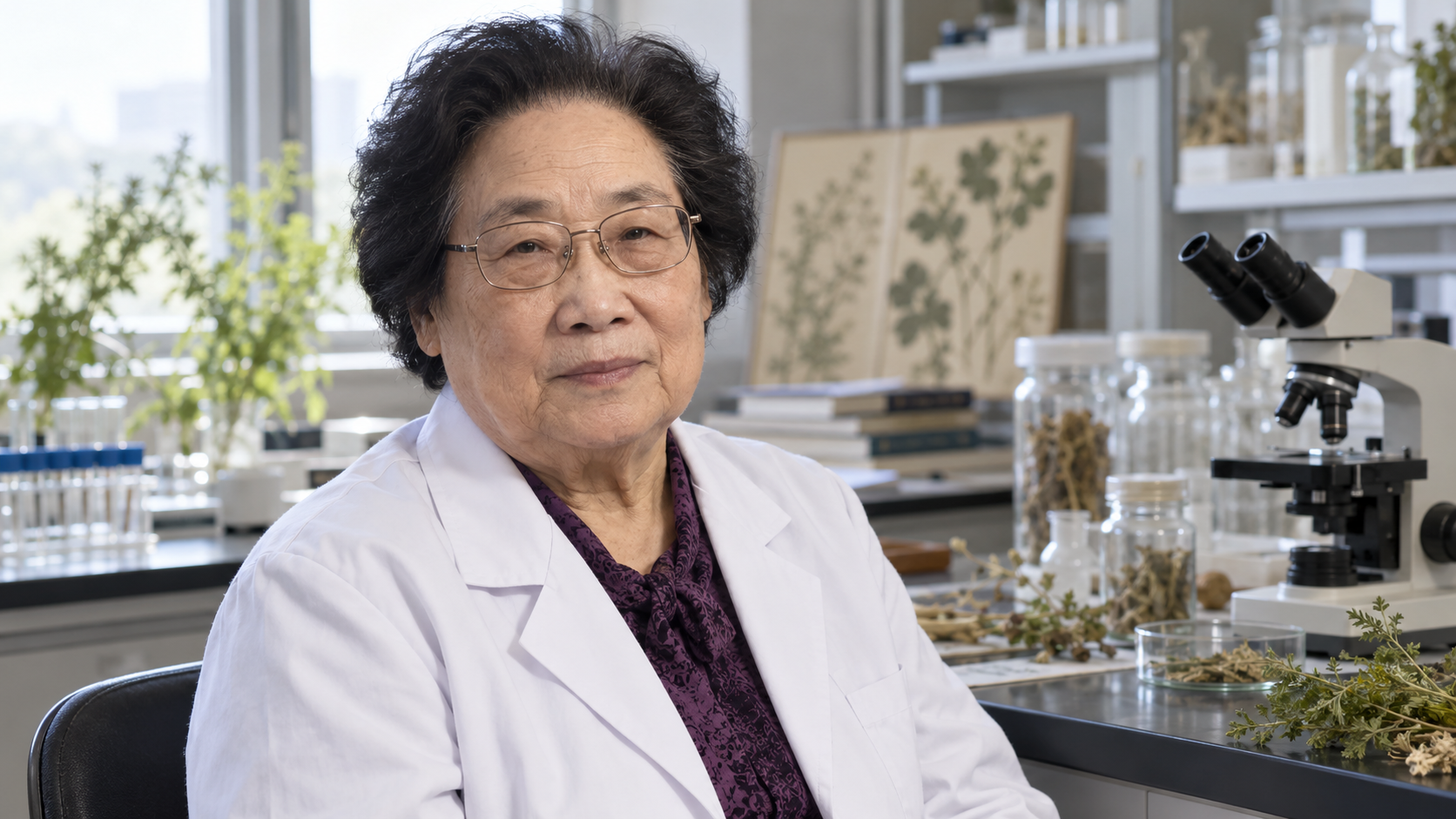
“Every scientist dreams of doing something that can help the world.”
Tu Youyou used these words in reflecting on the work that led to artemisinin, the antimalarial compound recognized by the 2015 Nobel Prize in Physiology or Medicine. Her research group examined historical Chinese medical texts, tested plant extracts, and changed an extraction method after a fourth-century description suggested that high heat might damage the active material. That insight did not turn immediately into a finished treatment. It had to survive repeated experiments, chemical analysis, clinical investigation, and later development by many researchers and institutions. The quote expresses a universal scientific hope, but Tu’s story gives it a concrete measure: helping the world requires patient attention to evidence and the willingness to revise a method when the results are not good enough. The Nobel recognition specifically honored a therapy that reduced mortality from a disease concentrated heavily in tropical regions, where research priorities had often received less global attention.
The sentence can sound like a celebration of solitary inspiration, yet the artemisinin story resists that reading. Tu led crucial work within a larger Chinese research program, drew from accumulated medical knowledge, and depended on colleagues who helped test, isolate, and study the compound. Traditional knowledge provided a clue; modern experimental methods determined which preparation was promising, what it contained, and how it might be used safely. Respecting both parts avoids two errors: dismissing historical practice without examination and accepting every inherited remedy without evidence. Scientific service lies in the disciplined passage from observation to a claim that others can test. Tu’s account also demonstrates how a failed procedure can contain information: changing the extraction method followed from asking why earlier preparations were not producing the expected result.
For current health research, Tu’s remark asks who defines the problem and who receives the eventual benefit. A discovery may be intellectually brilliant while reaching too few of the people most affected by a disease. The road from molecule to public impact includes manufacturing quality, resistance monitoring, combination treatment, accessible care, and continuing malaria prevention. It also includes credit: shared work should be described in a way that recognizes teams, communities, and earlier sources of knowledge. None of those responsibilities diminishes discovery. They show what it takes for discovery to help. The dream in Tu’s sentence becomes credible through methods that welcome useful clues, discard what evidence does not support, and keep the health of real populations as the standard by which success is judged. A service-oriented research culture rewards that patient correction of method, not only the dramatic announcement that arrives after years of uncertain work.
A historical description helped Tu’s group reconsider how sweet wormwood was being extracted.
The clue mattered because it was followed by experiments, analysis, and clinical study.
Tu’s leadership sat within a larger research program and a chain of contributions from many people.
Accurate history can honor a decisive insight without turning collaborative science into a lone-genius story.
A useful compound must be manufactured well, delivered appropriately, and monitored as conditions change.
Scientific ambition serves health when evidence and access carry an idea all the way to affected communities.
Explore more "Quotes of The Day"
Discover more notable quotes from influential voices across politics, science, business, technology, sports, and culture. Each quote offers insight into how ideas, beliefs, and decisions shape the world around us.