

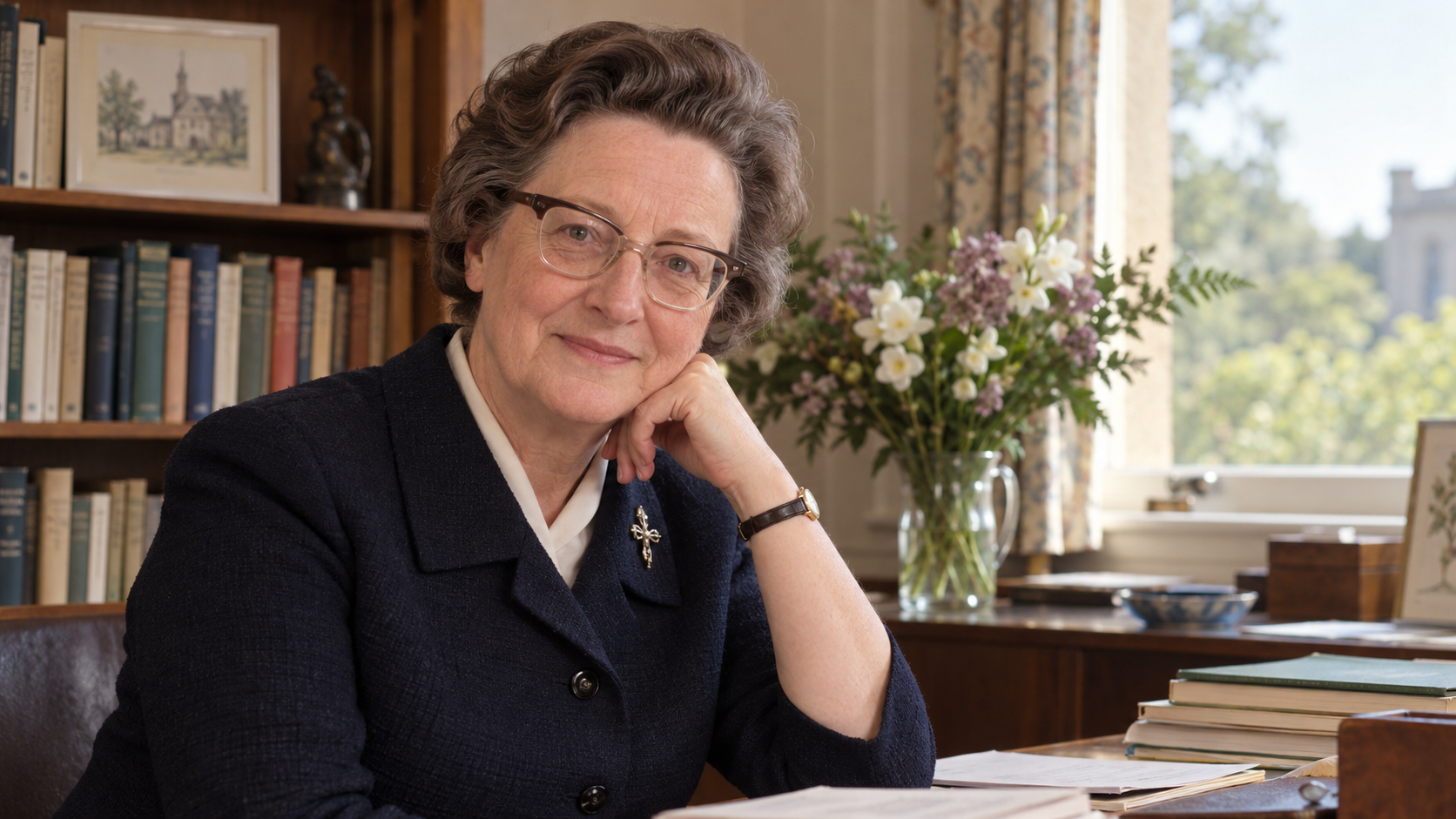
“You matter because you are you, and you matter to the end of your life.”
Cicely Saunders’s declaration is preserved by St Christopher’s Hospice as a central expression of the modern hospice movement she helped build. Saunders trained across nursing, social work, and medicine before founding St Christopher’s in London in 1967. Her clinical work developed the idea of “total pain,” recognizing that physical symptoms can be intertwined with emotional, social, and spiritual distress. The quote begins with identity rather than diagnosis: “because you are you.” Its second half refuses the idea that a person becomes less worthy of attention as cure becomes less likely. In that setting, dignity is not an abstract compliment. It appears in pain and symptom control, honest communication, companionship, practical support, and respect for what matters to the patient. Saunders’s interdisciplinary training helped her see gaps that no single profession could close, which is why hospice care developed around coordinated attention rather than one isolated treatment.
The sentence is sometimes used as a soft substitute for the difficult work of end-of-life care. Saunders’s practice points in the opposite direction. Affirming that someone matters requires clinical skill, coordinated services, and attention to families as well as kind words. It also requires listening without imposing one preferred meaning of a good death. People differ in their goals, beliefs, tolerance for uncertainty, and desire for treatment. Palliative care can accompany treatment aimed at prolonging life; it is not confined to the final hours, nor is it an instruction to refuse intervention. The quote establishes a value that should guide conversation while leaving individual decisions to patients, their chosen supporters, and qualified care teams. Her formulation protects the patient’s value while allowing realistic talk about prognosis; honest information and hope can coexist when hope is connected to achievable goals.
For health systems, Saunders’s language offers a test of whether care contracts as a person’s needs grow. Is relief available at home as well as in specialist centers? Can people communicate in a language they understand? Are caregivers supported, and are symptoms reassessed when circumstances change? These questions expose inequities that sentiment alone cannot solve. Access to palliative expertise remains uneven, and relief depends on training, medicines, staffing, time, and policies that allow care to follow the person. The lasting power of the quote comes from joining an unconditional claim with daily obligations. A person does not have to earn attention by improving, remaining cheerful, or making choices others find comfortable. Care continues because the person remains fully themselves, all the way to the end. The same principle supports advance-care planning that is revisited over time, because preferences can change as symptoms, family circumstances, and available options change.
Saunders founded St Christopher’s Hospice after work in nursing, social care, and medicine.
Her concept of total pain joined physical symptoms with emotional, social, and spiritual distress.
Respect becomes practical through symptom relief, communication, coordination, and support for families.
Palliative care can be offered alongside disease-directed treatment and is shaped by each patient’s goals.
The quote asks whether care remains available as needs become more complex and cure becomes less likely.
Services honor personhood when they reach people across settings, languages, incomes, and stages of illness.
Explore more "Quotes of The Day"
Discover more notable quotes from influential voices across politics, science, business, technology, sports, and culture. Each quote offers insight into how ideas, beliefs, and decisions shape the world around us.