

Cold-Weather Layering Explainer
Layered clothing keeps a person warm by slowing heat loss and managing moisture in changing conditions. The body continually transfers heat through conduction, moving air, radiation, and evaporation. Clothing cannot generate body heat on its own, but fibers and loft trap many small pockets of air, and still air conducts heat poorly. Several adjustable layers can preserve that loft while providing different jobs: a base layer next to skin, an insulating middle layer, and an outer layer that limits wind and precipitation. The arrangement works best when circulation is not restricted and the clothing stays reasonably dry.
The base layer moves perspiration away from skin and spreads it through fabric where it can evaporate. Synthetic fibers and wool are commonly used because they retain useful insulation and dry more readily than wet cotton. The base should fit close enough to contact the skin without squeezing. During high activity, even good fabric can become saturated, so pacing and ventilation matter. Opening a zipper or removing a layer before heavy sweating can preserve insulation for the later rest period, when heat production falls and damp clothing becomes a liability.
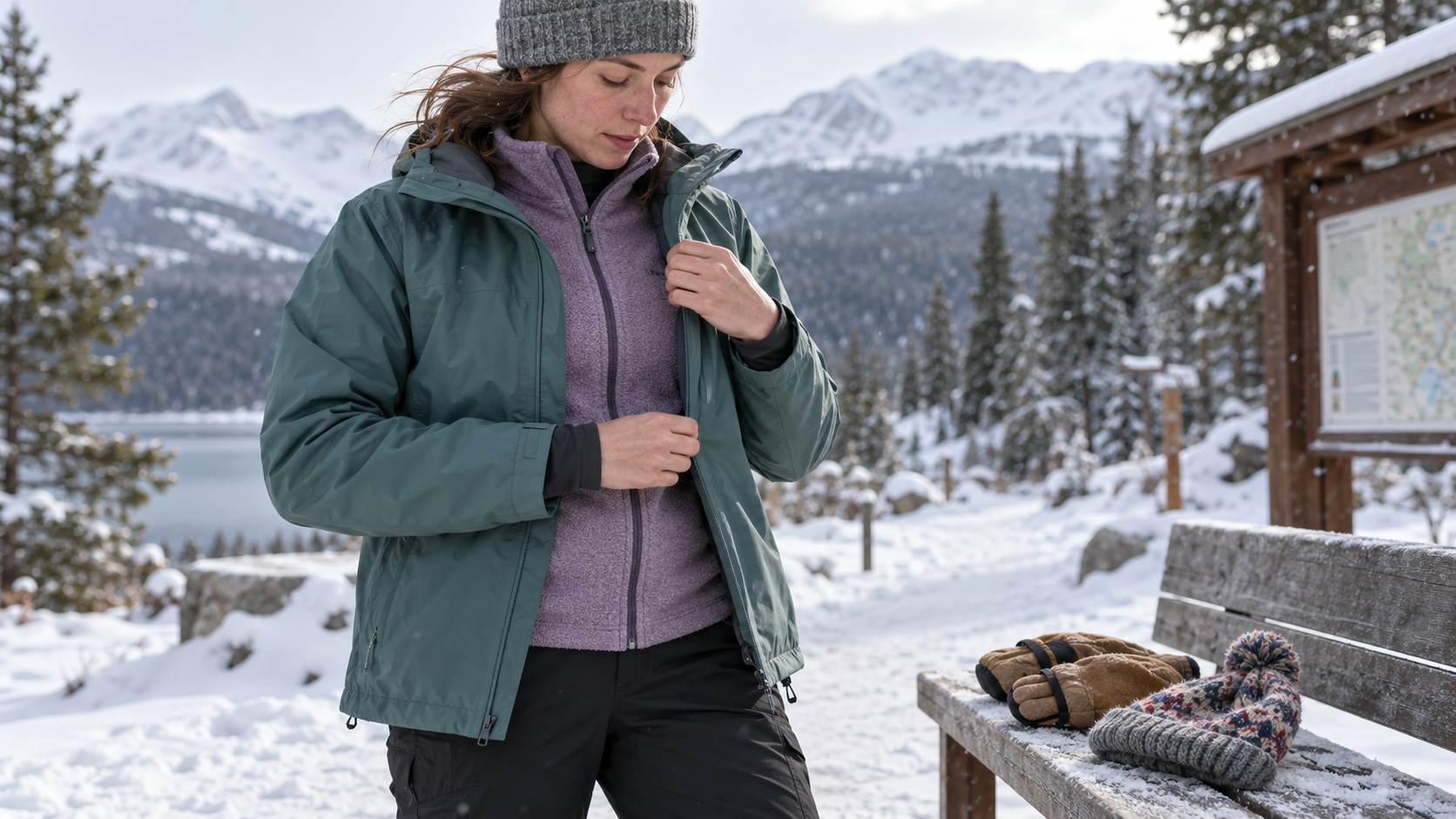
The middle layer supplies much of the loft. Fleece, wool, and puffy insulation trap air in different structures. Thickness is only useful while the material remains expanded; a tight shell, backpack strap, or compressed seat reduces insulation at those points. Down offers high warmth for its weight but loses much of its loft when wet unless protected, while synthetic fills usually tolerate damp conditions better. Multiple lighter insulating pieces can be easier to tune than one very heavy garment as temperature, wind, and activity change.
The outer layer controls convection and external moisture. Wind pushes cold air through porous insulation and carries away warmed air, so a wind-resistant shell can produce a large comfort difference. In rain or wet snow, water resistance becomes important. Fully waterproof fabrics also resist the escape of water vapor to varying degrees, making vents, pit zips, cuffs, and user pacing valuable. No shell is both completely impermeable to outside water and infinitely breathable; clothing systems manage a tradeoff based on weather and exertion.
Hands, feet, head, and face need their own system. Warm socks and mittens require room for circulation; adding thick socks inside a tight boot can make feet colder. Mittens generally conserve more heat than gloves because fingers share air space. A hat, hood, neck covering, and face protection reduce exposed area, while dry spare gloves or socks can rescue comfort after moisture enters. Skin numbness, pale or waxy patches, uncontrollable shivering, confusion, and loss of coordination are danger signs, not signals to add one more layer and continue.
Layering is a control strategy rather than a fixed outfit. The person adjusts insulation and ventilation before conditions become uncomfortable, protects dry layers from snow or rain, and packs enough margin for stops or delays. Weather forecasts, wind chill, route length, shelter, and individual health all affect the choice. The most impressive jacket cannot compensate for inadequate food, exhaustion, wetness, or prolonged exposure. A well-chosen system keeps warm air near the body, lets excess heat and moisture escape when needed, and makes those adjustments possible without replacing the entire outfit.
Layers preserve warm trapped air while managing sweat, wind, and precipitation. Key terms include base layer, wicking, loft, insulation, shell, convection, evaporation, ventilation, and wind chill.
Vent or remove insulation before heavy sweating during activity. Put it back on promptly for rest, wind, or falling temperature, while protecting dry layers from snow and rain.
Yes. Compression reduces insulating loft, and tight footwear or cuffs can restrict circulation. Layers need enough room to trap air and allow blood flow without creating large gaps for wind.
Explore more "Explainers"
Discover additional explainers across politics, science, business, technology, and other fields. Each explainer breaks down a complex idea into clear, everyday language—helping you better understand how major concepts, systems, and debates shape the world around us.