

On This Day in Tech: November 19, 1969
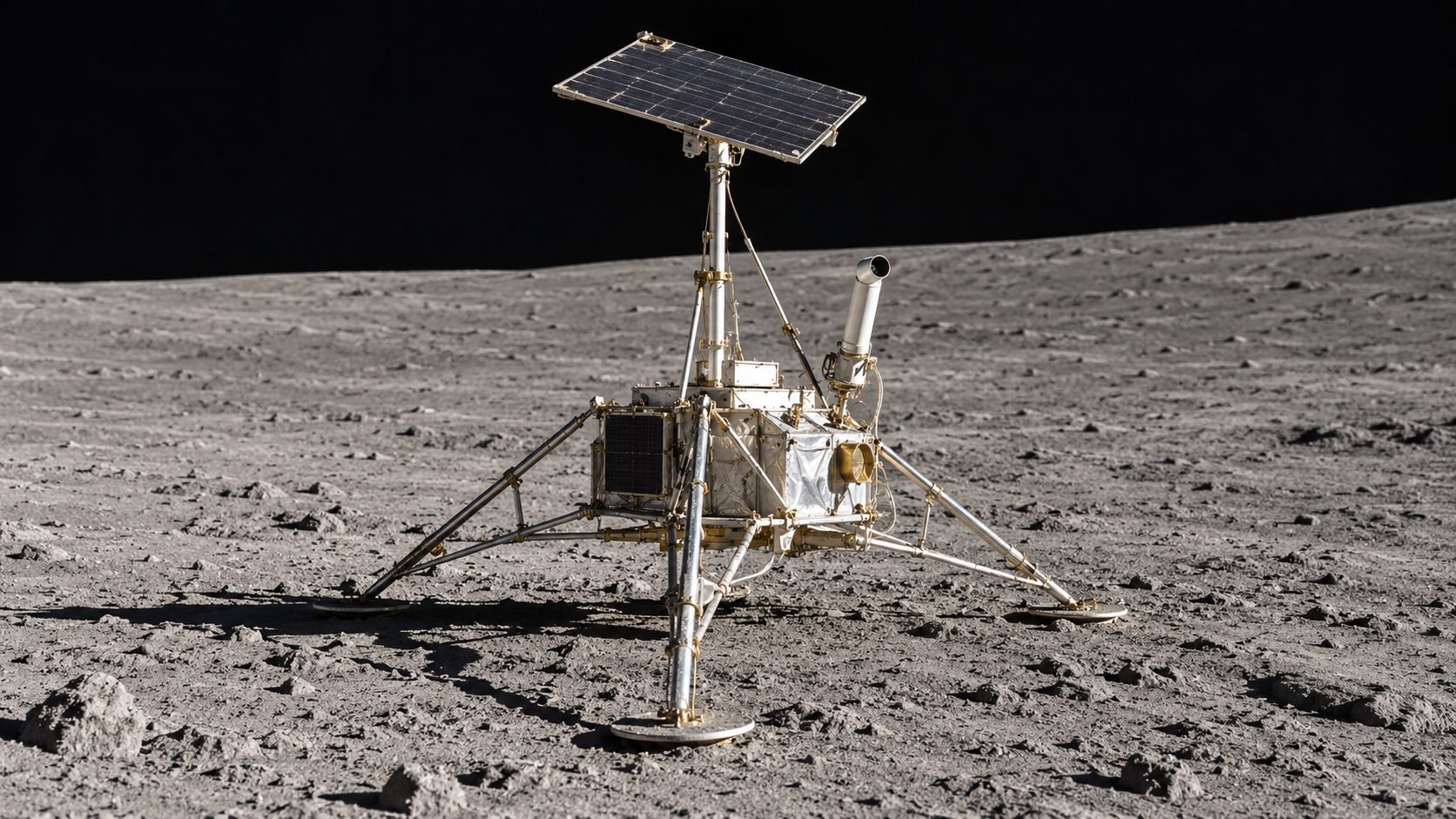
On November 19, 1969, Apollo 12 astronauts Charles ‘Pete’ Conrad and Alan Bean landed the lunar module Intrepid in the Moon’s Ocean of Storms. Richard Gordon remained in lunar orbit aboard the command and service module Yankee Clipper, while flight controllers in Houston supported the descent. The mission achieved a particularly accurate landing near Surveyor 3, an uncrewed spacecraft that had reached the area in 1967. Apollo 11 had already accomplished the first crewed lunar landing. Apollo 12’s challenge was to show that crews could reach a selected site closely enough to conduct planned work around a specific existing object.
Precision mattered because the usefulness of later exploration depended on reaching scientifically valuable terrain rather than merely finding any safe landing area. The task combined navigation measurements, ground calculations, an onboard computer, propulsion, and the commander’s judgment near the surface. Small uncertainties in position or velocity could shift the predicted touchdown point. During the descent, updated information from Houston helped refine the trajectory, while Conrad controlled the final approach. The result placed Intrepid within walking distance of Surveyor 3. This was not a demonstration that a computer alone could land anywhere without risk. It was evidence that the larger navigation and operating system could support a more demanding mission objective.
The flight had already survived lightning strikes during its November 14 launch, after which the crew and controllers checked spacecraft systems before continuing. The November 19 landing was a later, separate milestone. Surface work then required pressure suits, communications, life support, electrical power, and careful management of the available time. Conrad and Bean deployed scientific instruments and collected geological samples during two excursions. Their visit to Surveyor 3, including retrieval of components for examination on Earth, took place during the second excursion on November 20. The landing and the subsequent walk to the older spacecraft should therefore not be described as one action completed at the same moment.
Apollo 12 returned samples and equipment that supported scientific study and investigation of material exposed to the lunar environment. Its experience also helped prepare more ambitious landing and surface operations on later missions. The television camera’s failure after accidental exposure toward the Sun was a reminder that a successful overall mission could still include important equipment limitations. November 19 marks an advance in controlled access to a chosen place on another world. The technological achievement was the combination of reliable transport, accurate navigation, and practical work after arrival. By reaching an identifiable target closely enough for a visit, Apollo 12 helped turn lunar landing from a singular demonstration into a repeatable method for organized exploration.
Conrad and Bean landed Intrepid on November 19, 1969, while Gordon remained in lunar orbit. Houston controllers supported the descent.
The selected site lay near Surveyor 3 in the Ocean of Storms. Reaching that target tested precision beyond simply making a safe landing.
Ground calculations, onboard guidance, propulsion, and the commander's control contributed to the result. Precision was a system achievement.
The mission's lightning strikes occurred at launch on November 14. The visit to Surveyor 3 occurred after landing, during the November 20 excursion.
Samples, instruments, and recovered Surveyor parts supported later investigation. Not every device worked perfectly, including the surface television camera.
The mission demonstrated practical access to a planned exploration site. Subsequent lunar work built on the operational experience as well as the navigation result.
Explore more of "On This Day ..."
Discover more events from the same date across news, politics, technology, sports, and other fields. Each link highlights significant moments that shaped history on different fronts.