

On This Day in Tech: November 22, 1977
On November 22, 1977, Air France and British Airways began scheduled Concorde services to New York’s John F. Kennedy International Airport from Paris and London. The flights extended commercial supersonic travel to a particularly important transatlantic destination. They were not Concorde’s first flights or its first passenger services, which had begun in 1976 on other routes. Air France’s inaugural Paris departure and New York arrival illustrated the unusual timetable made possible by speed and time zones: the local arrival clock showed an earlier hour than the departure clock, even though the airplane had spent several hours in flight.
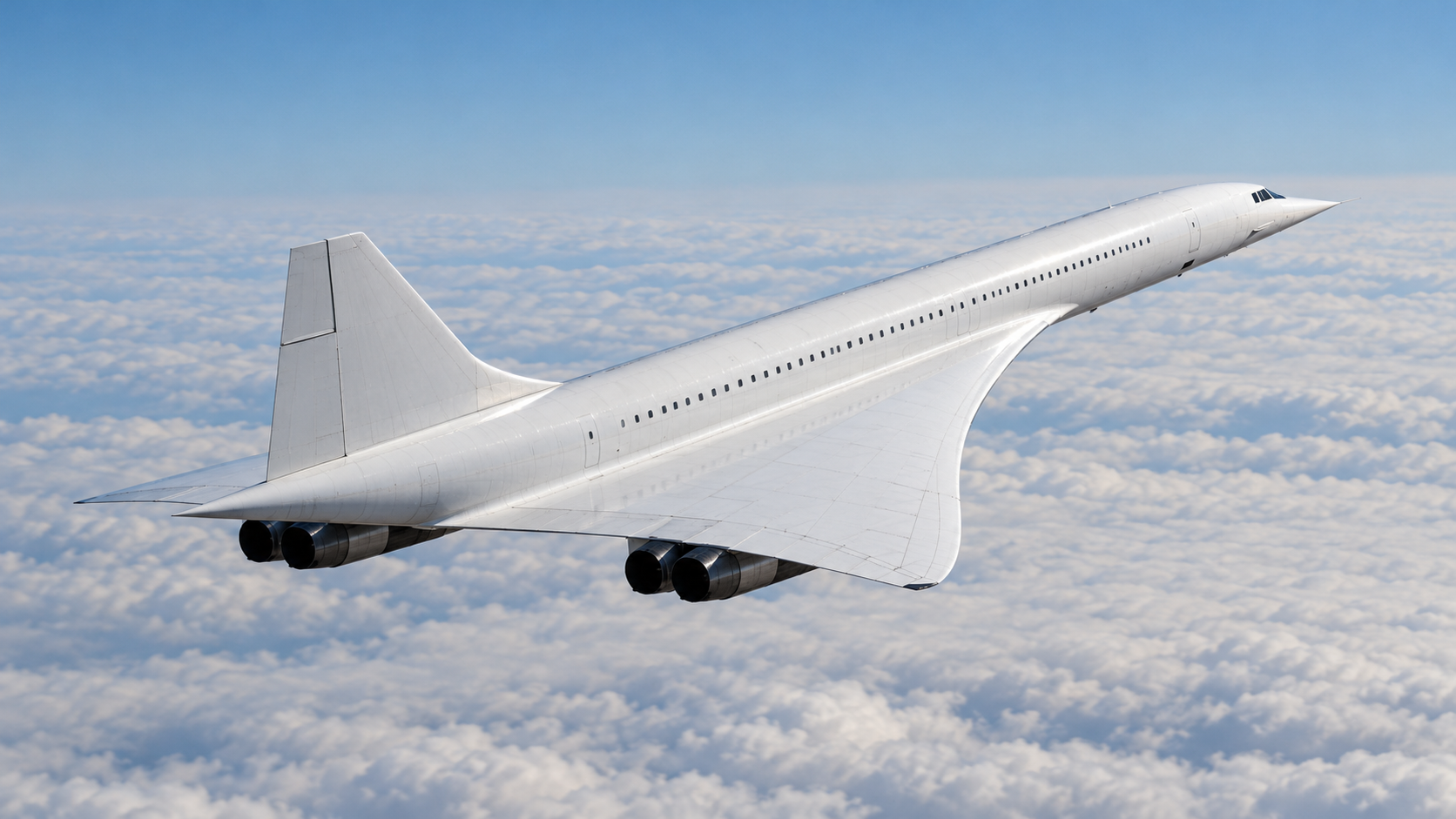
Concorde emerged from a British-French program intended to transport passengers at roughly twice the speed of sound. Its long slender fuselage, distinctive delta wing, four engines, and adjustable nose reflected the demands of that task. Aerodynamics suitable for fast cruise also created challenges at lower speeds and during takeoff and landing. The aircraft required coordinated control of engine airflow, fuel, temperature effects, and balance throughout a flight. It was not simply a conventional airliner with more powerful engines. Its shape and systems were designed around a different operating regime, with trade-offs in cabin size, range, operating expense, and the conditions under which supersonic flight could be used.
Access to New York had been delayed by objections related to noise and airport operations. The eventual introduction followed assessments, operating procedures, and a dispute over permission to serve the airport. The technical ability to cross the Atlantic quickly did not by itself provide an airline with a usable route. Crews needed to meet departure and arrival requirements, ground teams had to support the airplane, and service had to fit the wider airport system. Overland sonic-boom concerns also limited where fast cruise was practical. Those constraints explain why Concorde’s achievement cannot be measured only by its maximum speed or the time saved on one flight.
New York became central to the aircraft’s commercial identity, with crossings taking substantially less time than ordinary subsonic services. Concorde nevertheless remained a small-fleet, specialized form of passenger transport rather than a replacement for conventional long-haul airliners. Both operators ended service in 2003, long after the route opening remembered here. November 22 marks the beginning of scheduled New York operations, not the invention of supersonic flight or the removal of its economic and environmental limitations. The milestone demonstrates how an advanced vehicle becomes a transport service only when engineering, regulation, maintenance, infrastructure, and demand align. It also shows why a striking performance advantage can coexist with a narrow practical market and demanding operating requirements.
Concorde had already entered passenger service in 1976. The November 22, 1977 milestone concerned scheduled New York routes.
Air France flew from Paris and British Airways from London to JFK. Time-zone differences could make the local arrival hour earlier than departure.
Delta-wing aerodynamics, four engines, and specialized systems supported supersonic cruise. Low-speed operation imposed different requirements.
Noise concerns and airport access delayed New York service. Technical capability alone did not establish permission or a workable route.
The aircraft offered fast transatlantic travel but remained a specialized small-fleet service. Commercial operations ended in 2003.
Transport performance must be considered alongside cost, infrastructure, and operating restrictions. A successful route needs more than a fast aircraft.
Explore more of "On This Day ..."
Discover more events from the same date across news, politics, technology, sports, and other fields. Each link highlights significant moments that shaped history on different fronts.