

On This Day in Tech: November 25, 1940
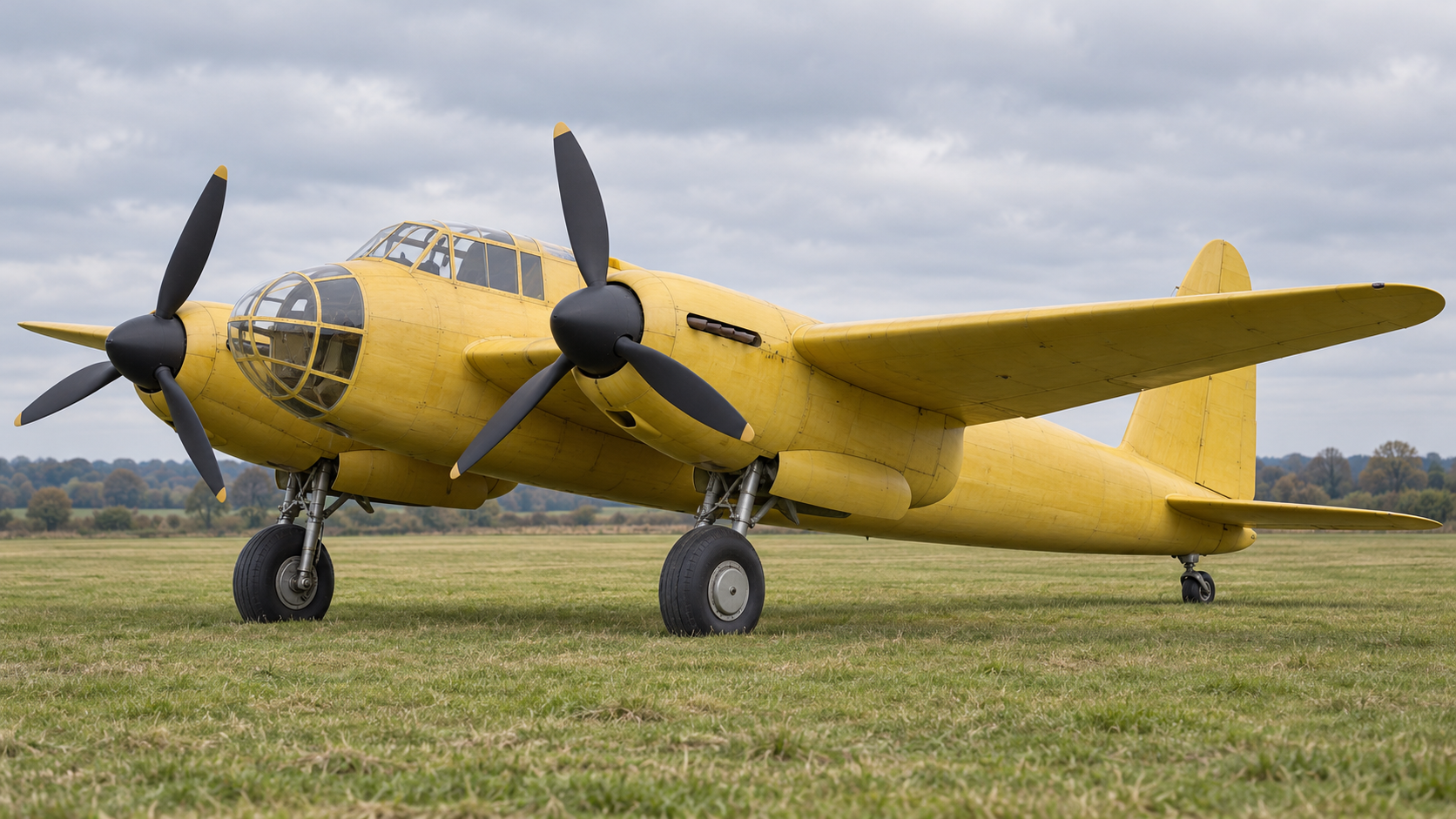
On November 25, 1940, the first de Havilland DH.98 Mosquito prototype flew at Hatfield, England. Chief test pilot Geoffrey de Havilland Jr. was accompanied by John Walker, the engineer responsible for the engine installation. The aircraft had been assembled through work at Salisbury Hall and moved to Hatfield earlier that month for preparation. Painted overall in prototype yellow, it tested an approach that differed from the expectation of a heavily armed, all-metal military aircraft. The first flight was an engineering milestone, not the beginning of operational service or proof that every proposed version of the design was already ready for use.
The concept emphasized speed, range, a streamlined shape, and two powerful Rolls-Royce Merlin engines. Much of the structure used wood, drawing on de Havilland’s earlier experience rather than treating timber as a temporary substitute with no engineering advantages. The fuselage combined plywood and balsa in a light, stiff construction, while wooden structural members and plywood also formed the wings. Selecting materials involved weight, strength, manufacturing methods, and the availability of industrial resources. An effective wooden airframe still required careful design and workmanship. It could not be reduced to an ordinary wooden shell around two engines, and the adhesive joints and shaped components were integral to its performance.
The initial flight allowed the crew and ground team to evaluate the completed aircraft in conditions that workshop tests could not reproduce fully. Engine operation, cooling, controls, balance, undercarriage behavior, and handling all needed assessment. The prototype was not identical to every later Mosquito seen in photographs. Subsequent changes included alterations to equipment and configuration, and the original yellow finish later gave way to camouflage on the upper surfaces. Keeping those distinctions visible prevents a mature wartime variant from being mistaken for the first-flight machine. Successful early tests led to further evaluation and orders, but production, crew training, and operational employment remained additional stages.
The Mosquito entered service in 1941 and was adapted for several roles, including reconnaissance, bombing, and night fighting. Factories in Britain, Canada, and Australia contributed to its production. Those later uses reflected both the flexibility of the design and continued development; they were not all demonstrated during the November 1940 flight. November 25 marks the first airborne test of a prominent example of materials-conscious aircraft engineering. Its legacy challenges the assumption that technical progress always means replacing an older material with a newer one. A carefully designed structure, suitable power, and disciplined aerodynamic choices can make a familiar material highly effective, provided the resulting aircraft can also be manufactured, maintained, and operated reliably.
Geoffrey de Havilland Jr. and John Walker made the first flight at Hatfield on November 25, 1940. Preparation and ground work preceded it.
The prototype was painted overall yellow. Later camouflage and wartime equipment should not be projected backward onto its initial appearance.
Plywood, balsa, and other wooden structural elements contributed to a light airframe. Streamlining and twin Merlin engines were also central to the concept.
A first flight began practical evaluation rather than completing development. Production, training, and service introduction remained separate tasks.
Later Mosquitos served in multiple roles and were built in several countries. Their configurations differed from the first prototype.
The design demonstrates thoughtful use of familiar materials. Performance and industrial practicality depended on construction quality and the complete aircraft system.
Explore more of "On This Day ..."
Discover more events from the same date across news, politics, technology, sports, and other fields. Each link highlights significant moments that shaped history on different fronts.