

On This Day in Lifestyles: January 26, 1926
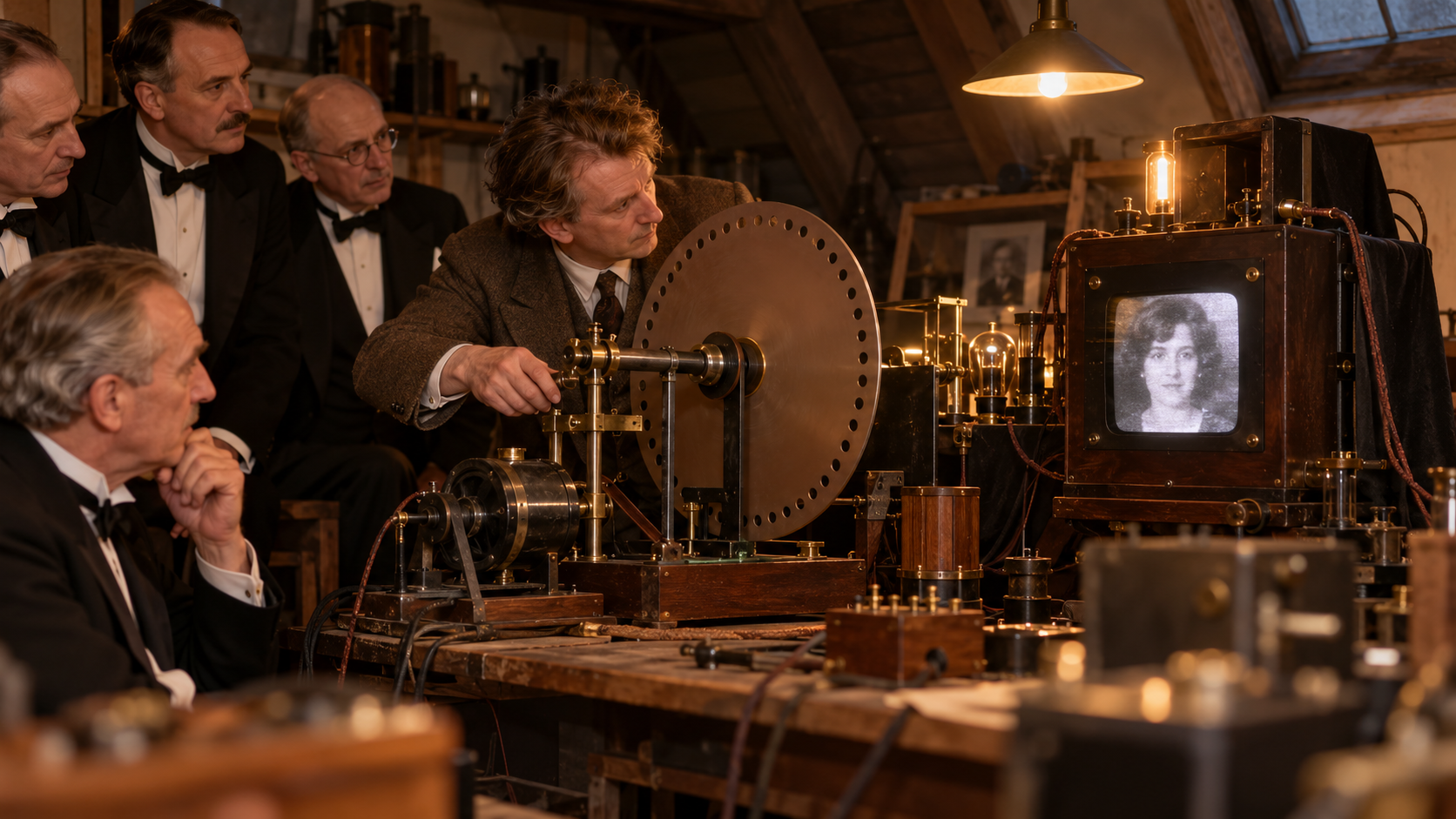
On January 26, 1926, Scottish inventor John Logie Baird demonstrated a working television system to members of the Royal Institution and a newspaper reporter in rooms above 22 Frith Street in London. His apparatus transmitted recognizable moving images of a human face in light and shade. The picture was tiny, flickering, and built from only thirty scanning lines, but it was live. Observers could see a person in one room reproduced by electrical signal in another, a startling preview of a medium that would later occupy living rooms around the world.
Baird’s system was mechanical. A rapidly spinning perforated disc scanned the subject line by line, while a photoelectric cell converted changing light into a signal. At the receiver, another synchronized disc reconstructed the image. The equipment needed intense illumination, and the first successful subjects included a ventriloquist’s dummy nicknamed Stooky Bill because a human face could not comfortably endure the heat for long. Baird worked with improvised parts and limited money, turning ideas explored by earlier inventors into a functioning demonstration.
Mechanical television would soon be overtaken by electronic systems that produced larger, sharper, and more stable pictures. Yet the 1926 presentation helped prove that transmitting live movement was practical, not merely a laboratory fantasy. Baird continued experimenting with long-distance transmission, color, and recording, while broadcasters and manufacturers built competing standards. Television gradually developed from an engineering curiosity into a scheduled service, and households began arranging rooms, evenings, and conversations around the screen.
The lifestyle effects became enormous. Television brought coronations, sports, news, drama, advertising, and educational programs into private homes, creating shared experiences among people who were physically apart. It changed furniture design, family routines, politics, celebrity, and the economics of entertainment. Today’s streaming video travels through technologies Baird could not have imagined, yet it answers the same desire demonstrated in Frith Street: to see distant events as they happen. On this day, a faint moving face offered an early view of screen-centered life. Early audiences also had to learn how to watch. A moving picture delivered at a distance felt different from film because it could be simultaneous with the event. That sense of “now” became television’s defining power, whether viewers were following a celebration, a crisis, a championship, or an ordinary presenter speaking directly to the camera. Even as screens changed shape and size, that expectation of immediacy remained at the heart of the medium.
Baird's guests saw a live moving face reproduced in light and shade in a neighboring room.
The image was small and flickering, but its recognizable movement made the demonstration historically important.
Spinning perforated discs scanned and reconstructed the subject one line at a time.
A photoelectric cell turned changing light into an electrical signal, while synchronized equipment rebuilt the image.
Electronic television later replaced mechanical systems with clearer and more stable pictures.
The medium ultimately transformed entertainment, news, advertising, interior design, and the rhythm of family evenings.
Explore more of “This Day in Lifestyles”
Discover more moments in everyday life, design, education, travel, food, fashion, and culture. Each story connects a calendar date with an event that changed how people lived.