

On This Day in Lifestyles: January 13, 1930
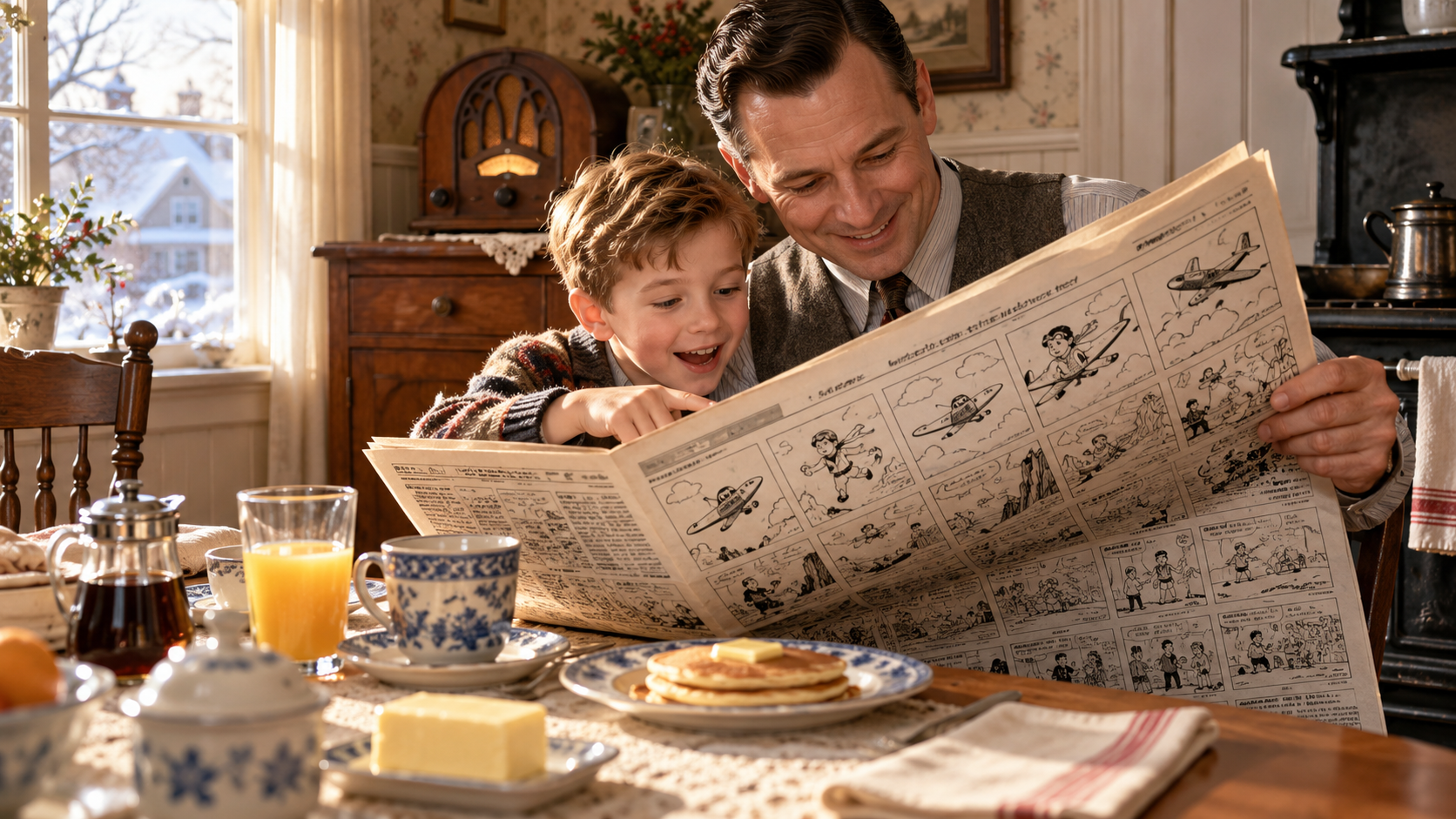
On January 13, 1930, the Mickey Mouse newspaper comic strip appeared for the first time. Walt Disney supplied the story, while Ub Iwerks drew the earliest installments and Win Smith soon handled artwork before Floyd Gottfredson began a long run later that year. The opening adventure adapted material from the animated short Plane Crazy, sending Mickey into aviation comedy at a moment when flight represented daring modern life. The strip carried a character known from movie screens into the home each day, where readers could follow an unfolding story at breakfast, on streetcars, or around the family table.
Newspaper comics were a powerful mass medium in 1930. Syndicates distributed the same features to cities across the country, and popular strips could shape slang, fashion, toys, and children’s play. Animation required a ticket and a scheduled screening, but a newspaper arrived at the door and could be reread, clipped, traded, or passed among relatives. The daily format also encouraged longer plots than a short cartoon allowed. Mickey’s personality expanded through journeys, mysteries, rivalries, and supporting characters, while artists learned how to create motion and timing across a sequence of still panels.
The strip became part of a larger system linking entertainment, publishing, and consumer goods. Characters moved between films, comics, books, radio, toys, watches, clothing, and school supplies. This cross-media presence helped turn Mickey into an internationally recognizable figure and demonstrated how a fictional personality could anchor a brand across everyday objects. Gottfredson, who expected his assignment to be temporary, guided the daily strip for decades and introduced situations that influenced later animation and comic books. Readers did not simply receive promotional material; many formed lasting attachments to the craft, suspense, and regular companionship of serialized storytelling.
The debut also belongs to a changing history of childhood and family leisure. Comics gave children accessible visual narratives while adults often followed the same adventures, making the newspaper page a shared cultural space. Modern audiences encounter characters through streaming, games, social media, and merchandise, but the pattern of a story traveling across formats was already visible in 1930. The strip’s racial and cultural imagery also reflected stereotypes of its era and deserves critical reading today. Its importance lies not only in fame, but in the way a printed sequence helped integrate screen entertainment into daily routine—one small panel at a time. The strip also carried Mickey beyond the movie theater, letting readers encounter the character each morning and strengthening the link between entertainment, print, and household routine.
The first strip adapted an aviation story associated with Plane Crazy. Walt Disney wrote the opening continuity and Ub Iwerks drew the earliest weeks.
Daily syndication brought a film character into households far beyond theaters, where the story could be read repeatedly and shared across generations.
Serialized newspaper space allowed longer adventures, cliffhangers, mysteries, and a growing cast that could not fit into a short animated cartoon.
Floyd Gottfredson took over later in 1930 and shaped the feature for decades, giving its hero a broad range of roles and situations.
The strip helped connect film, publishing, toys, clothing, and other household goods—an early example of entertainment moving across many formats.
Historical strips can contain stereotypes and attitudes that require context, reminding readers that popular culture preserves both creativity and the limits of its time.
Explore more of “This Day in Lifestyles”
Discover more moments in everyday life, design, education, travel, food, fashion, and culture. Each story connects a calendar date with an event that changed how people lived.