

Clothes Washing Machine Explainer
A washing machine cleans fabric by coordinating four basic tools: water, detergent, mechanical movement, and time. Water wets the fibers and carries dissolved material. Detergent lowers surface tension and surrounds oily soil so it can remain dispersed in the wash water. Movement flexes the cloth, brings fresh solution through the weave, and loosens particles from yarn surfaces. The machine then drains the dirty water, adds cleaner water for one or more rinses, and spins the load rapidly so centrifugal effects push much of the remaining water through holes in the drum.
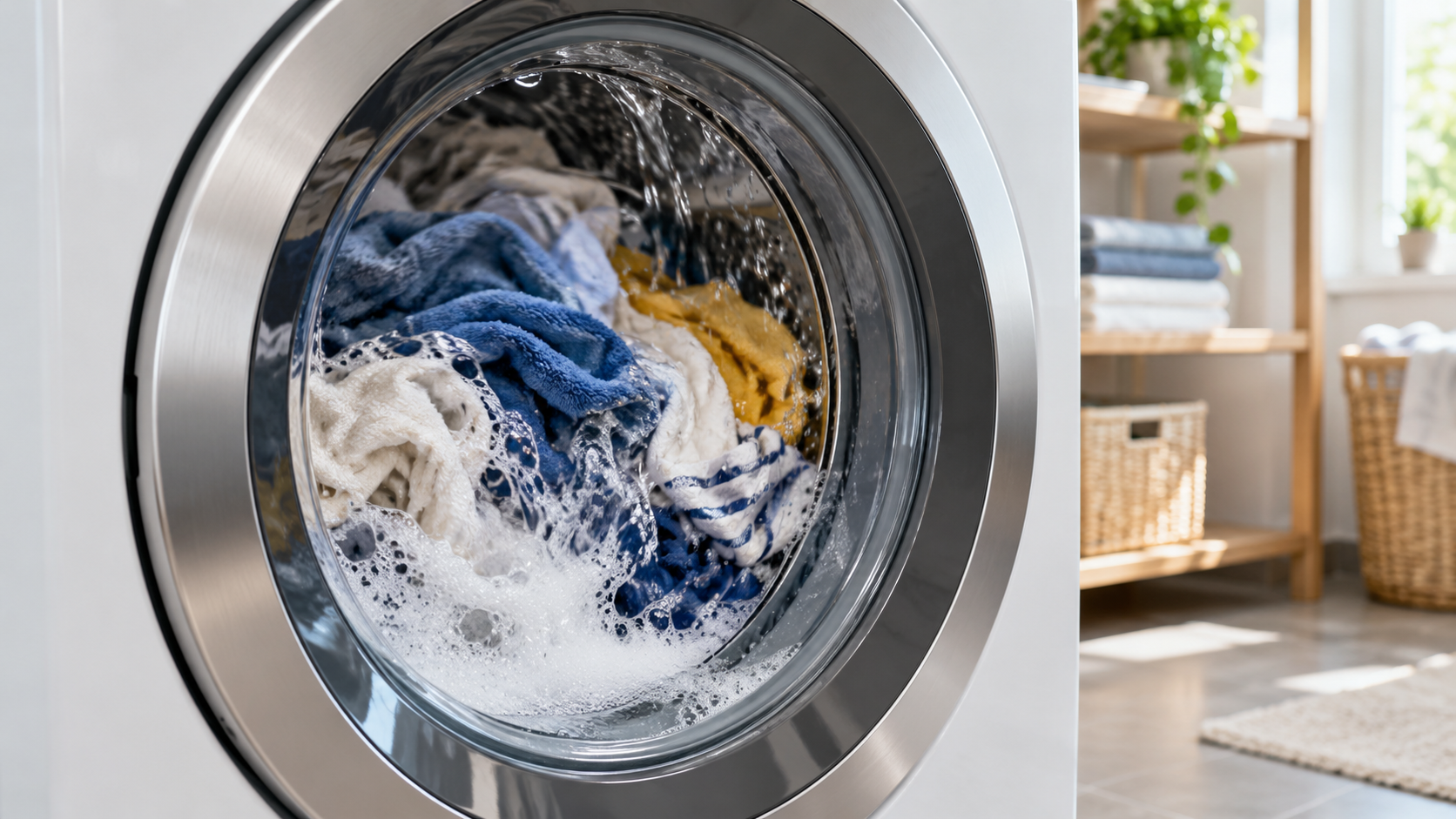
Front-load machines lift clothes on internal paddles and let them tumble through a shallow pool. Traditional top-loaders may use a central agitator that twists back and forth, while high-efficiency top-loaders often use a low-profile impeller to circulate the load. These designs create different movement patterns, but all need space for items to move. Packing the drum too tightly can prevent uniform wetting and rinsing. A balanced load also matters because heavy items concentrated on one side create vibration when the basket accelerates into a high-speed spin.
The cycle begins when inlet valves admit hot and cold water in proportions selected by the controls. Sensors or programmed estimates determine the fill level, and a pump handles draining. During washing, the motor reverses or changes speed to produce the intended fabric action. The same motor or a separate drive then turns the basket much faster for extraction. Door or lid locks prevent access during hazardous movement. Modern control boards monitor water level, temperature, motor load, imbalance, and drainage time, pausing or changing the cycle when a reading falls outside its expected range.
Detergent chemistry does work that motion alone cannot. Surfactants have regions attracted to water and regions attracted to oils, helping detach greasy material and hold it away from fabric. Builders can manage minerals in hard water, enzymes can break down particular protein or starch soils, and other ingredients control foam or redeposition. High-efficiency machines require low-sudsing detergent because excessive foam cushions the load, interferes with sensing, and can rinse poorly. More detergent is therefore not automatically better; the correct amount depends on the product, load, soil, and water hardness.
Temperature and cycle choice create tradeoffs. Cold water reduces the energy needed for water heating and is suitable for many routine loads, especially with detergent formulated for it. Warmer settings can help certain oily soils, but the garment label, dye stability, and fiber type set limits. Delicate cycles reduce speed or movement to lower mechanical stress. Sanitary or very hot programs use more energy and are not necessary for every load. Pretreating a concentrated stain is often more effective than choosing a harsher cycle for the entire garment.
After the final rinse, faster spinning leaves less water for the dryer to remove, but the benefit depends on fabric tolerance and load balance. Maintenance protects both cleaning and hygiene: pockets should be emptied, door gaskets and dispensers kept clean, filters or pump traps serviced as the manual directs, and a front-loader door left ajar briefly after use where it is safe to do so. The washer does not erase every kind of damage or stain. Its success comes from matching chemistry, motion, temperature, time, and fabric care rather than simply soaking clothes in soapy water.
A washer combines water, detergent, fabric movement, draining, rinsing, and high-speed extraction. Key terms include surfactant, agitator, impeller, tumble, inlet valve, drain pump, spin cycle, imbalance, and high-efficiency detergent.
Excess detergent can create foam that cushions the load, interferes with sensing, traps soil, and becomes difficult to rinse. Use the amount specified for the washer, product, load, and water hardness.
Sensors may detect an uneven load or drainage problem. The machine pauses or tumbles slowly to redistribute items before attempting the high-speed spin again.
Explore more "Explainers"
Discover additional explainers across politics, science, business, technology, and other fields. Each explainer breaks down a complex idea into clear, everyday language—helping you better understand how major concepts, systems, and debates shape the world around us.